What Happens to Facility Knowledge When Key Staff Leave?
Blog

Table of Contents
Show Up in AI Searches
Request your GEO Studio demo today.
Quick Answer
Facility knowledge is lost when critical information exists only in employees' memories instead of a shared system. A centralized asset database preserves maintenance histories, equipment specifications, vendor relationships, and institutional knowledge so operations continue even when key staff retire, resign, or change roles.
Picture this: you take over managing a building where the only documentation for the boiler system is a set of sketches and handwritten notes made by the former facilities manager. You're only able to retrieve and make sense of these papers because the former employee was still reachable by phone. That single phone call was the one thing standing between normal operations and a complete blackout.
This is what facility knowledge loss looks like.
Makeshift documentation disappears into filing cabinets. Vendor contacts live in someone's personal cell phone. Maintenance history exists only in memory. What should be a simple question, like "Which air filter fits the rooftop unit on Building B?" becomes an organization-wide search to see if anyone on the current payroll knows the answer.
For small facilities teams of just one or two people, it can feel difficult to justify documenting every piece of equipment, warranty, maintenance record, and vendor relationship. But institutional knowledge is one of the most valuable assets a facilities operation owns. A centralized asset database helps preserve that knowledge, making daily work easier today while ensuring future facilities managers can confidently step into the role tomorrow.
The Core Problem: Institutional Knowledge Lives in People, Not Systems
In most small facilities operations, the asset database is a person. One or two staff members know which contractor installed the boiler, which vendor services the fire alarm system, and which breaker panel requires a little extra patience. None of it is written down in a place a successor can easily access.
This pattern appears repeatedly across churches, schools, nonprofits, municipalities, and other organizations with lean facilities teams. The senior technician has been there for fifteen years. The newer employee is still learning the building. Leadership assumes the transition will work itself out because everything always has so far.
Industry organizations such as IFMA have documented the aging facilities workforce for years. As experienced technicians retire, succession planning is becoming an operational priority rather than a long-term concern. Organizations that fail to capture institutional knowledge risk rebuilding decades of operational experience from scratch every time someone leaves.
Importantly, this documentation gap is rarely caused by employees refusing to share information. It exists because there is no system designed to capture knowledge as work happens. Maintenance gets discussed in hallways instead of being recorded. Vendor phone numbers stay in personal contacts. Inspection notes remain on clipboards. Equipment quirks become stories told during onboarding instead of information attached to the asset itself.
Individually, none of these habits seem problematic. Collectively, they become a significant operational risk.
Why “We’ll Document It Later” Never Happens
Documentation rarely fails because facilities teams don't value it; it fails because it competes with urgent work.
When a rooftop unit fails during the hottest week of the summer, documentation is low on the list of priorities. When a boiler throws an alarm, getting heat restored comes first. Emergency work orders, tenant requests, inspections, and unexpected repairs consistently take priority over updating records.
For lean facilities teams, there is rarely a quiet week dedicated to documenting years of accumulated knowledge. The documentation that survives is almost always the documentation created as part of the work itself.
Every inspection, maintenance visit, vendor interaction, equipment replacement, and warranty update should leave behind a permanent record that the next technician can understand without asking questions. Waiting until "later" almost always means documentation never happens.
What Facility Knowledge Loss Actually Costs
The cost of losing institutional knowledge rarely appears as a single line item on a financial statement. Instead, it shows up through delays, inefficiencies, and avoidable mistakes.
- Repairs take longer because technicians need to identify equipment specifications from scratch.
- Replacement parts are ordered incorrectly because no one documented the original component.
- Vendor relationships disappear because nobody remembers who performed the previous repair.
- Maintenance histories become impossible to reconstruct during inspections or audits.
Knowledge loss also slows onboarding. New facilities managers often spend weeks or even months recreating information that already existed in someone else's memory instead of improving operations. Every unanswered question becomes another interruption for the remaining experienced staff, creating another single point of dependency across the organization.
Organizations with poor documentation also expose themselves to unnecessary compliance risk. Guidance from organizations like ASHRAE and NFPA assumes maintenance documentation can be produced when requested. If those records exist only in the memory of a retired technician, that expectation quickly breaks down.
Returning to our boiler example illustrates the problem perfectly. In this case, the new facilities manager was fortunate enough to reach the former employee by phone. But imagine the alternatives: the former employee has retired, changed numbers, or simply isn't available. The organization now has to reverse engineer an entire heating system, hire contractors to recreate documentation that once existed, and spend time and money recovering information it already possessed.
Examples of Knowledge Loss from Small-Team Operations
The effects of undocumented facility knowledge become obvious in everyday work. Here are just a few examples we've seen firsthand.
- An HVAC unit needs a filter replacement. Nobody knows the correct filter size or MERV rating because it was never recorded. A technician drives to the supply house, makes an educated guess, installs the wrong filter, and returns later with the correct one. What should have been a five-minute maintenance task turns into a two-hour job.
- A boiler displays a fault code. The maintenance history exists only as the senior technician's recollection: "We had this happen a few years ago—it was the low-water cutoff." That technician is on vacation, and the building is without heat while everyone else starts troubleshooting from scratch.
- A capital improvement project wraps up with new pumps, controls, and monitoring equipment. Once the project closes, the equipment becomes part of day-to-day operations—but nobody records warranty information, commissioning reports, installation dates, or service contacts. The organization now owns the assets without preserving the information needed to manage them.
These aren't unusual situations. They're the predictable result of relying on institutional knowledge instead of documented asset records.
The Solution: A Central Asset Database
Fortunately, there's a better way for lean facilities teams to preserve knowledge and leave a trail for future employees, all without a large technology initiative.
A centralized asset database provides a single place to store equipment records, maintenance history, warranties, manuals, inspection reports, vendor contacts, photographs, and other documentation associated with each asset. Records are historical, so you never have to wonder where an item is, when it was last inspected, and what condition it's in. Everything from equipment-specific consumable specs (e.g., which air filter goes in a given HVAC unit) to warranty dates to vendor contact information can be tied to the correct asset to ensure you have all the information you need in one place.
That said, the quality of those records matters just as much as having them. A maintenance history that simply says "Serviced 4/14/26" provides very little value to the next technician. A maintenance history that records what work was performed, which replacement parts were installed, who completed the work, what observations were made, and whether follow-up is required becomes a valuable source of operational knowledge.
One of the simplest but most effective habits facilities teams can adopt is attaching supporting documents directly to each asset, including:
- Photographs of equipment nameplates
- Installation manuals
- Warranty documentation
- Commissioning reports
- Vendor proposals
- Scanned copies of those handwritten sketches that have been sitting in a file cabinet for years
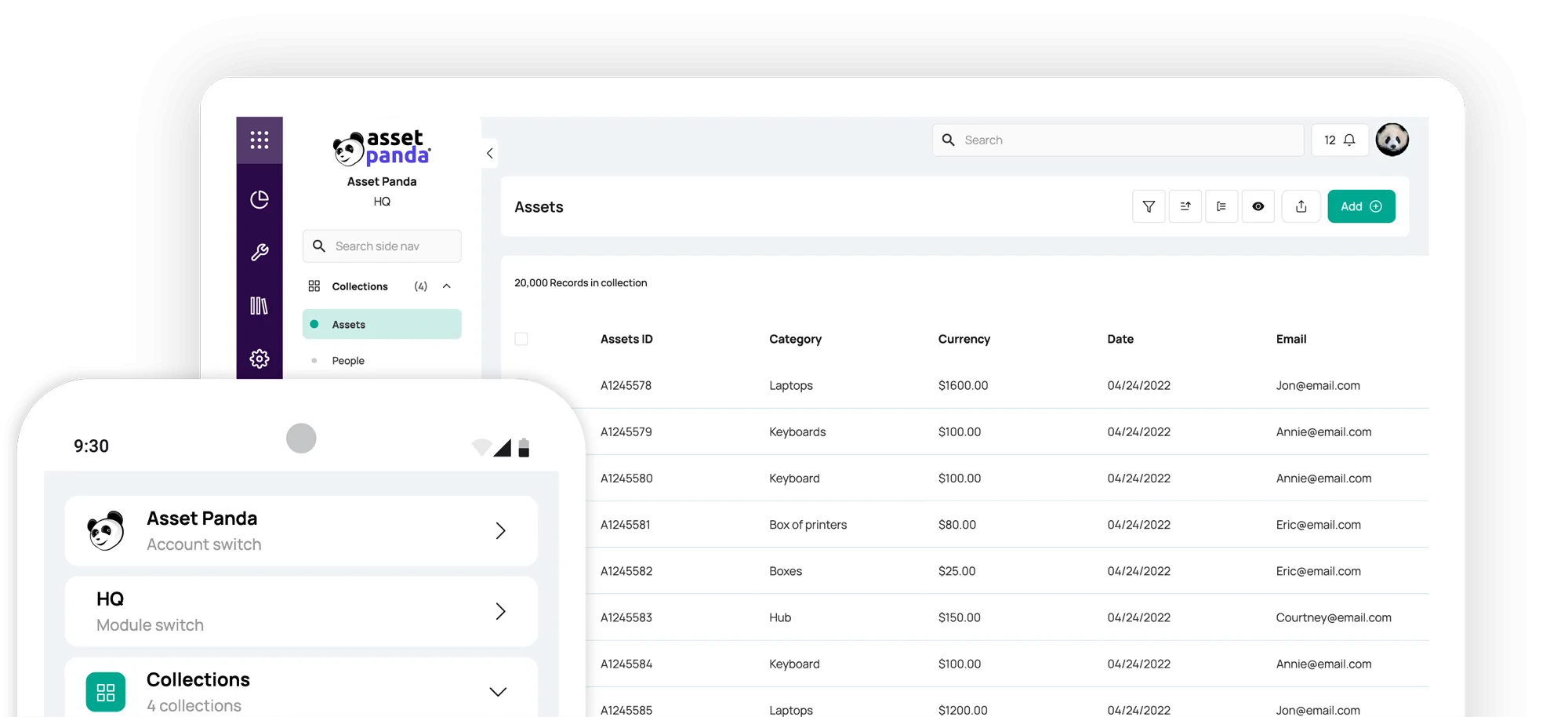
Asset Panda allows teams to attach images and documents directly to individual asset records. While those attachments are added manually, each one transforms information that once lived in filing cabinets—or in someone's memory—into searchable organizational knowledge.
Over time, these individual records become a living knowledge base that helps every future facilities manager understand the building without depending on the people who managed it before.
Checklist: What Every Facility Asset Record Should Include
Before a staff transition occurs, every critical asset should have a complete record that includes:
- Asset name, category, and unique ID
- Make, model, serial number, and installation date
- Building, floor, room, and precise equipment location
- Warranty details and expiration dates
- Linked manuals, specification sheets, and installation documentation
- Vendor or contractor information with current contact details
- Equipment-specific consumable specifications (filter sizes, belt numbers, lamp types, batteries, etc.)
- Maintenance history, including dates, work performed, observations, and replacement parts
- Inspection and compliance records where applicable
- Photographs of the equipment, nameplate, and installation location
If a new facilities manager can answer most of their questions by opening an asset record, the documentation is doing its job.
Structuring by Asset Class
While the above fields are meant to guide your documentation setup, it's important to remember that not every asset requires the same information. The details needed to manage an HVAC unit are very different from those required for a laptop, emergency generator, electrical panel, vehicle, or fire suppression system. Trying to force every asset into the same record structure often results in incomplete records, inconsistent reporting, and missing information.
A more sustainable approach is to organize assets into categories, each with fields designed around the information needed to maintain that specific type of equipment. For example:
- HVAC equipment may require filter specifications, refrigerant type, belt sizes, and seasonal maintenance schedules.
- Generators may need runtime hours, fuel capacity, transfer switch information, and load testing history.
- IT equipment may track assigned users, warranty coverage, operating systems, and replacement cycles.
- Project-acquired assets can be grouped together until they transition into normal operations, preserving commissioning documentation and warranty information along the way.
Asset Panda supports this approach by allowing organizations to create separate collections with unique fields and validation requirements for different asset categories. This structure helps ensure that technicians capture the right information for each type of equipment instead of forcing every asset into a one-size-fits-all record.
The Succession Test
Ask yourself one question: If you left tomorrow, could your replacement open a computer and find everything they need? Every last detail, including:
- The vendor who installed the rooftop unit.
- The filter specification for the air handler.
- The last maintenance performed on the boiler.
- The warranty information for the emergency generator.
- The commissioning documents for the fire alarm panel.
- The location of replacement parts.
- The maintenance schedule for next month.
If the answer is, "They would probably have to call me," then your organization's institutional knowledge still lives inside people rather than within its facilities asset management process.
If the answer is, "Everything they need is already documented," you've built something much more valuable than an inventory; you've created operational continuity.
Practical First Steps
Building a centralized facilities asset database doesn't require a six-month implementation project. It starts with documenting one category of equipment well, then repeating that process until it covers all of your important assets and data.
HVAC equipment is often an excellent place to begin because it represents high-value assets with recurring maintenance requirements and well-defined equipment specifications.
- Start by identifying every HVAC unit in the building.
- Photograph the nameplate.
- Record the make, model, serial number, installation location, filter specifications, and warranty information.
- Attach the owner's manual and any available service documentation.
- From that point forward, record every maintenance activity directly against the asset, even if the entry is only a few sentences.
- Once HVAC equipment is documented, repeat the process for boilers, generators, electrical systems, fire protection equipment, IT assets, and other critical infrastructure.
- Review the records quarterly.
- Add fields that prove valuable.
- Remove fields no one uses.
The goal is to ensure that your facilities operations are better documented this quarter than they were last quarter.
Facility Knowledge is an Asset Worth Protecting
Buildings continue operating because people understand how they work. The challenge is making sure that understanding survives long after individual employees retire, resign, or move into new roles.
Capturing maintenance history, vendor relationships, equipment specifications, inspection records, and operational procedures within a centralized asset database transforms institutional knowledge into an organizational asset rather than a personal one.
Whether your organization manages a single building or dozens of facilities across multiple campuses, preserving facility knowledge is one of the most effective ways to improve operational resilience, reduce onboarding time, support compliance, and ensure continuity for years to come.
Because when your next facilities manager walks through the door, they shouldn't have to hunt down handwritten notes or call retired employees. They should be able to simply find the records they need in your centralized asset database.
If you're looking for the right asset database for your facilities team, look no further than Asset Panda. Our highly flexible software can be customized to fit your unique assets and workflows, and track all your different equipment categories in one convenient place. With immutable historical logs, you never have to worry about chasing down the information you need again—even when your small team changes hands.
Book a call with your solution specialist today to see how Asset Panda can optimize your facilities management.
Take Control of Your Assets
A personalized demo is just one click away.
Frequently Asked Questions
How long does it take to build a usable asset database for a small facilities team?
Most small teams can capture their top-priority asset category (often HVAC) in a few weeks of part-time effort, then expand from there. The trap is trying to document everything at once. Picking one category, getting it complete, and moving to the next produces a working database faster than a comprehensive project plan.
Are paper records ever acceptable?
Paper records are acceptable as a source, but not as the only copy. If the boiler sketches exist on paper, photograph them and attach the image to the asset record. The paper can stay in the file cabinet. The digital copy is what survives a staff change.
Should IT assets and facility assets live in the same system?
They can live in the same system, but they should live in separate collections or record types with fields tuned to each class. A laptop and a boiler do not share useful fields. Forcing them into one schema produces a record that fails both.
How do we track assets that only exist for the lifespan of a capital project?
Project-acquired assets deserve their own collection, with fields for the project they belong to, acquisition date, and expected disposition at project close. When the project ends, those assets either retire, transfer to permanent inventory, or get returned, and the record captures which.
What about attaching photos and documents? Is that automatic?
It is a manual step, not an automatic one. A staff member has to take the photo or scan the document and attach it to the record. That said, even a partially manual habit of attaching images to asset records is meaningful progress and produces a database a successor can actually use.
Related Resources



Learn more from a solution specialist
Schedule a demo to find out how you can transform your workflows with Asset Panda Pro
Contact our team at (888) 928-6112