
How to Improve Inventory Management: 7 Strategies to Increase Visibility
Blog

Table of Contents
Take Control of Your Inventory
A personalized demo is just one click away.
Quick Answer
To improve inventory management, organizations need accurate inventory data, standardized processes, real-time visibility, and technology that supports inventory tracking across locations. The most effective strategies include implementing inventory management software, automating tracking with barcodes or RFID, conducting regular audits, optimizing stock levels, and integrating inventory data across the organization.
The goal is not simply to reduce inventory costs. It is to ensure the right inventory is available at the right place and time while maintaining visibility, accountability, and operational efficiency.
Why Inventory Management Remains a Challenge
Most inventory problems are visibility problems.
Organizations rarely struggle because inventory does not exist. They struggle because they cannot confidently answer questions like:
- What inventory do we currently have?
- Where is it located?
- How much is available?
- Who is responsible for it?
- When should we reorder it?
- Which items are overstocked or understocked?
As inventory expands across warehouses, facilities, vehicles, departments, or remote locations, these questions become increasingly difficult to answer without a centralized system. The result is inventory distortion: stockouts, overstocks, shrinkage, misplaced inventory, and inaccurate records. Globally, inventory distortion costs businesses an estimated $1.6 trillion annually.
Improving inventory management begins with improving visibility.
Why Effective Inventory Management Matters
Inventory is often one of the largest assets on an organization's balance sheet. Poor inventory management impacts far more than storage costs. It can create production delays, disrupt customer service, increase procurement expenses, and tie up working capital.
The benefits of effective inventory management extend across industries.
Manufacturing
Manufacturers depend on inventory accuracy to maintain production schedules. Most businesses have 25–30% of their working capital tied up in inventory, so optimizing stock levels can free significant funds. Missing raw materials or critical spare parts can stop production entirely, while excess inventory consumes valuable capital and warehouse space.
Healthcare
Hospitals and healthcare providers rely on inventory visibility to ensure medications, medical supplies, and critical equipment are available when needed. Poor inventory management can create both financial and patient-care risks.
Information Technology
IT teams must track laptops, mobile devices, servers, networking equipment, and software licenses. Without accurate inventory records, organizations face unnecessary purchases, compliance risks, and security concerns.
Regardless of industry, the objective remains the same: maintain accurate inventory records while minimizing waste and maximizing availability.
7 Strategies to Improve Inventory Management
1. Implement a Modern Inventory Management System
When data lives in spreadsheets, emails, paper logs, or disconnected systems, managing inventory becomes a manual and time-consuming process. But with a modern inventory management system, businesses can create a single source of truth for inventory information. Instead of relying on manual updates, organizations gain real-time visibility into inventory levels, transactions, and movement across locations.
The most effective systems provide:
- Real-time inventory visibility
- Mobile access with offline mode
- Multi-location tracking
- Automated reporting
- Barcode or RFID tracking
- Immutable audit trails
A centralized system creates the foundation for every other inventory improvement initiative.
2. Automate Inventory Tracking
Manual inventory updates are one of the most common sources of data inaccuracies.
Barcode scanning, QR codes, RFID, and IoT technologies help automate inventory transactions and reduce human error (by over 40% in some cases!). Rather than entering information manually, employees can scan inventory during receiving, transfers, audits, and issue transactions.
Automation improves:
- Inventory accuracy
- Transaction speed
- Audit efficiency
- Employee productivity
Most importantly, it helps ensure that inventory records reflect reality.
3. Conduct Regular Audits and Cycle Counts
Even with modern technology, inventory records should be verified regularly. Cycle counting allows organizations to audit smaller portions of inventory throughout the year rather than relying solely on annual physical inventories.
Regular audits help identify:
- Missing inventory
- Duplicate records
- Counting errors
- Process breakdowns
- Inventory shrinkage
Organizations that audit frequently typically maintain higher inventory accuracy and resolve discrepancies faster.
4. Optimize Inventory Levels with Better Forecasting
Striking the right balance between too much stock and too little is a core goal of inventory management. Demand forecasting, reorder points, safety stock calculations, and inventory analytics help organizations balance availability against carrying costs.
When forecasting improves:
- Stockouts decrease
- Excess inventory decreases
- Procurement becomes more predictable
- Working capital is used more efficiently
Better forecasting and refined inventory optimization practices can reduce inventory costs by 10% or more through better balance.
5. Prioritize Inventory Using ABC Analysis
Not all inventory deserves the same level of attention. ABC analysis helps organizations focus resources on the inventory that has the greatest financial or operational impact, where:
- A items represent the highest-value inventory (typically ~20% of items accounting for ~80% of value)
- B items represent moderate-value inventory
- C items represent low-value inventory (usually consumables like bolts or gloves)
This approach helps organizations allocate counting, auditing, and management resources more effectively.
6. Standardize Inventory Processes
Technology alone will not solve inventory challenges.
Organizations also need consistent processes for:
- Receiving inventory
- Issuing inventory
- Transfers between locations
- Inventory adjustments
- Audits
When employees follow standardized procedures, inventory data becomes more reliable and easier to maintain. Process consistency is often the difference between a successful inventory management program and an expensive software implementation that fails to deliver results.
7. Integrate Inventory Data Across the Organization
Inventory data becomes more valuable when it connects to other business systems.
Organizations should consider integrating inventory management with:
- ERP platforms
- Procurement systems
- Accounting software
- Maintenance systems
- Asset management platforms
Integrated systems eliminate duplicate data entry, improve reporting accuracy, and provide a more complete picture of inventory activity.
Signs Your Inventory Management Process Needs Improvement
Many organizations do not realize they have an inventory problem until operational issues begin to appear.
Common warning signs include:
- Frequent stockouts
- Excess inventory levels
- Duplicate purchases
- Long inventory audits
- Missing inventory
If several of these issues are present, it may be time to evaluate your inventory management processes and technology, then use the best practices above to strategically improve them.
How Asset Panda Helps Improve Inventory Management
Organizations looking to improve inventory management should focus on one goal above all others: visibility.
When inventory information is accurate, accessible, and updated in real time, organizations can make better decisions about purchasing, stocking, forecasting, and operations. By combining modern inventory management software, automated and standardized processes, and regular audits, organizations can reduce costs, improve service levels, and create a more reliable inventory operation.
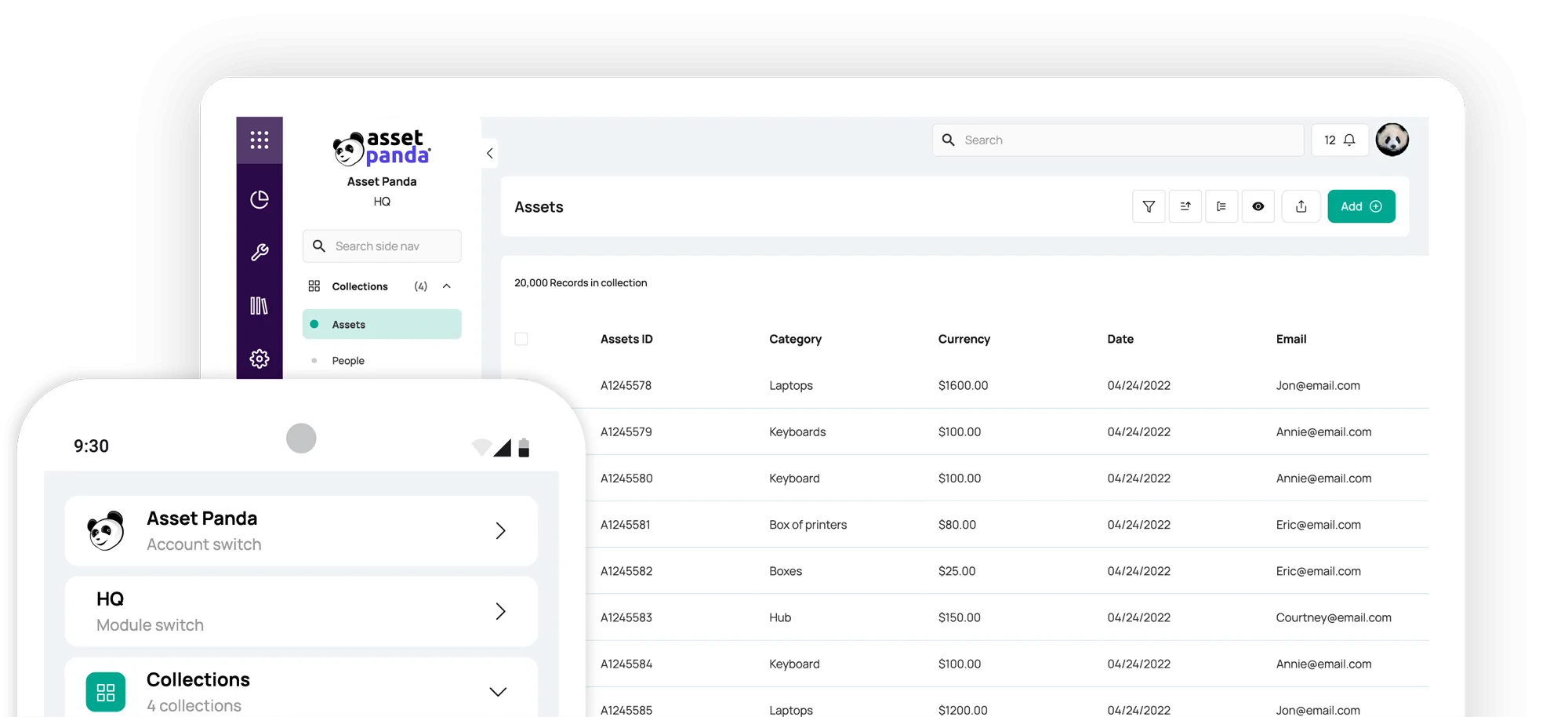
Asset Panda helps organizations gain real-time visibility into inventory across multiple locations, departments, and teams. With mobile access, barcode scanning, customizable workflows, and centralized reporting, organizations can improve inventory accuracy while reducing administrative effort.
Asset Panda supports inventory management initiatives by helping teams:
- Track inventory across locations
- Conduct audits using mobile devices
- Automate inventory updates
- Improve inventory accountability
- Generate inventory reports
Ready to see how Asset Panda can resolve your inventory management woes? Schedule a meeting with your solution specialist today.
Take Control of Your Assets
A personalized demo is just one click away.
Frequently asked questions
How can I improve inventory management?
The most effective ways to improve inventory management include implementing inventory management software, automating inventory tracking, conducting regular audits, optimizing inventory levels, standardizing processes, and integrating inventory data across systems.
What is the biggest challenge in inventory management?
The biggest challenge in inventory management is maintaining accurate inventory visibility. Many organizations struggle because inventory data is spread across spreadsheets, disconnected systems, or manual processes, making it difficult to know what inventory is available and where it is located.
How does inventory management software improve inventory accuracy?
Inventory management software improves inventory accuracy by centralizing inventory records, automating updates, supporting barcode or RFID scanning, and providing real-time visibility into inventory transactions and stock levels.
Why are cycle counts important?
Cycle counts help organizations verify inventory accuracy on an ongoing basis. By auditing smaller portions of inventory regularly, companies can identify discrepancies earlier and maintain more accurate records without disrupting operations.
What are the benefits of effective inventory management?
Effective inventory management reduces stockouts, minimizes excess inventory, improves cash flow, increases operational efficiency, supports better forecasting, and helps organizations provide better service to customers and internal stakeholders.
Related Resources



Learn more from a solution specialist
Schedule a demo to find out how you can transform your workflows with Asset Panda Pro
Contact our team at (888) 928-6112