
Lifecycle Management Software
Watch Every Asset, Through Every Journey
Real-time, mobile-enabled tracking, customizable workflows, and unmatched lifecycle capabilities

AI Enhanced
Improve your efficiency with the power of Asset Panda Intelligence.
Fast Time to Value
Achieve high user adoption and ROI with our intuitive interface.
Streamlined Maintenance
Easily track preventive maintenance and create and assign work orders.
Optimize asset utilization
Lengthen the lifespan of your assets and reduce costs
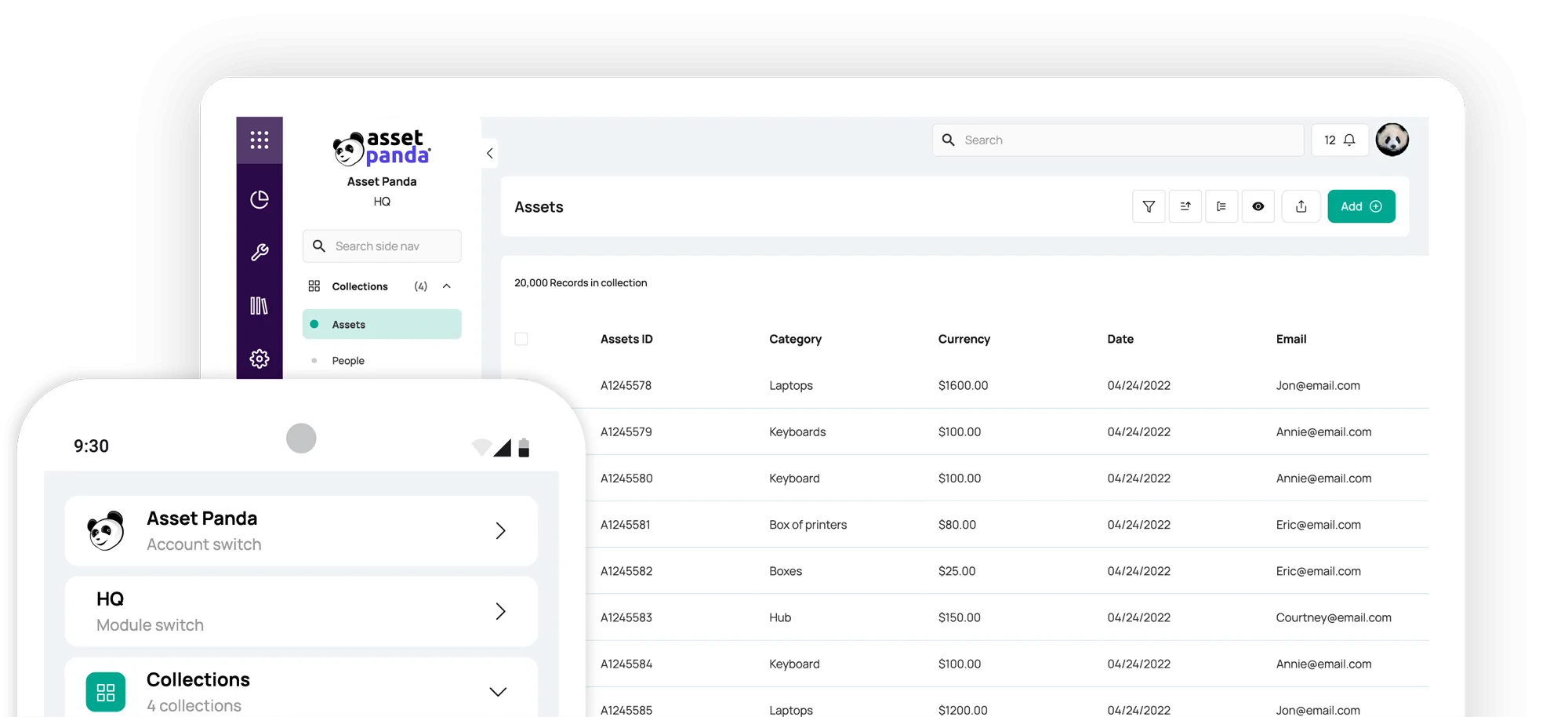
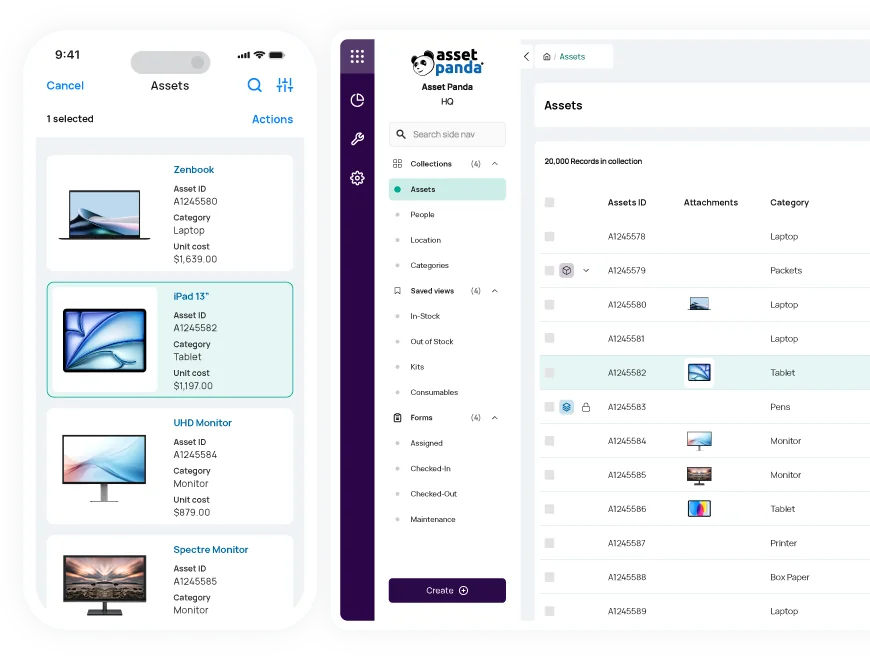
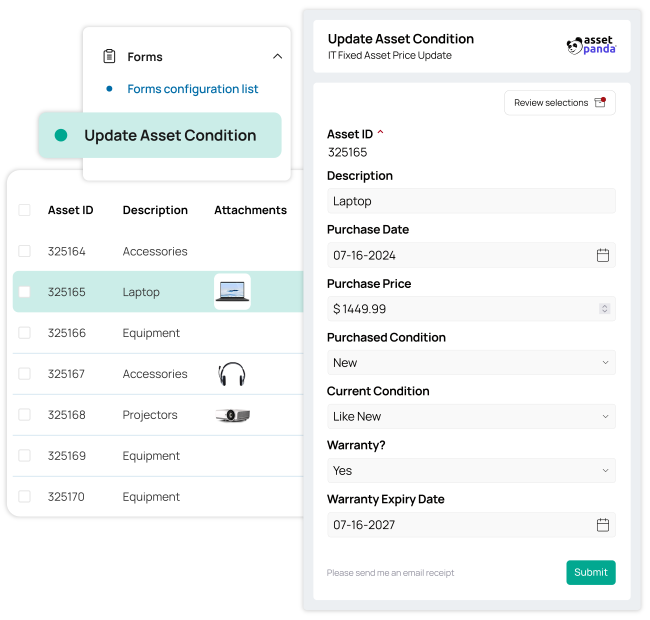
From IT devices to industrial equipment, our agnostic asset lifecycle management software helps you track the full history of your assets. Store every asset detail from acquisition to disposal in our detailed records, including assignment and repair history, key maintenance dates, and depreciation. With a clear understanding of an item’s current condition and value, you can optimize asset utilization and improve cost savings and sustainability.
Streamline maintenance
Increase safety and productivity with clear insight into maintenance needs
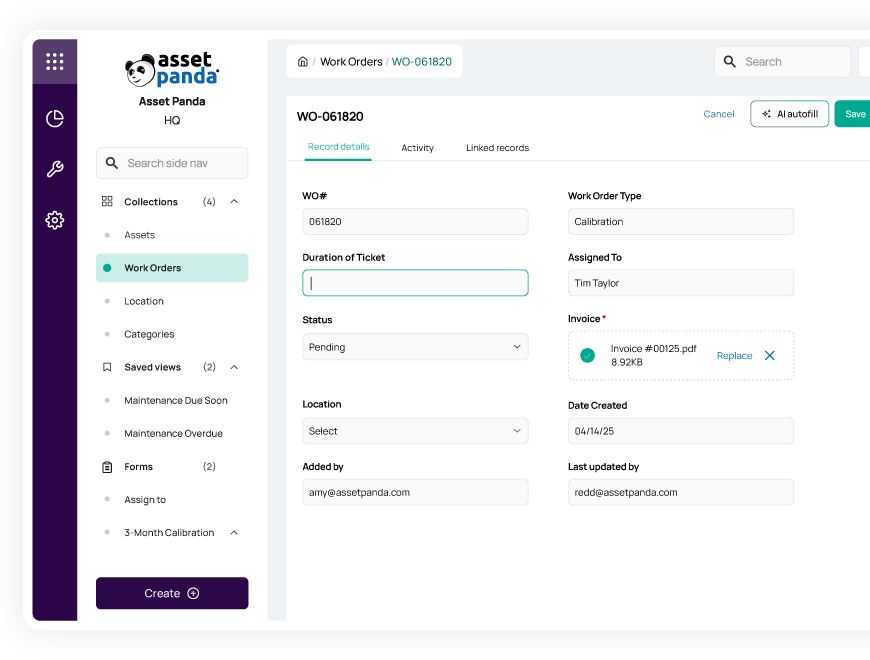
Stay ahead of preventive maintenance with our fixed asset lifecycle management solution. Access each asset’s full repair history, maintenance schedule, and user and safety manuals in robust asset records. Easily create work orders and assign them to available employees for increased efficiency.
Keep your IT devices up and running
Maintain your internal team’s and clients’ devices with IT asset lifecycle management
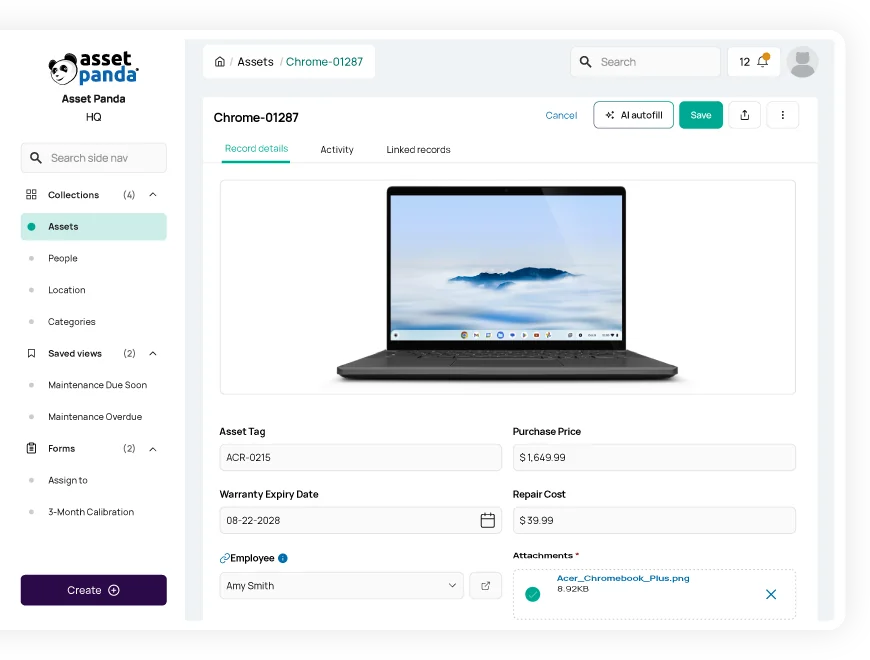
Easily track the full lifecycle of all your IT assets to boost productivity and accountability. Get visibility into an asset’s maintenance needs, assignment history, and depreciation to keep your IT devices in working order longer.
With our scalable, multi-tenant asset lifecycle management software, you can configure your Asset Panda platform to track an internal team’s devices or manage devices across numerous client accounts.
Make more informed business decisions
Gain detailed insights into your assets from acquisition to disposal
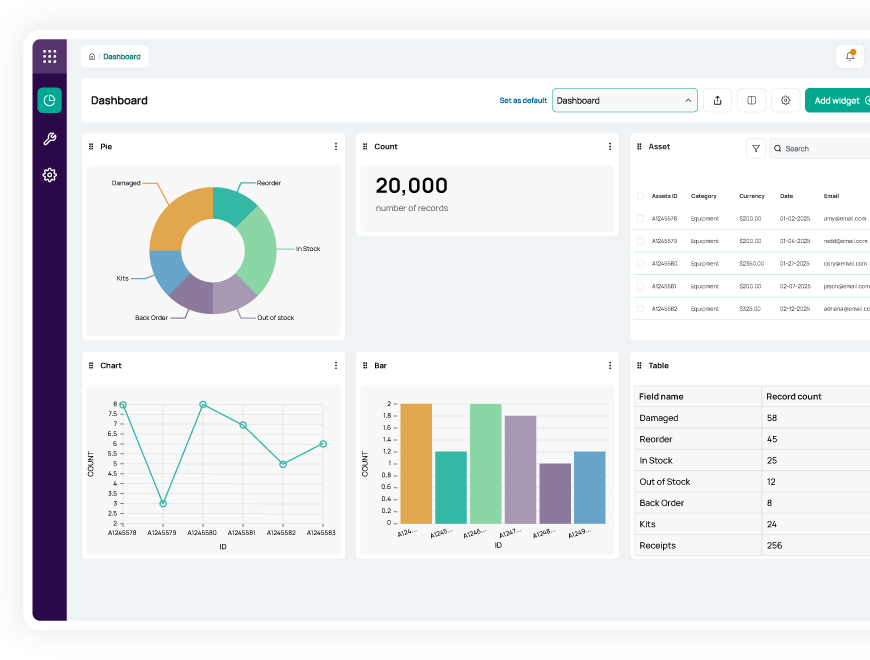
Use our lifecycle management software to generate customized reports and automated schedules to routinely review asset usage, upcoming maintenance needs, and more. Leverage straight-line depreciation reporting to improve tax compliance, avoid ghost assets, and accurately forecast future purchasing needs.
Useful features for lifecycle management

Asset assignment

Barcode tracking

Multi-account structure

Full lifecycle history

Maintenance tracking

Asset inspection

Repair tracking

Signature capture

Asset kitting

Tool tracking

Record-level attachments

Contract management

Unlimited users

Automations

Robust reports

Action-based forms

Notifications

Custom fields

Field requirements

Asset listing view

iOS and Android Compatible

Offline mode

Full integration with web app

Built-in barcode scanning

GPS pindrop

Mobile actions

Reporting access

Quick asset addition

User specific views

Sortable columns

Global & faceted search

Mobile and web apps

Data import

Easy record replication
Unlimited users

Bulk asset reallocation

Amazon AWS hosting

TLS 1.2 Encryption

Robust roles and permissions
Track Utilities earns back a day a week with Asset Panda
“Making sure those assets are in line with the dates that they need to be replaced or tested would be a definite benefit. We can get our guys the tools and the things they need to do their jobs safely and make sure we are being compliant."
Brian Bruni
Asset Management Lead

RISE™Robotics uses Asset Panda as their single source of truth
"Almost every company that I could see myself working for in the future would benefit from something like Asset Panda if they don't already have it."
Tom Rufo
Lab Manager

Hendrix Enterprises manages inventory 5X faster with Asset Panda
“Being able to better track maintenance costs, lifecycle replacements, and even when the cost of fixing a piece of equipment is more than the actual value of the equipment has made a big difference."
Jayna Hendrix
Project Specialist

Frequently asked questions
How can Asset Panda help us understand the life cycle of equipment for future replacement planning?
Asset Panda supports replacement planning by centralizing the key data needed to understand an asset’s lifecycle. You can track financial information such as depreciation, link repair and maintenance records, store usage metrics, and add custom fields for expected replacement or useful life. Using Saved Views and reports, you can analyze this data to identify aging or high-cost assets and make informed decisions about when they should be replaced—helping you move from reactive to strategic lifecycle planning.
How can I track an asset's total repair and maintenance history to determine the optimal time for replacement?
You can track an asset’s full repair and maintenance history by creating a Repairs or Work Orders collection and linking each maintenance event back to the asset record. Each repair entry can include labor, parts, total cost, and notes, and all submissions are logged in the Activity Stream and Form Submission History. Saved Views and reports can then summarize total repair costs and frequency over time, allowing you to compare those expenses to the asset’s original cost or book value and determine when replacement is more cost-effective than continued repairs.
How does Asset Panda manage items that are returned for disposal versus items returned to general inventory?
Asset Panda manages returned items by using custom Update Forms that change an asset’s Status field. You can create a “Return to Inventory” form that updates the Status to “Available,” and a separate “Disposal” form that updates the Status to “Disposed” or “Retired.” By controlling which forms are visible based on the asset’s current status, you ensure that disposed items cannot be accidentally re-issued while keeping active items in the general inventory pool.
How does the system ensure data integrity across an asset's entire history, even after merging duplicate records?
Asset Panda maintains data integrity by preventing duplicate creation through Unique Fields and by preserving a complete audit log for every asset record. If duplicate records are discovered, administrators can correct the issue by updating the valid record using Data Import (Update) and manually removing any redundant entries. The Activity Stream on the remaining asset record provides an immutable, time-stamped history of all changes going forward, ensuring a clear and verifiable record of the asset’s lifecycle.
Can I use Asset Panda to project replacement costs and budgets for our upcoming capital planning?
Yes. Asset Panda can support capital planning by centralizing the data needed to evaluate upcoming replacement costs. You can create custom fields to store each asset’s estimated replacement cost and expected end-of-life date, then build Saved Views and reports that filter assets scheduled for replacement within the next 1–5 years. Summarizing these fields gives your team the information needed to forecast capital requirements and plan future budgets.
How does the asset's full historical record ensure compliance during disposal and end-of-life auditing?
Asset Panda ensures compliance during disposal by maintaining a complete, immutable history of every update made to an asset record. When a disposal form is submitted—typically updating the asset’s Status to “Disposed” or “Retired” and capturing fields such as disposal date and reason—the submission is logged in Form Submission History and the Activity Stream records who performed the update and when. This provides auditors and financial teams with a verifiable chain of custody and documented proof of proper end-of-life handling.
Learn more from a solution specialist
Schedule a demo to find out how you can transform your workflows with Asset Panda Pro
Contact our team at (888) 928-6112