Asset Panda vs Google Sheets — Full Comparison Guide (2026)
Compare Asset Panda
Table of Contents
Take Control of Your Assets
A personalized demo is just one click away.
Summary
This guide compares Asset Panda vs Google Sheets, two common approaches to asset tracking. Google Sheets is a flexible, cloud-based spreadsheet often used by small teams to organize simple equipment lists because it’s free, familiar, and easy to share.
However, as organizations grow, Sheets becomes difficult to maintain, error-prone, and limited—particularly when teams need mobile tracking, automation, audits, inspections, check-in/check-out, reservations, or cross-department workflows.
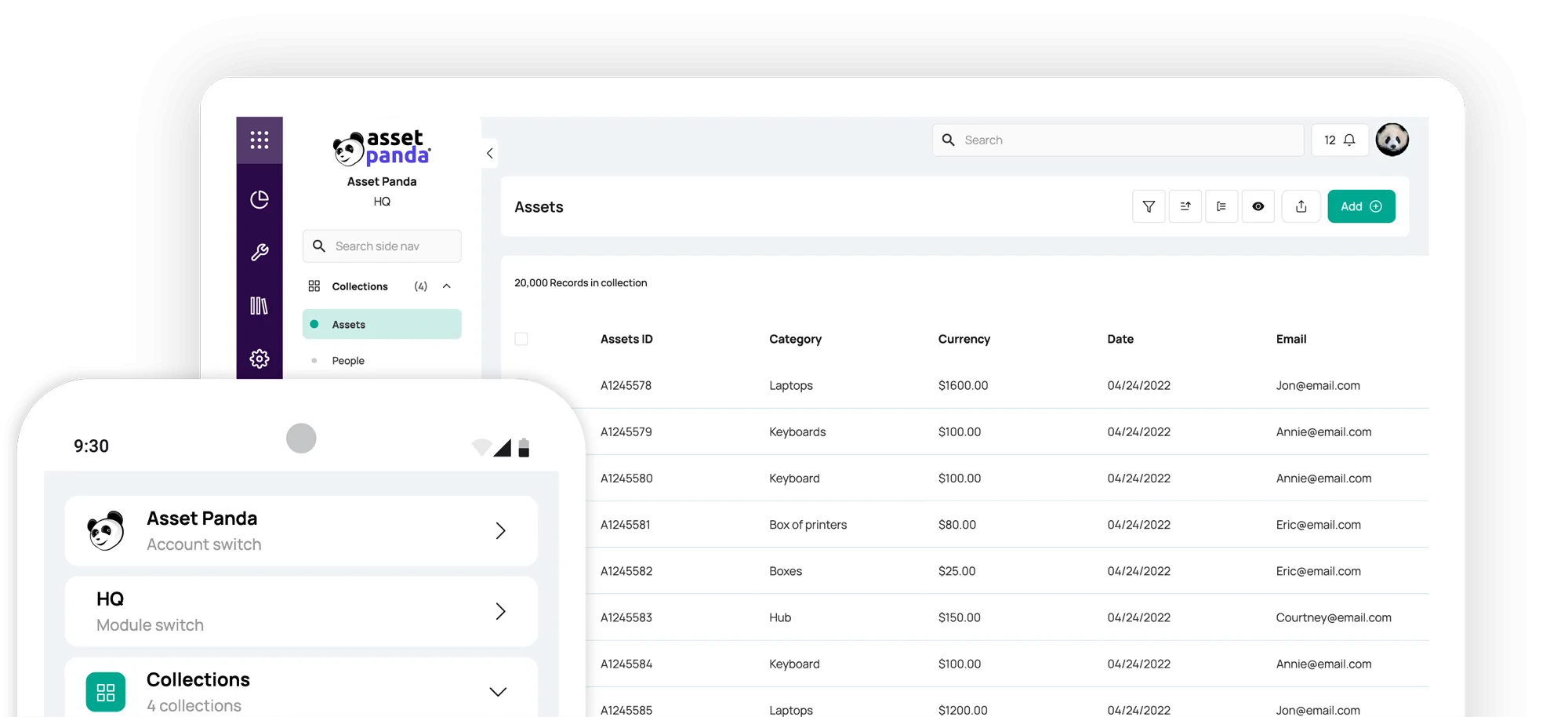
Asset Panda is a configurable, mobile-first asset management platform that replaces spreadsheet-based tracking with scalable workflows, automation, and reporting.
| Feature | Asset Panda | Google Sheets |
| Mobile use | Full app | None |
| Workflows | Yes | None |
| Reporting | Dashboards | Manual |
| Automation | Yes | No |
| Scalability | Multi-team | Limited |
After reading this Asset Panda vs Google Sheets comparison guide, you can expect to understand:
- When spreadsheets are sufficient
- When to transition to proper asset management software
- The differences in mobile functionality and automation
- Whether Sheets can support check-in/check-out or audits
- How to improve accuracy and accountability
Google Sheets Overview
Google Sheets is commonly used for:
- Simple asset lists
- Manual inventory updates
- Low-cost collaboration
- Small-scale departmental tracking
Strengths
- Free or included with Google Workspace
- Easy collaboration
- Accessible anywhere
- Simple for small lists
Limitations
- No automated workflows
- No audit trails
- No mobile scanning or offline asset updates
- No check-in/check-out or reservations
- No inspections or lifecycle reporting
- Error-prone with manual updates
- Data becomes unreliable as teams grow
Sheets works only for very small, low-risk asset lists.
Asset Panda Overview
Asset Panda is a configurable asset management platform designed to support IT, operations, facilities, construction, education, and multi-team workflows through:
- Mobile scanning + offline mode
- Inspections & audits
- Check-in/check-out & reservations
- Automation
- Reporting dashboards
- Multi-team permissions
- Integrations across ITSM, identity, finance, and MDM
- Full lifecycle tracking
This level of capability vastly exceeds spreadsheet-based workflows.
| Capability | Asset Panda | Google Sheets |
| Mobile scanning | Yes | No |
| Offline access | Yes | Limited to cached sheets |
| Inspections | Yes | No |
| Audits | Built-in | Manual & error-prone |
| Check-in/check-out | Yes | No |
| Reservations | Yes | No |
| Automation | Yes | No |
| Reporting | Dashboards | Manual formulas |
| Integrations | ITSM, identity, MDM, finance | Basic API imports/exports |
| Data integrity | Strong | Weak (manual edits) |
| Scalability | High | Low |
| Multi-team collaboration | Strong | Difficult to govern |
Deep-Dive Comparisons
Workflow Flexibility
Google Sheets:
- Only manual entry
- No fields, forms, workflows, or rules
Asset Panda:
- Custom fields, workflows, forms
- Automated routing, notifications, and lifecycle updates
Mobile Capabilities
Sheets:
- No scanning
- No inspections
- Not built for field operations
Asset Panda:
- Full mobile app
- Offline usage
- Photo attachments
- Audits + inspections
Automation
Sheets:
- Requires scripting (Apps Script)
- Not practical for asset lifecycle workflows
Asset Panda:
- No-code automation for reminders, status changes, and notifications
Audits & Accountability
Sheets:
- No audit trail
- Easy to overwrite data
Asset Panda:
- Timestamped activity logs
- Verification workflows
- User accountability
Reporting & Visibility
Sheets:
- Manual charts & formulas
- Difficult to maintain as lists grow
Asset Panda:
- Dashboards
- Grouped reports
- Export automation
- Multi-location visibility
Use Case Fit
Choose Google Sheets if:
- You track fewer than ~50–100 assets
- You have only one or two collaborators
- You don’t need audits, automation, or mobile functionality
- You don’t require lifecycle or status-based workflows
Choose Asset Panda if:
- You need inspections, audits, or field updates
- Your team manages check-in/check-out
- You require reservations
- You want automated reminders or lifecycle updates
- You manage assets across multiple locations
- You need reporting dashboards
- You want consistent accountability and compliance
Pros & Cons of Each Solution
Google Sheets Pros:
- Free
- Easy to start
- Good for very small teams
- Familiar interface
Cons:
- No workflows
- No mobile features
- No audit trails
- No automation
- Error-prone for asset tracking
- Not scalable
Asset Panda Pros:
- Mobile-first
- Automation
- Check-in/out + reservations
- Reporting dashboards
- Inspections & audits
- Multi-team governance
- Integrations
Cons:
- More capability than very small lists require
Final Recommendation
Google Sheets is suitable only for extremely small, simple asset lists. When an organization needs the following, it's time to move beyond spreadsheets:
- Accountability
- Mobile usage
- Lifecycle management
- Automation
- Multi-team collaboration
- Reporting
- Compliance
Asset Panda is the logical upgrade, offering the workflow depth, mobile capabilities, and governance needed for accurate, scalable asset management.
See how easy it is to switch from stagnant Google Sheets to Asset Panda's real-time tracking software
Take Control of Your Assets
A personalized demo is just one click away.
Related News & Press



Learn more from a solution specialist
Schedule a demo to find out how you can transform your workflows with Asset Panda Pro
Contact our team at (888) 928-6112