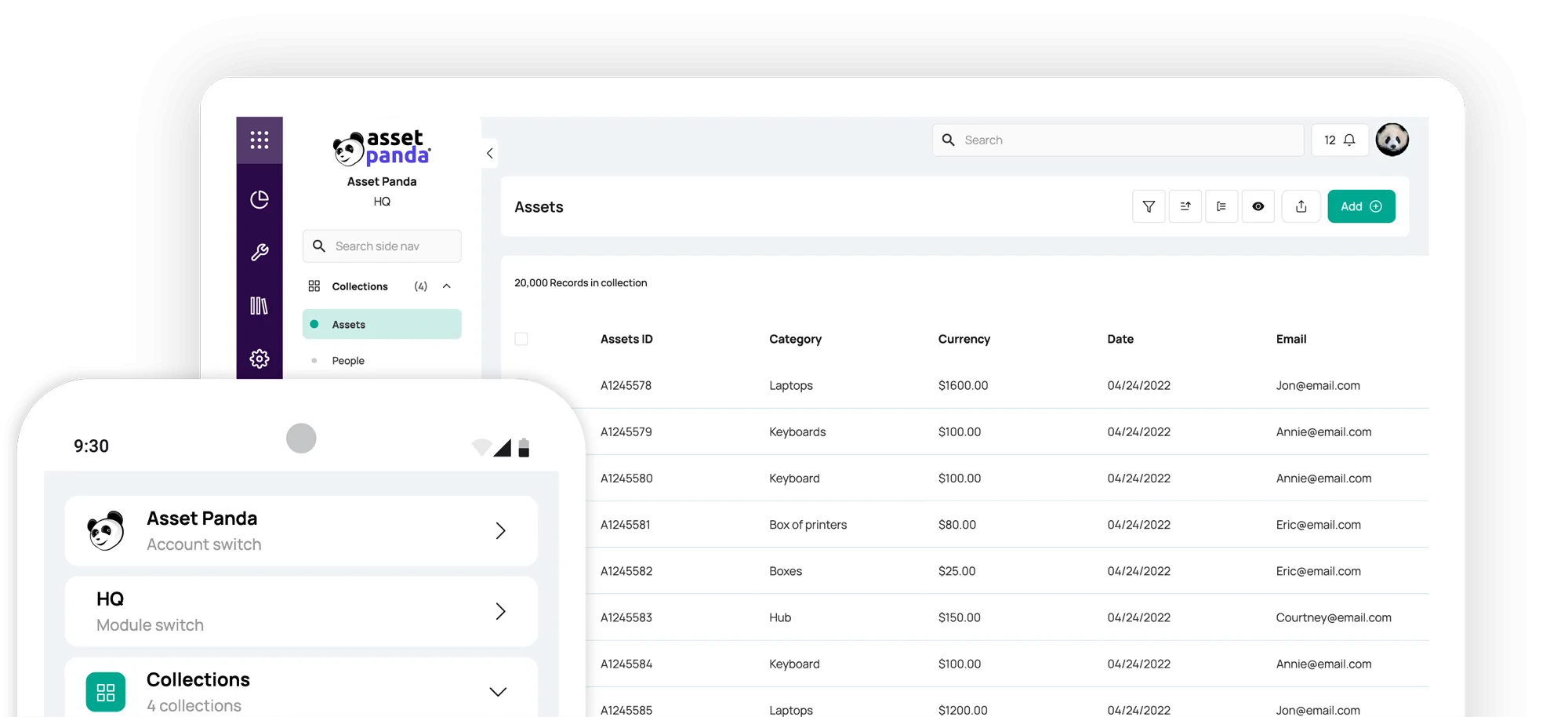
A Practical Guide to Securing Mission-Critical Equipment for Government Agencies

Imagine a firefighter lunging through smoke to grab a Self‑Contained Breathing Apparatus (SCBA) pack, or a police officer reaching for their radio during a critical incident. In those moments, asset management is not an accounting exercise—it is a life‑safety function. If the equipment is missing, expired, or uninspected, the consequences can be catastrophic.
For public safety and operations leaders, securing mission‑critical equipment means knowing, without hesitation, where every vital asset is, who is responsible for it, and whether it is ready for use. This guide explains how modern government agencies establish that level of control, accountability, and readiness.
What Is Mission‑Critical Equipment Tracking in Government?
Mission‑critical equipment tracking is the practice of digitally assigning, monitoring, and verifying custody, condition, and compliance status for high‑risk, life‑safety, and high‑value government assets.
These assets commonly include:
- SCBA cylinders and packs
- Firefighter turnout gear (PPE)
- Firearms, tasers, and body cameras
- Police radios and vehicle‑mounted equipment
- Evidence and sensitive property
- Shared public works tools and generators
Unlike basic inventory systems, mission‑critical tracking maintains a verifiable chain of custody, inspection history, and audit trail for every asset throughout its useful life. Lifecycle metrics to track for legal and operational requirements include:
- Personnel assignment logs
- Time-stamped transfers
- Status tracking (in service, out of service, repair, retired)
- Inspection documentation
- Certification management
- Expiration alerts
When Do Government Agencies Need Mission‑Critical Asset Tracking?
Agencies typically reach a breaking point when one or more of the following conditions appear:
- Asset counts exceed 500 items
- Equipment is shared across shifts, vehicles, or job sites
- Gear is governed by NFPA, OSHA, or internal SOPs
- Leadership or auditors ask: “Who had this last?”
- Loss, theft, or expired equipment creates safety or legal risk
At this stage, manual spreadsheets and disconnected systems introduce unacceptable operational and liability exposure. While spreadsheets often seem like a quick fix for asset tracking, they lack the capabilities needed to securely manage mission-critical equipment, such as:
- Chain-of-custody history
- Inspection automation
- Immutable activity log
- Multi-user collaboration
- Full audit defensibility
The True Cost of Misplaced or Uncontrolled Equipment
Financial Risk
Mission‑critical government equipment is expensive. A single police radio can cost $5,000-10,000. An SCBA unit with spare cylinders can exceed $6,700. When assets are lost or stolen, agencies must divert scarce funds away from training and staffing to replace them—often repeatedly. Over time, poor tracking results in millions of dollars in avoidable spend and negative audit findings.
Operational Risk
When critical tools are unavailable, response slows or stops entirely. Crews searching for missing equipment aren't able to respond to emergencies in a timely manner. Delays caused by missing radios, defibrillators, or specialty tools directly impact public safety and service delivery.
Safety and Legal Risk
Issuing expired or uninspected equipment exposes agencies to severe liabilities. Firefighters relying on out‑of‑date SCBA cylinders or police officers wearing expired ballistic vests are placed in direct danger. In law enforcement, a broken chain of custody can invalidate evidence, collapse cases, and erode public trust.
The Cornerstone of Control: A Modern Check‑In / Check‑Out System
At the core of mission‑critical equipment security is a fast, reliable check‑in / check‑out process.
How It Works
- Tag the asset with a barcode or QR code
- Scan to check out using a mobile device (timestamp + user ID recorded)
- Asset status updates to “assigned” or “in use”
- Alerts monitor inspections, expirations, and maintenance
- Scan to return, capturing condition notes, photos, or signatures
This process creates a complete digital chain of custody with minimal friction—faster than paper logs and far more reliable.
Securing Your Data: Who Sees What
Government agencies must protect sensitive information while enabling day‑to‑day operations. Role‑based permissions ensure each user sees exactly what they need and nothing more.
- Front‑line personnel see only assets assigned to them or available in their unit
- Quartermasters and equipment officers manage inventory, assignments, and maintenance
- Chiefs and supervisors access dashboards showing readiness, compliance, and risk
This structure protects sensitive locations, prevents accidental data changes, and supports audit transparency.
Feature Deep Dive: The Toolkit for Ironclad Accountability
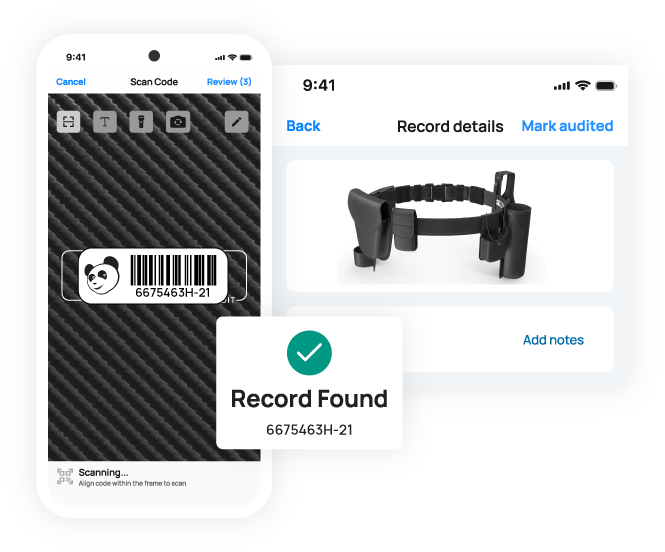
Fast Barcode and QR Scanning
Mobile scanning replaces manual entry, reduces errors, and ensures adoption, even during shift changes or emergency response.
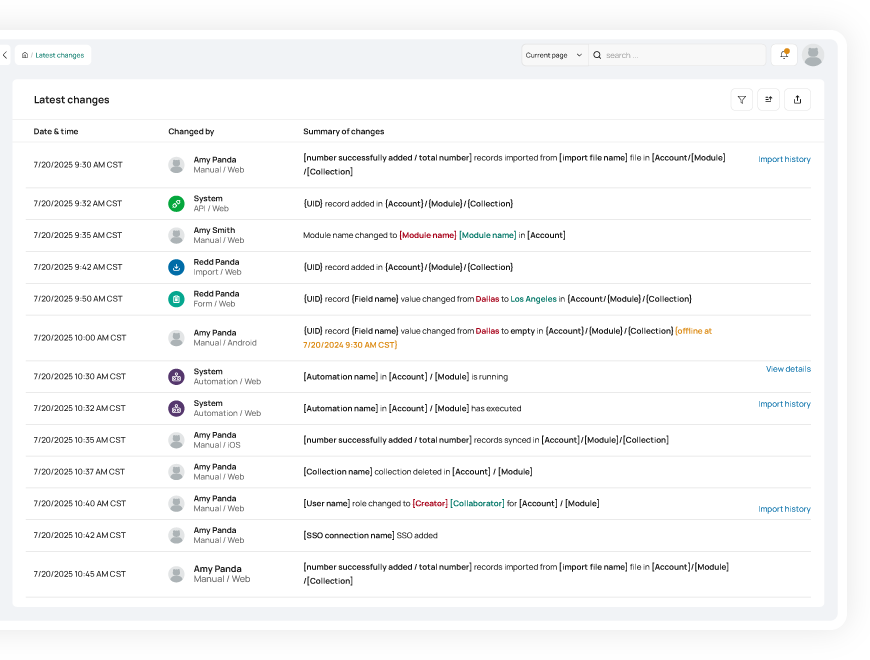
Complete Chain of Custody History
Every asset record maintains a full lifecycle log: assignments, returns, inspections, maintenance, and disposals. Ambiguity is eliminated, and accountability becomes indisputable.
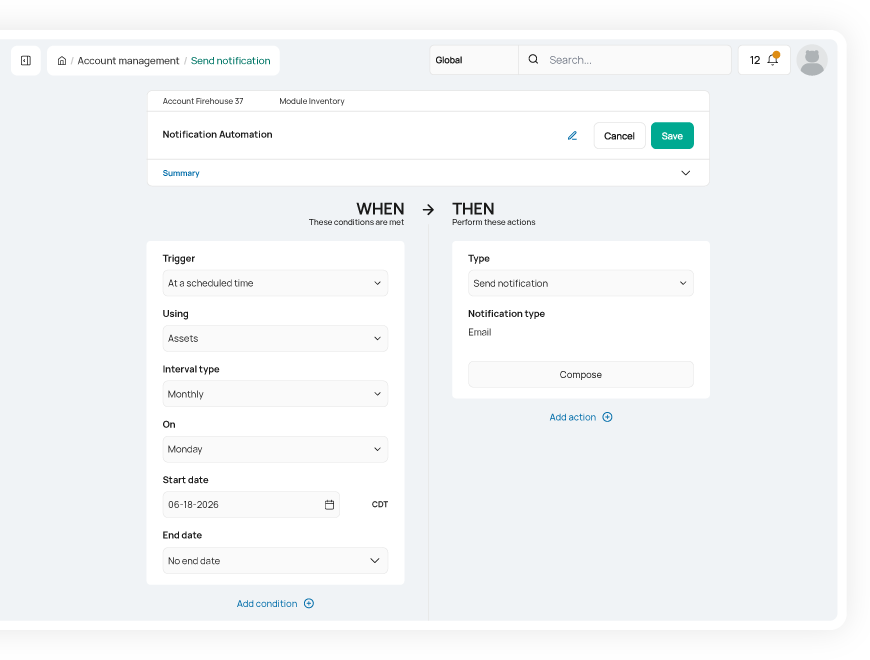
Automated Alerts for Maintenance and Expiration
Inspection schedules, service intervals, and expiration dates are monitored automatically. Alerts ensure no SCBA cylinder, turnout coat, or calibrated tool slips out of compliance.
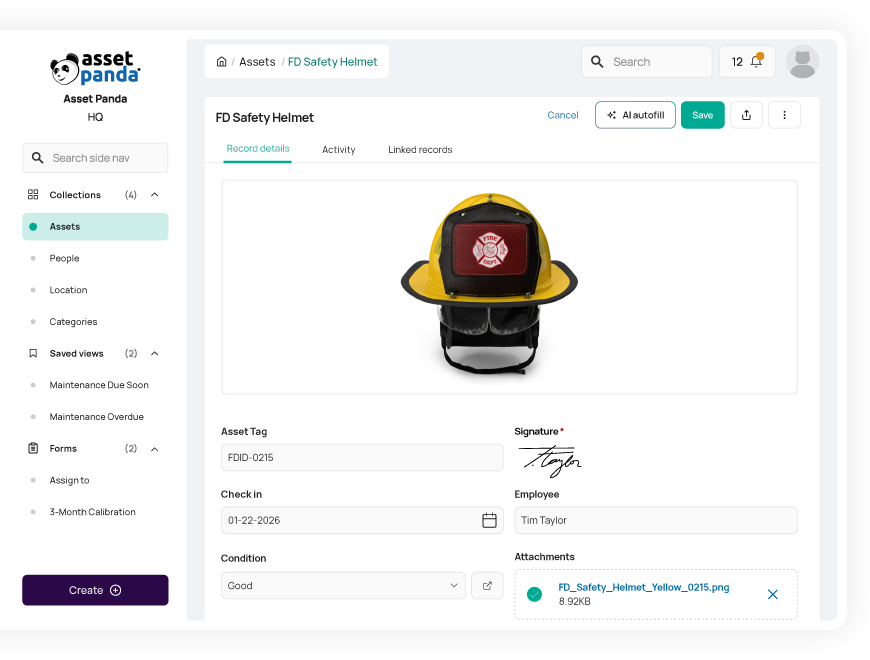
Digital Signatures and Photo Capture
Electronic signatures confirm custody transfers. Photos document condition at check-in and check-out, supporting investigations, insurance claims, and dispute resolution.
Safety and Compliance Standards Supported
Mission‑critical equipment tracking commonly supports compliance with:
- NFPA 1851 (Turnout gear inspection and lifecycle management)
- OSHA equipment inspection requirements
- Law enforcement chain‑of‑custody best practices
- Municipal audit and public accountability standards
- Manufacturer service‑life and warranty requirements
Use Case Spotlights: Readiness Across Departments
Law Enforcement
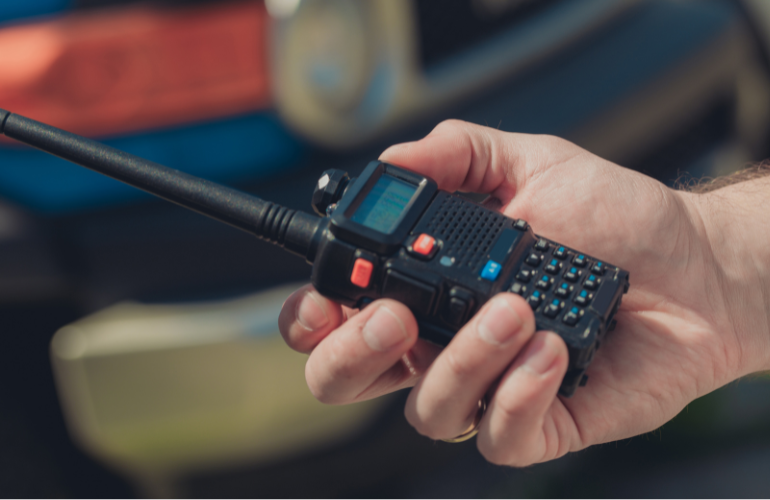
Track firearms, radios, body cameras, and evidence with a complete custody history. Quickly verify who last possessed an item, when it was inspected, and where it is assigned now.
Fire and EMS Departments
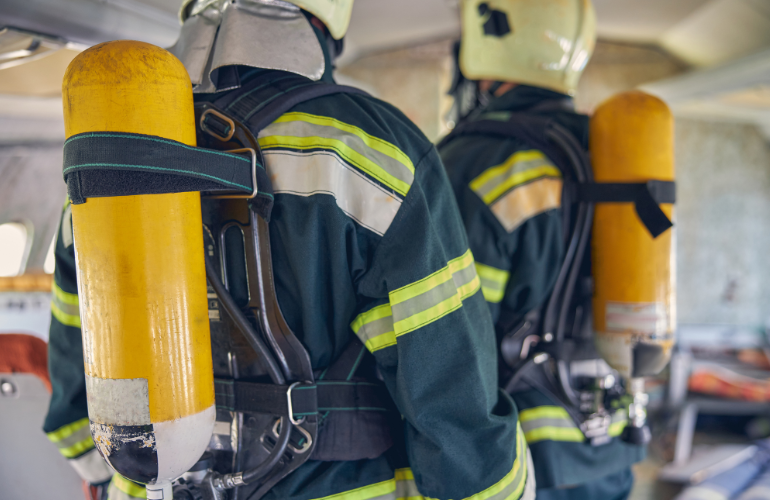
Ensure SCBA cylinders, turnout gear, and rescue tools are inspected, compliant, and ready. Automated alerts prevent issuing expired or unsafe equipment and provide defensible compliance records.
Public Works and Municipal Operations
Control shared tools, generators, and specialty equipment across crews and job sites. Reduce loss, prevent double‑booking, and keep projects moving without unnecessary replacement costs.
The New Standard for Government Equipment Security
Modern government agencies cannot afford uncertainty around life‑safety equipment. By moving beyond spreadsheets and paper logs, agencies gain total visibility, defensible compliance, and operational readiness.
With Asset Panda, mission‑critical equipment is secured through no‑code configuration, mobile workflows, and immutable audit trails—without large IT projects or long deployment cycles.
Take Control of Every Critical Asset
Stop wondering where your most important equipment is or whether it’s safe to use. Schedule a personalized demo to see how Asset Panda establishes a complete, unbreakable chain of custody for mission‑critical government assets.
Frequently asked questions
What is mission-critical asset management?
It is the structured tracking of high-liability equipment to ensure accountability, safety, and compliance.
Can Asset Panda track firearms and radios?
Yes, Asset Panda can securely track all the assets that law enforcement relies on and maintain an immutable history log for each item.
Does Asset Panda support inspection tracking?
Yes. Agencies can schedule inspections, attach forms, and maintain historical documentation in Asset Panda.
Can we manage multiple stations or facilities in one Asset Panda account?
Yes! Asset Panda supports multi-location tracking within a structured hierarchy and enables you to assign custom user permissions for each department to increase security.
How does this work for assets assigned to vehicles instead of people?
Assets can be assigned to vehicles, stations, or job sites with the same custody and history tracking.
Can alerts differ by equipment type?
Yes. Inspection and expiration rules are configured by asset category.
How should consumable items be handled?
Consumables are tracked by quantity and thresholds, while accountable items maintain a custody and history log.
Learn more about securing your mission-critical equipment

Learn more from a solution specialist
Schedule a demo to find out how you can transform your workflows with Asset Panda Pro
Contact our team at (888) 928-6112