
Asset Panda vs TrackVia: Asset Tracking & Management Comparison
Compare Asset Panda
Summary
In this Asset Panda vs TrackVia guide, we compare a purpose-built asset management platform with a low-code workflow and database platform. Asset Panda is designed specifically for tracking physical and digital assets across their full lifecycle, including inventory audits, barcode scanning, check-in/check-out, reservations, depreciation, mobile field operations, and compliance reporting. TrackVia provides a flexible low-code environment for building custom operational apps, but requires significant configuration to replicate asset management functionality. For organizations that need scalable, auditable asset tracking without heavy custom development, Asset Panda delivers faster time-to-value and lower long-term complexity.
| Feature | Asset Panda | TrackVia |
| Core focus | Asset lifecycle | Low-code application development |
| Mobile capabilities | Native audits, barcode scanning, offline mode, inspections | Limited |
| Reporting | Dashboards, grouped views, depreciation, exports | Not native, dashboards can be custom-built |
| Best for | Multi-department tracking | Low-code workflows and application development |
By the end of this comparison guide, you can expect to learn:
- Whether TrackVia's low-code solution covers all asset tracking needs
- Whether Asset Panda can effectively support custom asset tracking
- How the two solutions differ in asset management features, automations, and reporting
- Which tool scales better across departments
- How each supports the full asset lifecycle vs general workflow management
TrackVia Overview
TrackVia is a cloud-based low-code application platform designed to help organizations build custom workflows and operational apps without heavy development.
What TrackVia Is Best At
- Custom operational workflows
- Low-code application development
- Data capture and process automation
- Integrations with external systems
- Custom dashboards and reports
How TrackVia Is Used for Asset Tracking
- Building custom asset databases
- Designing bespoke asset workflows
- Creating tailored forms and reports
Structural Limitation
TrackVia is not asset-specific. Asset tracking workflows, audits, barcode logic, availability, and depreciation must be custom-designed, maintained, and governed internally.
Asset Panda Overview
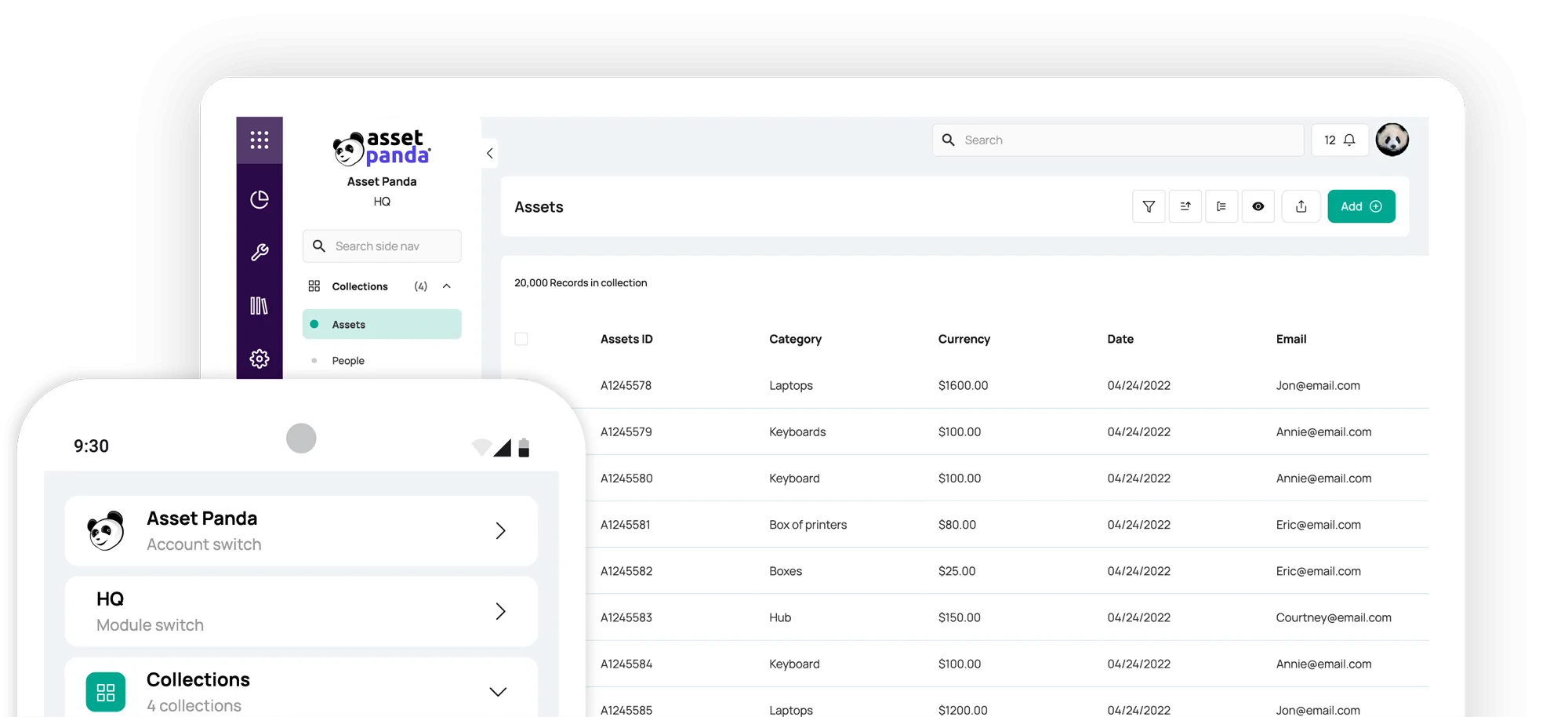
Asset Panda is a no-code, dedicated asset tracking and asset management platform designed to manage assets across their entire lifecycle. Asset Panda supports a wide array of industries and use cases with features like:
- Modular, multi-tenant architecture
- Structured asset data models with enforced schemas
- Proprietary Ursa AI assistant
- Native iOS and Android apps with offline capability
- Barcode scanning and barcode label generation
- Inventory audits and asset verification
- Check-in / check-out and reservations
- Automation for asset-driven workflows
- Dashboards, reporting, and depreciation tracking
- Enterprise-grade permissions and governance
- Integrations with IT, finance, and operations systems
- Open API for extensibility
Asset Panda is built to deliver asset accuracy without custom development.
| Feature | Asset Panda | TrackVia |
| Built specifically for asset management | Yes | No |
| End-to-end lifecycle tracking | Native | Custom-built |
| Barcode scanning | Native | Limited |
| Barcode label creation & printing | Native | Not available |
| Mobile app with offline mode | Yes | Limited |
| Check-in/check-out | Native | Custom |
| Reservations & availability tracking | Native | Not native |
| Depreciation tracking | Built-in | Not supported |
| Asset-centric reporting | Native | Custom |
| Role-based permissions | Granular | Limited |
| Compliance & audit trails | Native | Manual |
| Open API | Yes | Yes |
Deep-Dive Comparisons
Asset Data Model & Governance
TrackVia
- Data tables defined by users
- No native asset schema or lifecycle enforcement
- Governance depends on internal design
Asset Panda
- Assets are first-class system records
- Enforced schemas with conditional logic
- Persistent asset history across lifecycle stages
Advantage: Asset Panda
Inventory Audits & Verification
TrackVia
- No built-in audit workflows
- Verification logic must be custom-built
- Native audit workflows
- Barcode-based verification
- Offline audit support
- Exportable compliance evidence
Advantage: Asset Panda
Mobile & Field Operations
TrackVia
- Mobile data capture supported
- Limited offline capability
- Not optimized for inventory operations
Asset Panda
- Designed for mobile asset workflows
- Offline scanning and updates
- Barcode-first UX for inventory tasks
Advantage: Asset Panda
Asset Availability & Usage Tracking
TrackVia
- Availability logic must be custom-built
- No native reservation engine
Asset Panda
- Native check-in / check-out
- Reservation-based availability
- Automated overdue handling
Advantage: Asset Panda
Reporting, Compliance & Lifecycle Insights
TrackVia
- Custom dashboards possible
- Asset reporting depends on schema design
- No native depreciation or lifecycle reporting
Asset Panda
- Asset-centric dashboards and reports
- Depreciation and lifecycle reporting
- Built-in audit trails
Advantage: Asset Panda
Customization vs Time to Value
TrackVia
- High flexibility
- Requires design, testing, and ongoing maintenance
- Higher long-term complexity
Asset Panda
- Purpose-built workflows out of the box
- Configuration, not development
- Faster implementation for asset use cases
Advantage: Asset Panda for asset managers
Use Cases Comparison
Choose TrackVia If You Need:
- Highly customized operational apps
- Unique workflows unrelated to asset lifecycle
- Low-code process automation
- Custom internal tooling
Choose Asset Panda If You Need:
- End-to-end asset lifecycle management
- Inventory audits and reconciliation
- Barcode-driven workflows
- Asset availability and reservations
- Depreciation and financial reporting
- Scalable governance without custom code
Pros & Cons of Each Solution
TrackVia
Pros
- Highly flexible low-code platform
- Custom workflow design
- Integrates with many systems
Cons
- Not designed for asset lifecycle management
- Requires custom development for core asset features
- Higher maintenance burden
- Longer time to value for asset teams
Asset Panda
Pros
- Purpose-built for asset management
- Native audits, barcodes, reservations, and depreciation
- Strong mobile and offline workflows
- Enterprise-grade governance and integrations
Cons
- Focused on asset management use cases
- Less suitable for non-asset workflows
Final Recommendation
If your organization needs custom operational workflows, TrackVia may be a fit.
If you need accurate, auditable, and scalable asset tracking without heavy customization, Asset Panda is the better long-term solution.
See how Asset Panda simplifies asset tracking, audits, and lifecycle management.
Frequently asked questions
Is TrackVia an asset management platform?
TrackVia is a low-code workflow and application development platform, not a purpose-built asset management system.
Can TrackVia be used for asset tracking?
TrackVia can be configured for asset tracking, but core asset management features such as audits, barcodes, availability tracking, and depreciation must be custom-built.
What is the difference between low-code platforms and asset management software?
Low-code platforms provide flexibility to build workflows. Asset management software provides predefined structures and workflows optimized for managing physical assets.
Why choose Asset Panda over TrackVia?
Asset Panda delivers asset management functionality out of the box, reducing the need for custom development and ongoing maintenance.
Learn more from a solution specialist
Schedule a demo to find out how you can transform your workflows with Asset Panda Pro
Contact our team at (888) 928-6112