7 Benefits of Implementing an IT Inventory Management System
Blog

Table of Contents
Take Control of Your Assets
A personalized demo is just one click away.
In today's interconnected world, technology assets are indispensable in the modern workplace. But between computers, laptops, printers, server racks, and the software that makes it all functional, it takes a lot of technology to perform an organization's day-to-day tasks. Altogether, this technology fleet comprises one of your organization's largest investments—which is why tracking it with an IT inventory management system is non-negotiable.
What is an IT inventory system? It’s a process for tracking, organizing, and managing IT assets, typically by using a specialized software solution. If you are only tracking your IT assets with an Excel spreadsheet, or not at all, there are multiple immediate and long-term benefits to switching to an IT management system as soon as possible. Read on to learn about the seven key benefits that come with implementing an IT inventory management system.
Key takeaways
- Trackable IT assets include tangible hardware (like laptops and server racks) as well as software.
- IT assets are valuable in three ways: their upfront cost, their utility, and their sensitive data.
- An IT inventory management system is a software-based process for tracking, organizing, and managing IT assets.
- Switching to an IT inventory management system results in 7 immediate operational benefits.
7 Reasons to Switch to an IT Inventory Management System
Your IT assets are one of your organization’s most valuable investments for three reasons. First, they often involve a big cost upfront. Second, they are so essential to most operational tasks that it can be a challenge to work efficiently without them. Third, they house your organization’s most sensitive data: the processes, analytics, and passwords that make your business function on a daily basis. Add in the fact that items like laptops change hands between employees and are frequently on the move between different offices and locations, and you can see why these assets can be particularly tricky to manage.
A software-based IT inventory management system resolves this problem by establishing a formal process for adding IT assets to your organization, assigning them to employees, and scheduling them for repairs—all while reducing the risk of error that would come from giving these tasks to people. Here are seven of the most noticeable benefits your organization will experience.
1. Faster Deployment
Computers aren’t immediately ready to enter your organization’s technology fleet. Your IT department spends a lot of time securing them, loading them with proprietary software, and delivering them to employees. With an IT inventory system, you can automate that process by creating a routine installation process, assigning machines to individuals through the system, and making it possible to deliver security and performance updates remotely, so your team experiences more uptime without the hassle.
2. More Efficient Utilization
Your organization’s devices exist physically in multiple locations, but an IT inventory system offers a big-picture look at your technology fleet in one central place. It lets you see at a glimpse how many laptops your organization has, and whether all of them are currently assigned to employees or if there are extras. For example, if one office has a surplus and another has a shortage, this system will quickly reveal that discrepancy to your IT department before it makes a request to order more.
3. Full Lifecycle Management
An IT management system tracks and manages your technology assets from the moment they enter your organization. That means you can use it to see an asset’s purchase price, deployment date, who it has previously been assigned to, how many times it has been repaired, and whether it is still under warranty. You can find out when an asset has scheduled maintenance coming up as well as how long the asset itself is expected to last before it needs to be retired and replaced, giving you time to develop a disposition plan.
4. Unified Tech Stack
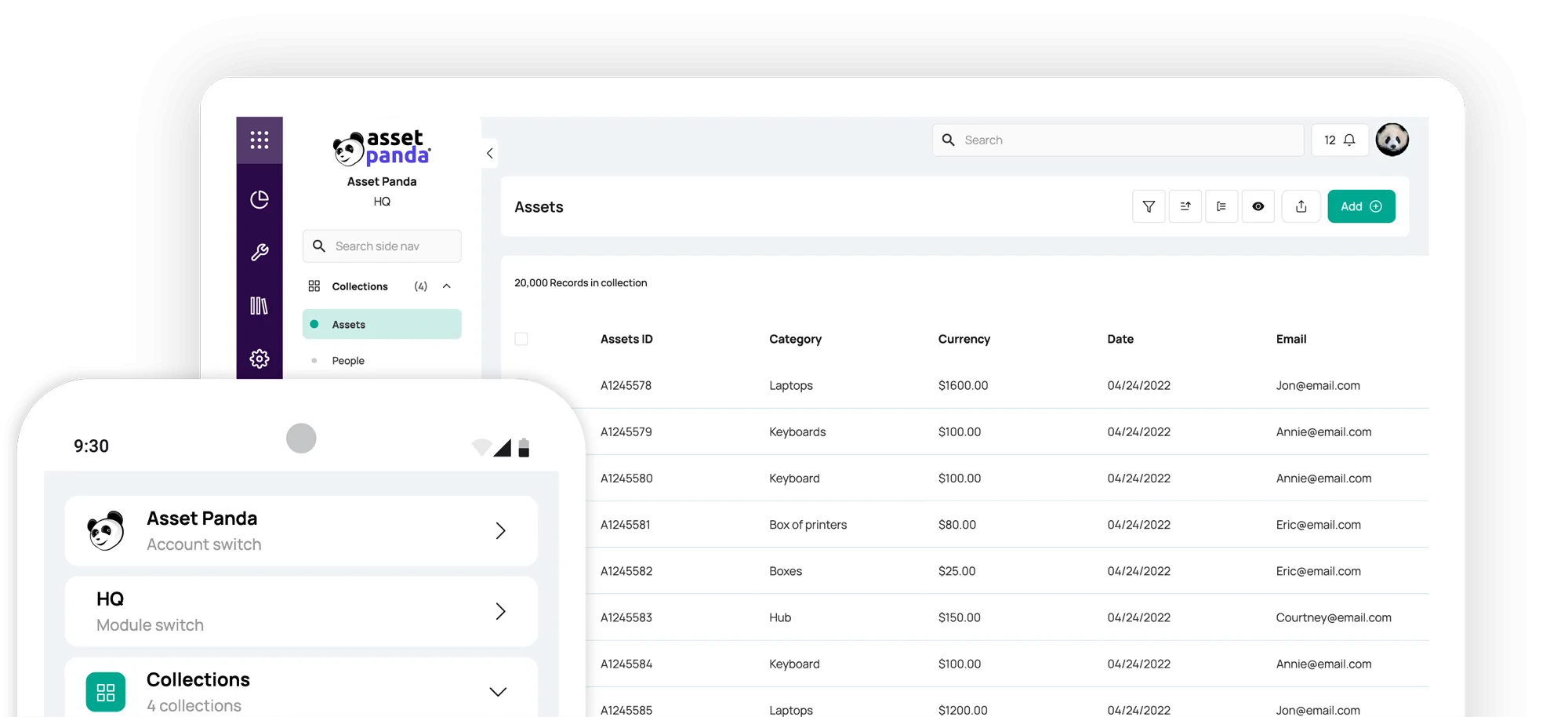
If your organization already uses software to manage internal help desk ticketing, establish an employee directory, or conduct financial reporting for taxes, choose a system like Asset Panda that is designed to integrate with the software your team already uses. A software solution for managing IT inventory can seamlessly transmit relevant information to other applications in your tech stack, including warranties, depreciation numbers, or anything else about your technology fleet that makes your data more accurate.
5. Better Accountability
You can use an IT inventory system to keep tabs on where any of your technology assets are in real time. You can see at a glance who the device is assigned to, what state of repair it is in, where it is supposed to be located, and where it is actually located. That way, if a device is lost, you can increase your chances of recovering it quickly, and if it was stolen or damaged, you can hold the right person accountable.
6. Improved Budgeting and Forecasting
When you use an IT inventory system for more efficient asset utilization and full lifecycle management, financial benefits will naturally follow. Once you are tracking an asset’s full lifecycle, you can better predict its average useful life. And once you have a clear picture of where your technology assets are located and how they are being operated, you’ll not only be able to make more accurate forecasts of when they’ll need to be replaced, you’ll also have the data to support this need and secure the necessary budget.
7. Enhanced Security and Compliance
Automate security and compliance by tracking your organization’s technology assets in one centralized inventory system where you can proactively manage vulnerabilities, outdated systems, and warranty information. Full visibility into your fleet means you can identify and eliminate “ghost assets,” which may be in use without the IT department’s knowledge or approval. Accurate records also facilitate IT asset audits, the better to maintain organizational compliance during tax time.
IT Inventory Management with Asset Panda
Your entire organization benefits from an IT inventory management system, so there’s no reason to delay in implementing one! These seven reasons above touch on each aspect of inventory management that your IT department is already conducting, just not as efficiently as they could with a software solution. An inventory solution automates many of these processes, freeing up your IT department so they can work on more critical tasks like maintaining maximum uptime for your organization’s computers.
The idea of switching to a software solution from a more manual process can be intimidating. That's why we've developed a list of IT asset management best practices to help demystify some of your worries. The first and most important step? Choose a solution you can trust. Asset Panda is designed to seamlessly accomplish all the tasks described in the seven benefits above in a user-friendly interface with no lengthy training module required. What’s more, Asset Panda can be customized to work with your current tech stack on the hardware your employees are already using. With Asset Panda, transferring to an IT inventory management system is easier than you think, so you can reap the benefits of your implementation from Day One.
Take Control of Your Assets
A personalized demo is just one click away.
Frequently Asked Questions
What are the 4 types of inventory management systems?
Four of the main ways to manage inventory are just-in-time management (JIT), materials requirement planning (MRP), economic order quantity (EOQ), and days sales of inventory (DSI). Each of these management systems has its own pros and cons.
What is the 80/20 rule for inventory?
Sometimes called the Pareto Principle, the 80/20 rule posits that 20% of your organization’s inventory generates 80% of your profits. An asset management system can help you identify which of your assets comprise that 20% so you can allocate your budget for that asset type accordingly.
What data points should be tracked in an IT inventory system?
Your IT inventory system should be capable of tracking each IT asset’s location, assigned users, repair history, upcoming maintenance schedule, warranty information, documentation for internal use cases, performance analytics overtime, compliance level, lifecycle stage, and expected disposition date. A good system should also be capable of including custom data points according to your needs.
What are the key differences between cloud-based and on-premises IT inventory management systems?
Cloud-based IT inventory management systems host software remotely on an external provider, who is in charge of managing security, upgrades, and 24-7 access for a subscription fee. On-premises IT inventory management systems store data on local hardware and the organization itself is responsible for applying security patches and maintaining uptime. Both systems have their pros and cons. For example, a cloud-based system provides greater scalability, but an on-premises system can provide offline access.
Related News & Press



Learn more from a solution specialist
Schedule a demo to find out how you can transform your workflows with Asset Panda Pro
Contact our team at (888) 928-6112