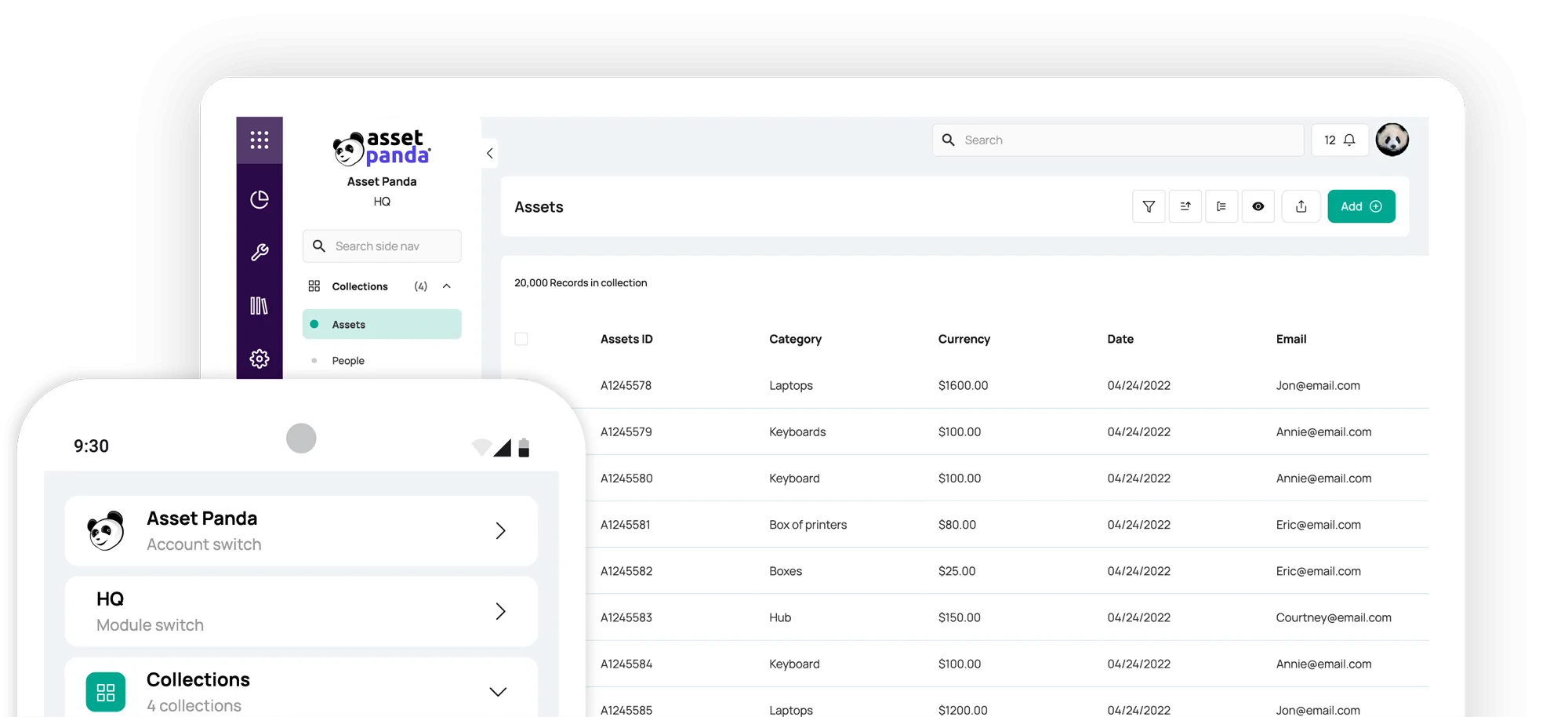

IT Device Management Tools Comparison (2026 Guide)
Compare Asset Panda

Table of Contents
Take Control of Your Assets
A personalized demo is just one click away.
Summary
This guide compares leading IT device management tools—including Intune, Jamf Pro, Kandji, Meraki Systems Manager, ChromeOS Management—alongside Asset Panda, which manages the physical lifecycle of IT assets.
MDM/UEM platforms handle digital policy management, compliance, configuration, and security. Asset Panda handles the physical asset lifecycle, including assignments, check-in/check-out, audits, inspections, reservations, and multi-team workflows.
Most IT teams require both:
- MDM/UEM for device configuration & security
- Asset Panda for physical tracking & lifecycle workflows
This guide explains how these solutions complement—and differ from—each other.
| Platform | Category | Focus |
| Intune | MDM/UEM | Windows ecosystems |
| Jamf Pro | MDM | Apple ecosystems |
| Kandji | MDM | Automated Apple management |
| Meraki SM | MDM | Multi-OS cloud management |
| Asset Panda | Asset lifecycle | Physical workflows |
In this IT device management tool comparison guide, you'll learn about:
- The difference between MDM/UEM and asset management
- Whether an MDM can replace asset management software (it cannot)
- What workflows require lifecycle tracking beyond digital controls
- How to support IT, operations, and field teams in a unified system
- Which platforms complement each other
What IT Teams Need in Device Management
A. From MDM/UEM Platforms:
- Remote wipe, lock, reset
- App deployment & patching
- OS & policy enforcement
- Compliance & configuration
- Real-time device posture visibility
B. From Asset Management Platforms:
- Lifecycle tracking: procurement → assignment → return → retirement
- Check-in/check-out
- Inventory accuracy & audits
- Break/fix workflows
- Reservations for shared devices
- Mobile scanning & field updates
- Reporting for finance, operations & compliance
These two tool categories solve different problems but work best together.
Top IT Device Management Tools Compared (2026)
1. Microsoft Intune — Best for Windows-Centric Device Environments
Best For: Windows-heavy enterprises and organizations using Microsoft 365.
Strengths:
- Deep OS-level policy enforcement
- App deployment, patching, compliance
- Strong identity integration
Limitations:
- Less visibility into non-Windows devices
- Not designed for physical asset management workflows
2. Jamf Pro — Best Apple Device Management Platform
Best For: Apple-first IT environments (education, design, production teams).
Strengths:
- Industry-leading macOS/iOS management
- Remote commands, patching, profiles
- Enterprise Apple compliance
Limitations:
- Apple-only
- Not built for physical asset lifecycle workflows
3. Kandji — Best Automated Apple MDM/UEM
Best For: IT teams wanting zero-touch automation.
Strengths:
- Auto-remediation
- Zero-touch deployment
- Clean admin UI
Limitations:
- Apple ecosystem focus
4. Cisco Meraki Systems Manager — Best Multi-OS Cloud MDM
Best For: Organizations with mixed device environments.
Strengths:
- Supports Windows, macOS, iOS, Android, ChromeOS
- Easy cloud deployment
- Centralized console
Limitations:
- Less granular control vs. Intune/Jamf
5. ChromeOS Management Console — Best for Chromebook Fleets
Best For: K–12 schools and organizations with Chromebook-heavy environments.
Strengths:
- Centralized ChromeOS policy management
- Easy user-based device controls
Limitations:
- ChromeOS-only
- Not for physical asset workflows
6. Asset Panda — Best for Physical IT Asset Lifecycle Management
Best For: IT teams needing assignment tracking, audits, inspections, and multi-team workflows.
Strengths:
- Check-in/check-out workflows
- Reservations
- Inspections & audits
- Mobile scanning, offline mode, attachments
- Automation rules
- Reporting dashboards
- Integrations with identity, ITSM, MDM, finance, and SFTP
Limitations:
- Not an MDM (but is the ideal complement to one)
| Platform | Category | Best For | Physical Asset Lifecycle | Digital Security/Config |
| Intune | MDM/UEM | Windows IT teams | No | Yes |
| Jamf Pro | MDM | Apple ecosystems | No | Yes |
| Kandji | MDM | Automated Apple management | No | Yes |
| Meraki SM | MDM | Mixed OS fleets | No | Yes |
| ChromeOS Console | MDM | Chromebooks | No | Yes |
| Asset Panda | Asset Management | IT & operations | Yes | No |
Do You Need MDM, ITAM, or Both?
Choose an MDM/UEM (Intune, Jamf, Kandji, Meraki, ChromeOS) if you need:
- Device compliance
- OS and policy management
- Remote commands
- Patch + app deployment
Choose Asset Panda if you need:
- Tracking physical hardware
- Assignment management
- Check-outs & reservations
- Inspections & audits
- Barcode scanning
- Lifecycle automation
- Reporting + export automation
Most modern IT teams need both. MDM handles digital governance, while Asset Panda handles physical lifecycle management.
Final Recommendation
MDM tools are essential for securing and managing device configurations, but they do not replace asset lifecycle management. Organizations seeking full visibility — from procurement to retirement — need a dedicated asset management platform like Asset Panda to complement their MDM stack.
Together, they offer:
- Stronger compliance
- Accurate inventory
- Complete lifecycle visibility
- Better governance
- Reduced operational risk
Asset Panda fills the physical asset tracking gap that MDM tools cannot cover.
Learn how Asset Panda's highly customizable platform can optimize your IT asset tracking
Take Control of Your Assets
A personalized demo is just one click away.
Related News & Press



Learn more from a solution specialist
Schedule a demo to find out how you can transform your workflows with Asset Panda Pro
Contact our team at (888) 928-6112