
The Hidden Costs of Managing Data Across Multiple Systems
Blog

Table of Contents
Take Control of Your Assets
A personalized demo is just one click away.
If your supervisor asked you to pull up a report of your department’s IT assets, how quickly could you produce that? Would you have that data readily available, or would you need 15-30 minutes to reconcile it across one or multiple manual systems?
If your answer is the latter, you’re not alone. For public sector agencies in the United States, managing data across multiple systems (e.g., spreadsheets and ERP modules) has become the norm. But what feels like a routine process is actually hiding significant operational costs, audit risks, and inefficiencies that compound over time.
In this article, we’ll discuss the risks of managing your asset data across multiple systems and how a centralized solution can save you time and boost compliance.
What Does Managing Data Across Multiple Systems Really Mean?
Managing data across multiple systems means that an organization’s asset information is spread across two or more disconnected platforms, such as spreadsheets, ERP modules, and standalone databases, rather than being housed in a unified system of record.
Most government teams don’t intentionally design fragmented asset management programs—they simply become that way over time as one spreadsheet or legacy system stops meeting all of their needs. As asset inventories grow, or old tracking methods fall behind, adding another Excel file or ERP module feels like a fast and easy solution in the moment. The result might look like:
- Managing finance reports and asset depreciation in an ERP system
- Tracking IT assets, equipment, and vehicles in their own respective spreadsheets
- Managing work orders in a specialized system
Even when each tracking method effectively serves its purpose, a piecemeal system makes it difficult to get a holistic view of your asset inventory come audit time.
The Hidden Costs of Managing Data Across Multiple Systems
Even if a multi-pronged asset management approach seems to work for your internal team, duplicate workflows and data discrepancies are inevitable. Over time, these can create several costly problems. According to an Asana study, workers spend an average of 257 hours annually navigating inefficient processes. This adds up to roughly 6 work weeks per year.
1. Time Lost to Repetitive Navigation
Legacy systems often require navigating multiple menus just to find one piece of information. When data is split across systems:
- Users repeat the same steps across platforms
- Simple queries become multi-step workflows
- Teams spend minutes (or longer) per lookup
The Impact: What should take seconds turns into hours of lost productivity each week.
2. Data Inconsistency and Reconciliation Work
When asset data lives in multiple systems, field names may differ, especially depending on the customizability of different platforms. This makes combining data from various sources even more difficult, as you need to match up the inconsistent fields to create a cohesive report. This could mean a lot of back-and-forth between different departments as they work to match up the data, or inaccurate reports altogether if fields aren’t correctly translated.
Not to mention, this kind of manual data reconciliation is tedious and time-consuming. Compiling data from multiple systems can take hours or days—time that your team could be spending on impactful work that serves your constituents.
The Impact: Focus shifts from using asset data and making informed decisions to fixing data.
3. Increased Audit Risk
For public sector agencies, this is where the stakes get higher. Proper asset management doesn’t just impact your day-to-day operations; your compliance and future funding depend on the accuracy of your data.
In order to comply with GASB 34, organizations must report on all their capital assets, infrastructure, and asset depreciation. When this data is fragmented:
- There is no clear system of record
- Audit trails are incomplete or contain inaccurate data
- Supporting documentation is scattered
The Impact: Long-winded audit processes and a higher likelihood of finding discrepancies, which could make or break your compliance and ability to secure future funding.
Why Do Government Agencies Struggle to Consolidate Asset Data?
It’s easy to assume that better processes or more training will fix these issues, but that’s rarely the case.
The real problem is structural.
If your team maintains spreadsheets alongside official systems, it’s not because they prefer Excel—it’s because the system isn’t meeting their needs.
Root causes include:
- Legacy ERP systems built for finance, not operations
- Menu-driven interfaces that slow users down
- Too many fields, many of which aren’t relevant
- Departmental silos with separate tools
In other words, your team adapts to changes as they come, but your system doesn’t.
How Much Time Do Government Agencies Lose to Fragmented Data Systems?
Individually, each inefficiency feels minor. At scale, however, the impact is significant.
For example, say you have 10 employees losing around 15 minutes performing duplicate workflows or struggling to find where asset records are located. Even this small amount of time lost on a daily basis adds up to 600+ hours per year lost to repetitive navigation.
Now add larger, compliance-focused tasks like audit preparation and spending reports, and the cost becomes much larger—and harder to ignore.
What Should Government Asset Management Look Like?
Better data management for government agencies starts with consolidating asset information into a single, centralized platform that serves as the authoritative system of record. This eliminates duplicate data entry, reduces reconciliation time, and provides a consistent audit trail across all departments. Key capabilities to look for include role-based access controls, automated depreciation calculations, lifecycle tracking, and built-in reporting that aligns with GASB and federal compliance requirements.
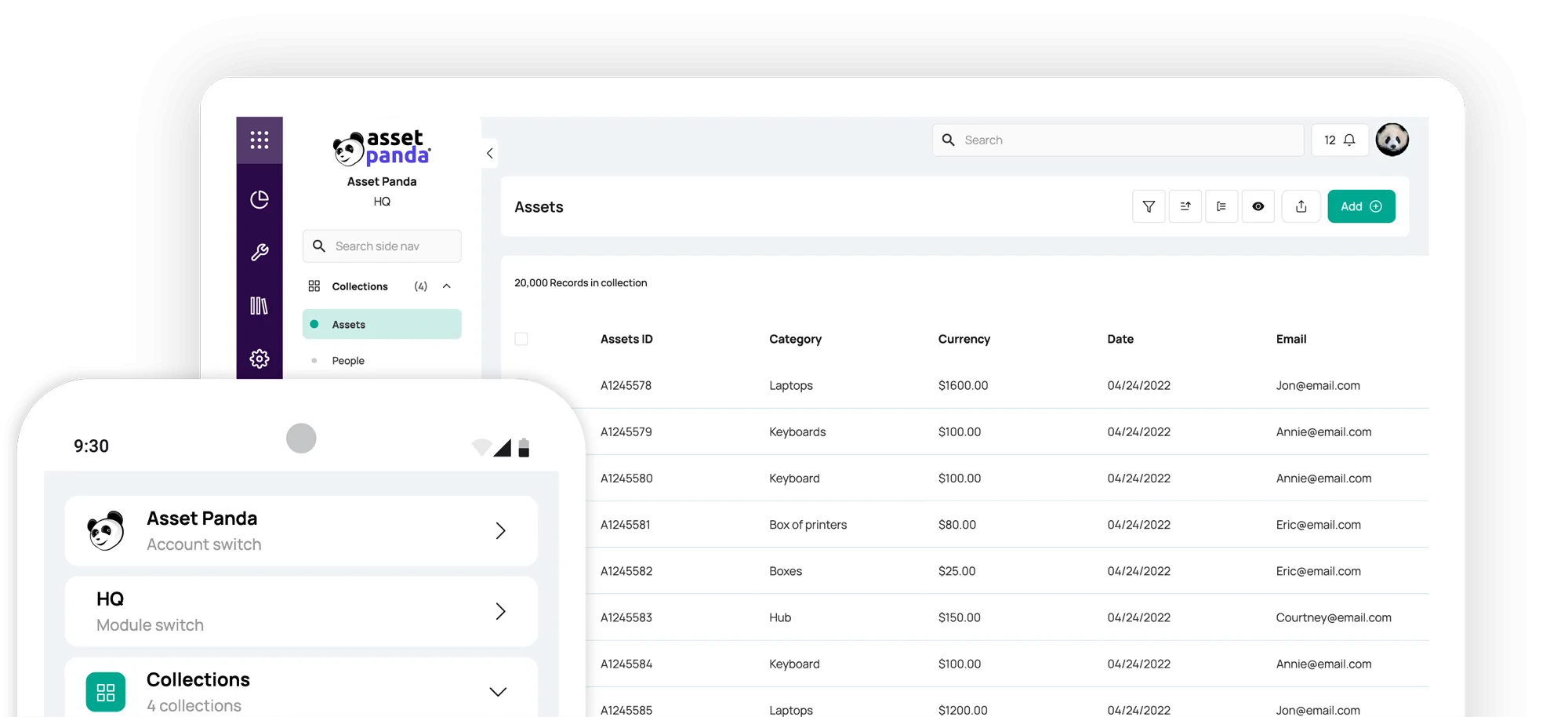
Centralized solutions like Asset Panda can serve as the system of record for all your agency’s assets and reports. With a modern asset management solution, state and local governments get:
- A Single Source of Truth: All asset data lives in one system—no duplication, no confusion.
- Search-First Access: Instead of navigating complex menus, users can instantly find what they need through search.
- Bulk Operations: Tasks like updates or reassignments can happen in batches, not one asset at a time.
- Context-Aware Data: Users only see fields relevant to their role or asset type, reducing errors and friction.
When government agencies have seamless access to their asset data in one convenient place, everyone is on the same page. This streamlines communication across departments, speeds up workflows, and ensures accurate reporting for audits.
Reduce Time Waste and Compliance Risk with a Modern Solution
Managing data across multiple systems isn’t just inefficient—it’s risky. Data can easily be entered in the wrong place or lost altogether when your asset tracking program is fragmented. Trying to reconcile your data come audit time can be an extremely tedious process, and you may still be left with inconsistent records that put your compliance at risk.
That’s where a modern asset management solution comes in. With a centralized platform, your team can manage all assets, workflows, and reports in one place—not across multiple spreadsheets and systems.
Asset Panda Pro is the choice solution for numerous state and local government agencies to manage their vital asset data. Our multi-tenant platform allows organizations to manage different branches or departments in unique accounts under one secure umbrella. Track the entire asset lifecycle for clear audit trails and automatically calculate depreciation using one of five methods. With our proprietary Ursa AI, your team can reduce manual work and save time performing routine workflows and generating reports.
Want to see how Asset Panda Pro can help your agency avoid time waste and compliance risk? Start your 7-day free trial today.
Take Control of Your Assets
A personalized demo is just one click away.
Frequently Asked Questions
How does data fragmentation affect government audit compliance?
Fragmented asset data leads to inefficiencies, inconsistent records, increased audit risk, and slower decision-making due to the lack of a single, reliable source of truth. This increases the likelihood of audit findings, which can trigger corrective action plans and put future federal or state grant funding at risk.
What should government agencies look for in a centralized asset management platform?
Government agencies should seek asset management platforms that offer a single system of record for all asset types, role-based access controls, automated depreciation calculations using standard methods (straight-line, declining balance, etc.), full lifecycle tracking from acquisition to disposal, and built-in reporting aligned with GASB and federal compliance standards. Mobile accessibility and barcode or RFID scanning capabilities are also important for agencies where field operations are prevalent.
How do legacy ERP systems contribute to data silos in government?
Legacy ERP systems are typically designed around financial reporting workflows, not day-to-day asset operations. Their rigid, menu-driven interfaces and limited customization often force departments to create supplemental spreadsheets for tracking information the ERP cannot easily accommodate, such as equipment condition, maintenance schedules, or location changes. Over time, these workarounds create numerous data sources and make it difficult to build reports or understand which asset data is most current.
How much time can agencies save by consolidating asset data into one system?
The time savings depend on the size of the organization and the degree of fragmentation, but even a small team of 10 employees losing 15 minutes per day to duplicate workflows and cross-system lookups loses over 600 hours per year. Larger agencies with audit preparation, compliance reporting, and interdepartmental coordination tasks can lose thousands of hours annually.
Related Resources



Learn more from a solution specialist
Schedule a demo to find out how you can transform your workflows with Asset Panda Pro
Contact our team at (888) 928-6112