
From Complicated to Clear: A Practical Guide to Kitting and Fixed Asset Systems
Blog
Table of Contents
Take Control of Your Assets
A personalized demo is just one click away.
If you have ever tried to track a five-piece AV rig as one line item, you already know the problem. The kit moves as a unit, but the parts wear out, get swapped, and travel between rooms on their own schedule. Operations teams new to formal kitting often discover this the hard way: they create one record, lose sight of the components, and then spend a Friday afternoon hunting for a missing receiver.
This guide walks through a clear, repeatable approach to defining, building, and maintaining asset kits, based on patterns we have seen in customer interviews with teams managing display setups, conference room gear, and AV equipment. The workflow is deliberately practical. It assumes you want kits that work today, not kits that depend on a feature still being reimagined.
Key Summary
- Asset kitting groups multi-component equipment into a single bundle while preserving individual asset records for each part.
- Common kit candidates include splash TVs, AV equipment, and conference room setups, where parts move, fail, or get replaced independently.
- A kit of 10 items still requires 10 individual asset records to be created first; the kit layer sits on top of those records, it does not replace them.
- Location and sublocation tracking (building, conference room) is where most kit workflows either prove their value or fall apart.
- Customer interviews surface a consistent pain: dedicated kitting tools often complicate tracking rather than simplify it, which is why a disciplined manual workflow is the reliable path right now.
What Is Asset Kitting, In Plain Language?
Asset kitting is the practice of grouping several individually tracked assets into one logical bundle so they can be assigned, located, and audited together, while each component keeps its own record, history, and identifier. Think of it as two layers: the kit (the AV rig in Conference Room 4) and the components (the display, the mount, the soundbar, the cables, the streaming box). You need both layers to keep visibility when a single part breaks.
Real-World Use Cases: Multi-Component Assets That Benefit from Kitting
The assets that benefit most from kitting share three traits: multiple physical components, a shared location or function, and parts that get replaced on different cycles. Display setups, AV equipment, and conference room bundles check all three boxes, which is why they came up repeatedly in customer interviews as the canonical kitting use case.
Splash TVs and display setups
A splash TV is rarely just a TV. It is a panel, a mount, a media player or streaming device, cables, and sometimes a separate audio component. One team described this exact configuration as the reason kitting moved from "nice to have" to a key feature requirement. When the streaming box dies, you do not want to retire the whole display; you want to swap one component and keep the kit intact.
AV equipment for events and training rooms
AV rigs travel. A roving cart with a projector, laptop, clicker, speaker, and cables might serve three departments in a week. Kitting lets you assign the whole cart to a user or room while still tracking which projector bulb has hours on it and which speaker came back with a dented grille.
Conference room equipment
Conference rooms are the clearest test case for sublocation tracking. The kit lives in Building 2, Room 314. The components within the kit share that sublocation, but any one of them might leave for repair or upgrade. Tracking the building and room at the component level (not just the kit level) is what keeps audits clean.
A Step-by-Step Workflow for Building Your First Kit
The most reliable kitting workflow today is a manual, four-step process that builds individual asset records first and then layers the kit relationship on top. It is more tedious than a one-click "create kit" button, but it produces records that hold up to audits, replacements, and location changes.
Step 1: Define your kit before you build anything
Before touching the system, list every component that belongs in the kit. For a conference room AV setup, that might be: display panel, wall mount, soundbar, HDMI matrix, streaming device, remote, and power cables. Write it on paper. The teams that skip this step inevitably discover a missing component three weeks later and have to retrofit it into an already-assigned kit.
Decide at this stage which items are worth tracking individually. A $40 HDMI cable may not warrant its own record; a $400 streaming device almost certainly does. Be honest about the threshold so the kit stays useful instead of bloated.
Step 2: Create individual assets first, then associate them
This is the step that surprises new users. A kit of 10 items still requires 10 individual assets to be created first. The kit does not replace the underlying records; it references them. Plan for the time this takes, especially when filling out category-specific fields for each asset, which customer interviews flagged as one of the more tedious parts of the setup.
A practical tactic: batch the data entry by component type. Enter all displays first, then all mounts, then all streaming devices. Category-specific fields stay consistent within a batch, which cuts down on context-switching.
Step 3: Assign locations and sublocations to every component
Each component needs its own location and sublocation, not just the kit. If the kit lives in Building 2, Conference Room 314, every component record should reflect that building and room. This redundancy is intentional. When a soundbar leaves for repair, its location record updates independently while the kit's nominal location stays put.
Sublocation discipline is where most kit workflows pay off or break down. Teams that treat "Conference Room 314" as a free-text field end up with "Conf Rm 314," "CR314," and "Room 314" across three records. Use a controlled list.
Step 4: Track component replacements without losing kit integrity
When a component fails, retire the old asset record and add the replacement as a new individual record, then update the kit association. Do not edit the old record in place to reflect the new serial number. The historical lifecycle of the original component matters for warranty, depreciation, and pattern-spotting (if three streaming devices in three rooms all failed at 18 months, that is information you want).
This replacement workflow is the single biggest reason kitting feels harder than it should. Customer interviews consistently named the act of kitting, assigning, and replacing components as the friction point, not the initial setup. Build the muscle now, while your kit count is small.
Common Kitting Mistakes (and How to Avoid Them)
The most common kitting mistakes come from treating the kit as a substitute for component records, leaning on immature kitting features, or letting location data drift across components. Each of these is fixable with discipline, not with new tooling.
- Treating the kit as the only record: If you create one "AV Rig 12" record and stop there, you have no way to track which speaker is in its third room or which streaming device is still under warranty. The kit is a grouping layer, not a substitute for component-level data.
- Letting location and sublocation drift: If the kit says Room 314 but two components still say Room 212 from a prior assignment, your audit will catch it (eventually), and your operations team will feel it sooner. Update sublocations on every component move, not just on the kit.
- Over-categorizing during setup: The tedium of filling out category-specific fields per asset is real. Resist the urge to invent new fields mid-setup. Decide your required fields before Step 2 and stick to them. You can always add a custom field later for the whole category; you cannot easily backfill 80 records you abandoned halfway.
Practical Tips for Ongoing Kit Management
Ongoing kit management is mostly about three habits: consistent naming, regular sublocation audits, and a clean replacement process. Teams that build these habits early spend far less time troubleshooting later.
Naming conventions that survive team changes
Name kits by function and location, not by the person who set them up. "AV-ConfRm-314" outlives any individual employee. Pair this with category names that match across components, so reports stay readable.
Use custom fields for kit-specific attributes
If your platform supports custom fields, use them to capture kit-specific context: associated room, building, primary user group, and last full audit date. This is where configurable record management earns its keep, because the same field structure can apply across every kit of the same type.
Build a quarterly sublocation audit
Once a quarter, pull every component in a kit and confirm the sublocation matches reality. This is the single most valuable recurring task for teams managing AV and conference room gear, because components migrate quietly.
Setup Checklist: Your First Asset Kit in Under an Hour
- Document every physical component in your kit, ideally in a spreadsheet for easy bulk importing later.
- Decide which components warrant individual asset records (use a dollar threshold or a criticality test).
- Create each individual asset record, batching by component type to speed up category-specific field entry.
- Assign building and sublocation to every component, using controlled values, not free text.
- Create the kit association and link every component record to it.
- Document the kit's naming convention and replacement process in a one-page internal note.
- Schedule the first sublocation audit for 90 days out.
Start Kitting with Asset Panda Pro’s Fixed Asset System
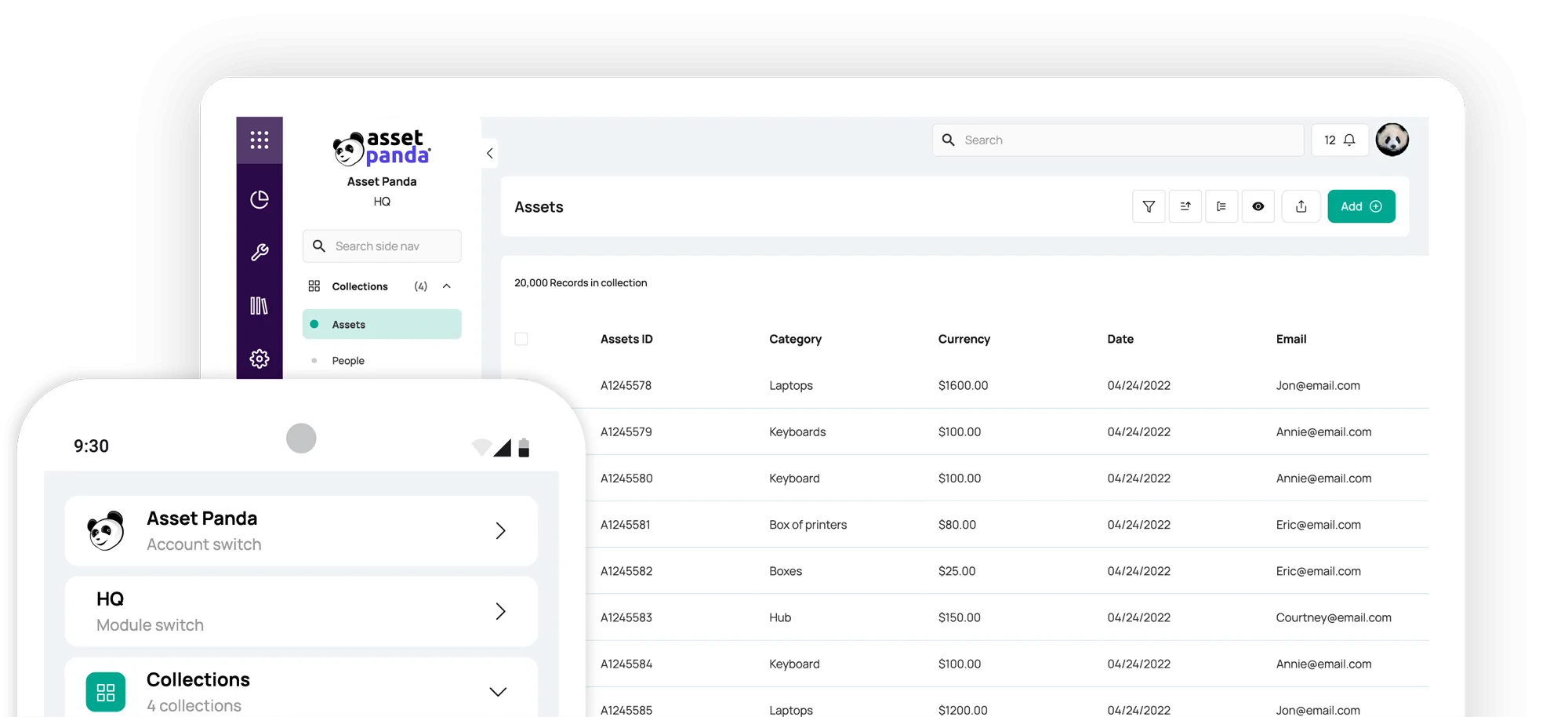
While the above best practices and checklist will help you effectively kit your assets, having the right system in place is still a key piece of the puzzle. If you're still in search of the right fixed asset system, look no further than Asset Panda Pro.
Asset Panda Pro is a comprehensive fixed asset management system that can be easily customized to track and kit your inventory. Our mobile audit function makes it simple to routinely audit your kits and ensure everything is accounted for and in working order.
See how Asset Panda Pro can streamline your kitting processes and give you time back in your day. Schedule a call with your solution specialist now.
Take Control of Your Assets
A personalized demo is just one click away.
Related News & Press


Frequently asked questions
Do I really need to create individual asset records for every component in a kit?
Yes. A kit of 10 items still requires 10 individual assets to be created first. The kit is a relational layer on top of those records, not a replacement for them. Without individual records, you lose the ability to track warranties, replacements, and lifecycle history at the component level.
What is the difference between a kit and a category?
A category groups assets by type (all displays, all soundbars). A kit groups specific assets by operational purpose (the five components that make up the AV rig in Room 314). An asset belongs to one category but can be a member of one kit.
When should a kit be split into separate assets?
Split the kit when components stop sharing a location or function. If a soundbar from a conference room kit gets reassigned permanently to a different room with different gear, retire its kit membership and let it stand alone or join the new kit.
How do I handle a component that fails and gets replaced?
Retire the failed component's record (do not overwrite it), create a new individual asset record for the replacement, and update the kit association to reference the new record. This preserves the failure history of the original part, which is useful for warranty claims and reliability patterns.
What custom fields are worth adding to kit components?
The most useful ones in customer interviews were associated room, building, primary user or department, and last audit date. These four cover the operational questions that come up most often during moves, audits, and replacements.
Learn more from a solution specialist
Schedule a demo to find out how you can transform your workflows with Asset Panda Pro
Contact our team at (888) 928-6112