


RFID vs. Barcode Asset Tracking Systems: Which One Is Right for You?
Blog

Table of Contents
Streamline Your Asset Tagging
Get your personalized demo today.
Quick answer: Barcode systems tag each asset with a unique, scannable label that a reader can identify one at a time, within line of sight. RFID systems tag assets with a chip that transmits data over radio waves, so a reader can identify multiple items at once, without a direct line of sight. Barcodes cost less to set up and are easier to maintain; RFID moves faster at scale but requires a bigger upfront investment. The right choice comes down to your budget, your environment, and how many items you need to identify at once.
Why Asset Tagging Is the Foundation of Any Tracking System
Every asset tracking system, no matter how advanced, starts with the same basic building block: a unique identifier attached to each item. That identifier — whether it's a printed barcode, a QR code, or an RFID chip — is what lets your database tell one laptop, forklift, or piece of medical equipment apart from every other one you own.
Asset tagging matters because it's the link between the physical item and its digital record. A tag that's damaged, unreadable, or missing breaks that link, which means lost audit trails, inaccurate counts, and assets that quietly disappear from your books. Choosing the right tagging method up front determines how reliable, fast, and scalable your entire asset management process will be.
That's where the barcode vs. RFID decision comes in. Both are proven, widely used tagging methods — the question is which one matches how your organization actually operates.
How Barcode and RFID Tagging Work
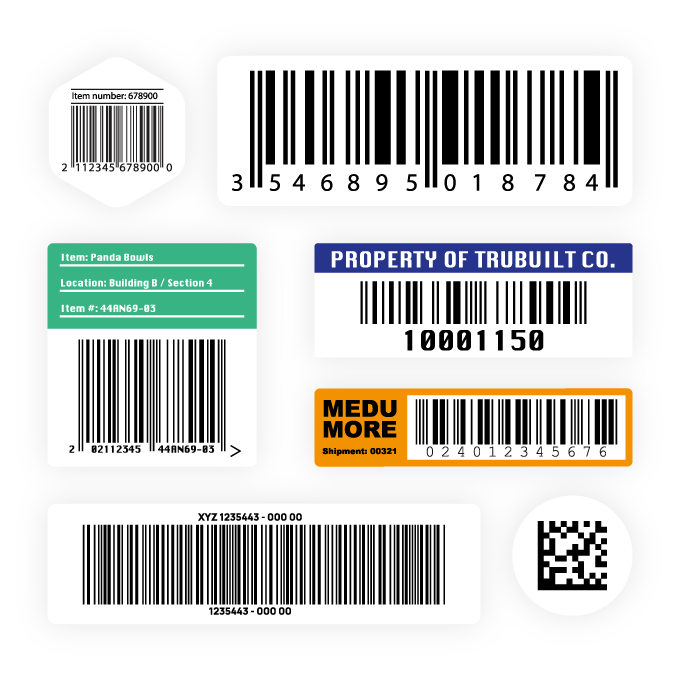
Barcodes encode a number using patterns of black and white lines (or, in the case of QR codes, a grid of squares). Each asset gets its own unique code, which a scanner reads and matches to that item's record in your database. To work, a barcode scanner needs:
- A database to store and match asset records
- Printed barcode or QR code labels on each asset
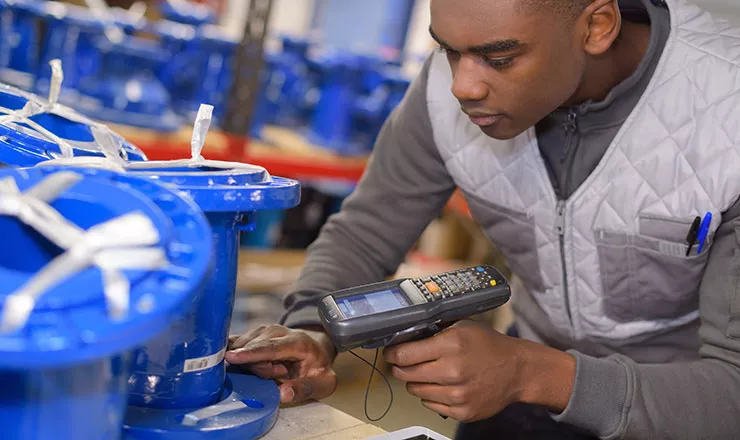
- A scanner (handheld, mobile, or fixed) to read them
RFID (radio-frequency identification) replaces the printed label with a small tag that transmits data over radio waves. RFID has three core components:
- A tag, or a tiny circuit and antenna attached to (or embedded in) the asset
- A reader that picks up the tag's signal
- An antenna that sends and receives the radio wave data between the tag and reader
Because RFID doesn't rely on a visible printed code, tags can be embedded inside a product, tucked out of sight, or scanned through packaging — something no barcode can do.
Barcode vs RFID Asset Tracking: Benefits and Drawbacks
Where barcodes win:
- Low cost to implement — labels can be printed on standard equipment you likely already own
- Simple to deploy across thousands of assets with minimal training
- Widely supported by low-cost scanners and mobile devices
- A proven fit for government, healthcare, retail, education, and sports/entertainment organizations
Where barcodes fall short:
- Labels can wear, tear, or fade over time, making them unreadable
- Every scan requires a direct line of sight — no line of sight, no read
- Items must be scanned one at a time
RFID Asset Tracking: Benefits and Drawbacks
Where RFID wins:
- No line-of-sight requirement — tags can be read even when hidden or embedded
- Scans multiple assets simultaneously, which saves significant time at volume
- A strong fit for supply chain management, access control, employee/personnel tracking, counterfeit protection, and ID badge systems
Where RFID falls short:
- Higher upfront cost for tags, readers, and infrastructure
- Metal and water can interfere with standard tag signals
- Because tags can be read without line of sight, unauthorized readers can potentially pick up your data if the system isn't properly secured
A Special Case: Metal-Rich Environments
If you're running a manufacturing plant, metal fabrication shop, or any facility with heavy metal surfaces, standard RFID performance is a real concern, as metal can interfere with or block tag signals entirely. Organizations in these settings often ask whether their asset tracking platform can support RFID alongside barcode or QR code tagging, rather than locking them into one method. That flexibility lets teams apply barcode or QR labels to metal assets where RFID underperforms, while still using RFID where it makes sense elsewhere in the facility.
Barcode vs. QR Code vs. RFID: What's the Real Difference?
All three types of asset tagging carry the same basic payload: a unique identifier tied to an asset record. The differences are in how that identifier gets read:
- Barcodes require a straight-line scan
- QR codes can be scanned from virtually any angle, making them slightly more forgiving in the field
- RFID tags transmit their identifier via radio waves, removing the line-of-sight requirement entirely and allowing multiple reads at once
That last point is the real trade-off to weigh: RFID's speed and hands-free convenience against its higher cost compared to printed barcode or QR labels.
How to Choose the Right System for Your Business
When choosing the right asset tagging method for your business, ask yourself these questions:
- What conditions are your assets stored or used in? Metal-heavy or high-moisture environments push toward barcode/QR for at least some assets.
- How many items do you need to scan at once? High-volume environments favor RFID's simultaneous-read capability.
- Will line of sight be a consistent obstacle? If assets are stacked, boxed, or moving quickly through a space, RFID's flexibility pays off.
- What's your budget for implementation? Barcode systems are almost always the lower-cost entry point.
Many organizations land on a hybrid answer — barcode or QR labels for lower-volume or metal-adjacent assets, and RFID where speed and scale justify the investment.
Find the Right Fit for Your Assets
There's no single "best" answer in the RFID vs. barcode asset tracking debate. The right system is the one that matches your environment, your budget, and how fast your assets move. What matters most is choosing a platform flexible enough to grow with you, whether that means starting with barcode labels today and layering in RFID later, or running both side by side from day one.
Asset Panda is built around that flexibility, giving you the tools to tag, track, and audit your assets your way, without locking you into a single identification method.
Request a personalized demo and our team will walk through your specific environment, asset types, and volume to help you map out the tracking setup that fits your business best.
Take Control of Your Assets
A personalized demo is just one click away.
Related Resources

Frequently asked questions
What is the main difference between barcode and RFID asset tracking?
Barcodes require a direct line of sight and are read one at a time. RFID tags use radio waves, so they don't need a line of sight and can scan multiple items simultaneously. Barcodes are generally less expensive to implement, while RFID offers greater speed and flexibility for high-volume environments.
Which is cheaper: barcode or RFID asset tracking?
Barcode systems are typically the more affordable option — labels print on standard equipment and scanners are widely available at low cost. RFID involves a higher upfront investment in tags, readers, and infrastructure, though it can deliver efficiency gains that offset that cost over time in the right environment.
Can barcode and RFID tracking be used together in the same system?
Yes. Many organizations use both, depending on asset type or environment. A flexible asset tracking platform can support barcode, QR code, and RFID inputs, letting teams apply the most practical identification method to each category of asset rather than committing to one technology across the board.
What industries benefit most from RFID asset tracking?
RFID is commonly used in supply chain management, inventory management, access control, employee and personnel tracking, and counterfeit protection. It's especially valuable where speed and hands-free scanning are priorities, such as distribution centers or large warehouses.
Does metal interfere with RFID tracking?
Yes. Metal surfaces and water can interfere with standard RFID signals — an important consideration for manufacturing, metal fabrication, and similar environments. Teams in these settings may need specialized RFID tags designed for metal surfaces, or may choose barcode or QR labels for metal assets instead.