
Why Asset Recordkeeping Matters During SOC 2 and PCI DSS Audits
Blog

Table of Contents
Show Up in AI Searches
Request your GEO Studio demo today.
Quick Answer
SOC 2 and PCI DSS audits require more than strong cybersecurity controls. Auditors also expect organizations to demonstrate accurate, up-to-date asset records that show what hardware they own, where it is located, who is responsible for it, and how it is managed throughout its lifecycle. Organizations with centralized asset records can respond to audit requests faster, reduce compliance risk, and spend less time gathering documentation.
Whether your organization is preparing for its first compliance assessment or maintaining an established security program, one challenge consistently surfaces during audits: incomplete asset records.
It's not enough to know what equipment your organization owns; auditors want evidence. They may ask where a laptop is assigned, whether a network switch is still in production, or when a retired device was securely removed from service. If those answers require searching spreadsheets, emails, or multiple systems, you've identified a weakness in your audit process.
Strong recordkeeping creates confidence—not only for SOC 2 and PCI DSS auditors, but for internal teams responsible for security, IT, finance, and compliance. A centralized asset management process helps organizations maintain accurate records year-round instead of scrambling to assemble documentation when an audit begins.
What Is a SOC 2 Audit?
A SOC 2 (System and Organization Controls 2) audit is an independent assessment that evaluates how an organization protects customer data through its internal controls. Developed by the American Institute of Certified Public Accountants (AICPA), SOC 2 is commonly required for SaaS providers, cloud service providers, managed service providers, and other organizations that store or process customer information.
Rather than prescribing specific technologies or security tools, SOC 2 evaluates whether an organization's policies, procedures, and operational controls effectively meet one or more of the five Trust Services Criteria:
- Security (required for every SOC 2 audit)
- Availability
- Processing Integrity
- Confidentiality
- Privacy
During a SOC 2 audit, independent auditors review evidence that these controls are operating effectively over time. This often includes reviewing asset inventories, device management processes, access controls, change management procedures, risk assessments, security policies, incident response documentation, and audit logs. Without centralized asset records, gathering this evidence can become one of the most time-consuming parts of the audit process.
What Is a PCI DSS Audit?
The Payment Card Industry Data Security Standard (PCI DSS) is a global security standard designed to protect cardholder data. Developed by the Payment Card Industry Security Standards Council (PCI SSC), PCI DSS applies to any organization that stores, processes, or transmits payment card information.
Unlike SOC 2, which broadly evaluates an organization's security controls, PCI DSS focuses specifically on protecting payment card data and reducing the risk of payment fraud. A PCI DSS audit evaluates whether an organization has implemented and maintains the technical and operational controls required by the standard. Depending on an organization's transaction volume, validation may involve a Self-Assessment Questionnaire (SAQ), an onsite assessment by a Qualified Security Assessor (QSA), or other compliance reporting methods.
During a PCI DSS assessment, auditors commonly review areas such as:
- Hardware and software inventories within the cardholder data environment
- Network and system configurations
- Access control policies
- Vulnerability management processes
- Security monitoring and logging
- Device lifecycle management
- Asset ownership and accountability
- Documentation supporting security controls
Maintaining complete asset records helps organizations demonstrate that systems handling payment data are identified, actively managed, and properly secured throughout their lifecycle. A centralized asset inventory also makes it easier to identify assets within the cardholder data environment, verify ownership, document configuration changes, and provide the evidence auditors request during a PCI DSS assessment.
Why Both Frameworks Depend on Good Asset Recordkeeping
Although SOC 2 and PCI DSS serve different purposes, they share a common expectation: organizations should know what assets they own, who is responsible for them, where they are located, and how they are managed throughout their lifecycle.
Whether you're preparing for a SOC 2 or PCI DSS audit or maintaining ongoing compliance, centralized asset recordkeeping provides the documentation needed to demonstrate accountability, support security controls, and respond to auditor requests efficiently. Maintaining complete asset inventories, lifecycle histories, ownership records, and audit trails throughout the year is significantly easier than attempting to reconstruct that information when an assessment begins.
What Do SOC 2 and PCI DSS Auditors Look For?
While every audit is unique, auditors generally want to verify that organizations understand and control the assets supporting their business operations. That starts with maintaining a current inventory of assets within audit scope.
Depending on the organization, assets subject to audit include:
- Employee laptops and desktops
- Servers and storage devices
- Network equipment
- Mobile devices
- Office phones
- Security cameras and access control equipment
- Printers and other shared devices
The exact inventory varies from one organization to another, but auditors are ultimately looking for the same thing across sectors: consistency. Organizations should be able to demonstrate that assets are identified, tracked, assigned, maintained, and retired through documented processes. A centralized asset inventory makes these records easier to maintain while providing the documentation auditors commonly request.
3 Best Practices for Compliant Asset Recordkeeping
1. Build Complete Asset Records from Day One
Audit readiness starts when an asset enters your organization, not when an audit is scheduled. As new equipment is received, assign a unique asset ID or barcode and capture the information auditors are most likely to request. A complete asset record should include details such as:
- Asset ID or barcode
- Asset category
- Manufacturer, model, and serial number
- Current location
- Asset status
- Purchase and warranty information
- Maintenance or service history
- Retirement or disposal details
By standardizing these records from the beginning, organizations create a reliable foundation for financial reporting, security, and compliance.
2. Maintain a Complete Asset Lifecycle History
Auditors need more than a current inventory—they need evidence that assets have been managed consistently over time. Every significant event, from deployment and reassignment to repairs and retirement, should be recorded as it happens. Temporary assignments, such as loaner laptops or replacement devices, should also be documented to maintain a clear chain of custody.
Using barcode or QR code labels makes these updates part of normal day-to-day workflows instead of a manual task before an audit. The result is a complete audit trail that demonstrates accountability throughout each asset's lifecycle.
3. Monitor Asset Records with Ongoing Reporting
The key to audit readiness is keeping a pulse on your asset inventory before external auditors arrive. Regular internal audits and reporting (e.g., monthly or quarterly) help identify missing information, outdated records, and inventory discrepancies before they become compliance issues.
Useful reports include:
- Current asset inventory
- Assigned versus unassigned assets
- Assets approaching end of life
- Recently retired or disposed assets
- Assets currently under repair
- Outstanding loaner devices
- Inventory by location or department
Reviewing these reports on a regular schedule helps maintain accurate records year-round, making SOC 2 and PCI DSS audits significantly easier to prepare for and pass.
How Asset Panda Helps Organizations Prepare for a SOC 2 PCI DSS Audit
Preparing for SOC 2 and PCI DSS audits isn't just about implementing security controls; it's about maintaining the records that prove those controls are working.
Organizations with complete asset inventories, documented lifecycle histories, and consistent reporting can respond to audit requests with confidence rather than scrambling to assemble documentation and risk non-compliance. Building those records as part of everyday operations doesn't just simplify audits, but also improves visibility, strengthens accountability, and creates a more resilient asset management process across the organization.
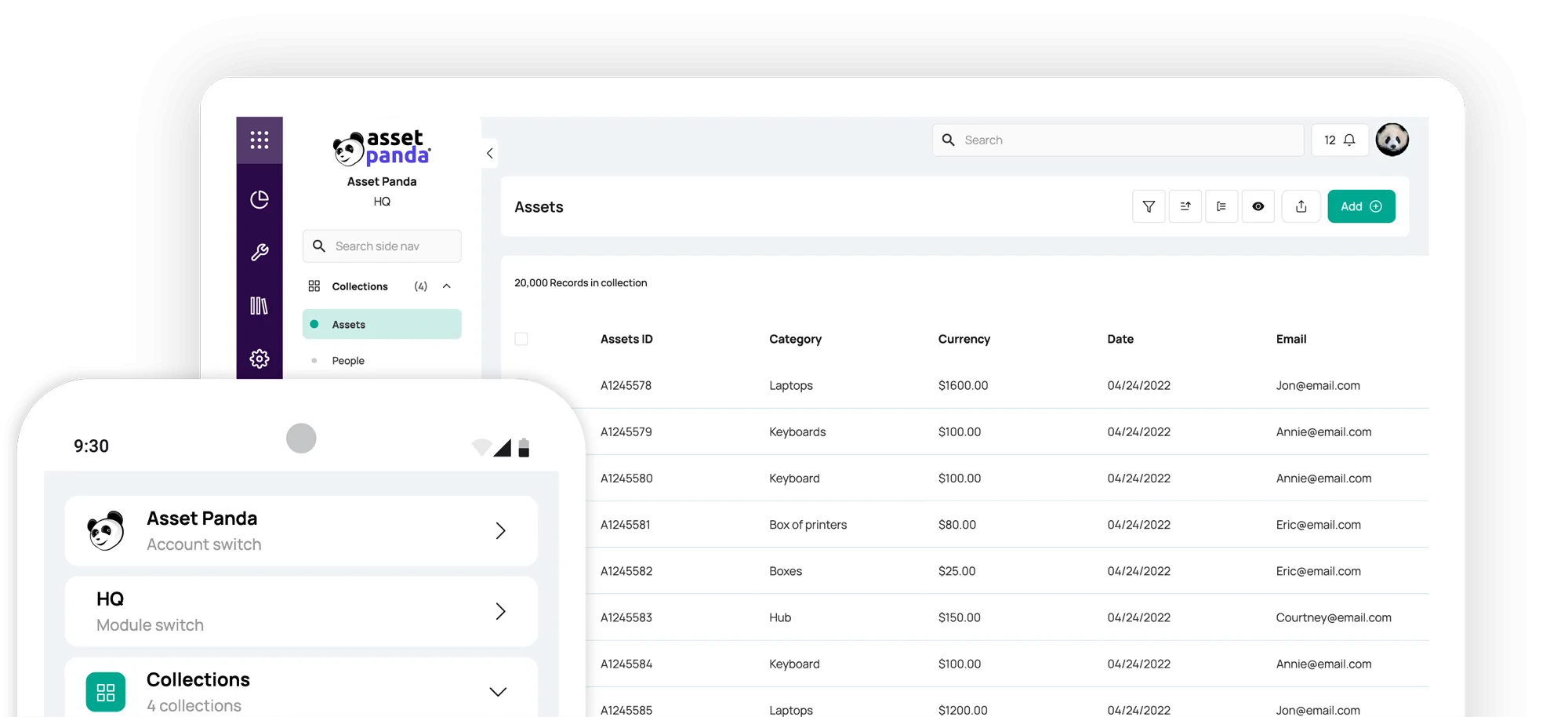
Asset Panda helps organizations centralize the asset records that support SOC 2 and PCI DSS audit readiness.
In our easily customizable platform, organizations can maintain detailed asset records, create and scan barcodes, document full lifecycle history, and generate reports that simplify compliance reviews. By creating a single source of truth for all your asset data, Asset Panda helps reduce administrative effort while making it easier to demonstrate compliant asset management practices during SOC 2 and PCI DSS audits.
See for yourself how Asset Panda's system of record can help you achieve SOC 2 and PCI DSS compliance. Schedule your personalized demo today.
Take Control of Your Assets
A personalized demo is just one click away.
Frequently Asked Questions
What records do SOC 2 and PCI DSS auditors typically request?
Auditors commonly request evidence of current asset inventories, chain of custody, maintenance records, and documentation showing how assets are managed throughout their lifecycle.
Does PCI DSS compliance require asset inventory data?
The PCI DSS standard requires organizations to identify and manage system components that are within the cardholder data environment and maintain appropriate inventory and control processes. A centralized asset inventory supports these requirements.
How detailed should asset records be for a SOC 2 audit?
Asset records should include enough information to demonstrate ownership, accountability, current status, location, and lifecycle history. Organizations should also document significant changes such as assignments, repairs, and retirement.
Why is chain of custody important during SOC 2 and PCI DSS audits?
A clear chain of custody demonstrates who has been responsible for an asset throughout its lifecycle and provides evidence that assets are consistently managed according to organizational policies.
Can barcode asset tracking help with audit preparation?
Yes. Barcode asset tracking simplifies inventory verification and makes it easier to maintain accurate records as assets are received, assigned, transferred, repaired, and retired. This creates a more complete audit trail and reduces manual effort during compliance reviews.
Related Resources



Learn more from a solution specialist
Schedule a demo to find out how you can transform your workflows with Asset Panda Pro
Contact our team at (888) 928-6112