
Asset Tracking for Police: Why Modern Departments Are Moving Beyond Spreadsheets
Blog

Table of Contents
Take Control of Your Assets
A personalized demo is just one click away.
Quick Answer
Asset tracking for police departments involves managing vehicles, firearms, radios, body armor, IT equipment, and other mission-critical assets throughout their lifecycle. While many agencies begin with spreadsheets, modern police asset tracking software provides centralized visibility, automated compliance tracking, equipment accountability, fleet management, role-based access controls, and audit-ready reporting from a single platform.
As departments face growing compliance requirements and growing equipment inventories, purpose-built police asset management software helps reduce administrative burden while improving operational readiness.
Why Asset Tracking Matters for Police Departments
Every police department relies on assets to serve and protect its community. Patrol vehicles transport officers to calls. Radios maintain communication. Body armor protects personnel in dangerous situations. Firearms, mobile devices, medical kits, laptops, and specialized equipment all play critical roles in daily operations.
Unlike some organizations, police departments cannot afford uncertainty around their equipment. Supervisors need to know what assets exist, where they are located, who is responsible for them, and whether they are safe and ready for service.
As agencies grow, maintaining that visibility becomes increasingly difficult. Equipment moves between officers and vehicles. New assets are acquired while older assets reach end-of-life. Compliance requirements introduce inspection schedules, certification deadlines, and maintenance obligations. Over time, managing these activities through disconnected systems becomes increasingly challenging.
That is why many agencies are investing in modern asset tracking solutions designed specifically to support law enforcement operations.
Why Spreadsheets Stop Working for Asset Tracking for Police
Most police departments do not intentionally build their asset management process around spreadsheets; it usually happens organically.
A fleet supervisor creates a spreadsheet to track patrol vehicles. Another team uses Microsoft Lists for equipment. The IT department maintains a separate inventory for laptops and mobile devices. Over time, multiple systems emerge, each serving a specific purpose but none providing a complete picture.
Initially, these tools seem adequate. They are inexpensive, familiar, and easy to implement. However, the problems emerge as operational complexity increases.
A patrol vehicle requires monthly mileage reporting. Body armor approaches its recertification date. Equipment changes hands between officers. A supervisor needs an audit report. An administrator must determine whether a radio is assigned to an officer, a vehicle, or both. At this point, spreadsheets become difficult to maintain.
The most common challenges of spreadsheet asset tracking include:
- Lack of a single source of truth for asset data
- Time-consuming manual workflows and data reconciliation
- No automated reminders for key maintenance or inspection dates
- Lack of change history and user accountability
For agencies managing hundreds or thousands of assets, spreadsheets eventually create more administrative work than they eliminate.
What Should Police Asset Tracking Software Do?
Not all asset management systems are built for law enforcement. Police departments have operational requirements that differ significantly from those of traditional businesses.
Effective asset tracking for police should support:
- Patrol vehicle management
- Firearms accountability
- Body armor and safety equipment tracking
- Radio and communications equipment management
- Officer equipment assignments
- Fleet maintenance scheduling
- Compliance and certification tracking
- Inspection management
- Audit-ready reporting
- Role-based access controls
The objective is not simply inventory management. The goal is to maintain operational readiness while ensuring accountability for every critical asset within the department.
6 Benefits of Asset Tracking for Police Departments
1. Centralized Visibility Across All Police Assets
One of the most significant benefits of police asset tracking software is centralized visibility. Rather than managing vehicles, safety equipment, and IT devices in their own separate systems, police departments can track all their asset categories from a single platform. This creates a single source of truth for the agency and makes it easier to locate assets, verify assignments, and generate reports when needed.
Leadership gains a comprehensive view of agency resources while individual teams maintain ownership of their specific asset categories. The result is greater visibility, improved accountability, and less time spent reconciling information across multiple systems.
2. Automated Compliance and Certification Tracking
Police departments manage a wide range of assets that require recurring inspections, certifications, maintenance, and replacement schedules. Body armor and life vests often require recertification or replacement after a specified period. Firearms may require scheduled inspections. Vehicles must be maintained according to established service intervals.
Tracking these requirements manually creates unnecessary risk.
Modern police asset tracking software automates compliance monitoring by storing certification dates, maintenance schedules, and inspection requirements directly within asset records. Automated reminders help ensure critical deadlines are not missed, reducing both operational risk and administrative burden.
3. Simplified Fleet Management and Mileage Reporting
Fleet management is one of the most resource-intensive aspects of police asset management. Departments must monitor mileage, maintenance schedules, repair history, inspections, and vehicle assignments while often complying with state or municipal reporting requirements. Many agencies still collect mileage information through manual processes involving phone calls, emails, or spreadsheets.
Asset tracking software simplifies these workflows by centralizing vehicle information and automating data collection wherever possible. This reduces administrative workload while improving the accuracy and reliability of fleet reporting.
4. Better Equipment Accountability
Police departments are responsible for maintaining accountability over mission-critical equipment. Radios, firearms, mobile devices, medical kits, less-lethal tools, and other equipment frequently move between officers, vehicles, and locations throughout the day.
Modern asset tracking systems maintain detailed assignment histories that show who is responsible for an asset, where it is located, and when custody changes occurred. This level of visibility helps reduce loss, improve accountability, and simplify investigations when discrepancies arise.
5. Stronger Security Through Role-Based Access
Different teams within a police department require access to different information. IT personnel may manage laptops and mobile devices. Fleet managers oversee vehicles and maintenance. Supervisors review reports and compliance information.
A modern police asset tracking system should provide role-based permissions that ensure users only access the records and functionality relevant to their responsibilities. This improves security while maintaining agency-wide oversight where appropriate.
6. Faster Audits and Reporting
Preparing for audits, accreditation reviews, grant reporting, or internal inspections can consume significant staff time. When asset information is spread across multiple spreadsheets and departments, gathering the necessary documentation becomes a lengthy process.
Police asset tracking software centralizes inventory records, assignment histories, maintenance logs, certification dates, and compliance documentation. As a result, departments can generate reports more quickly and demonstrate accountability with far less effort.
Best Practices for Asset Tracking for Police
Agencies that successfully manage large asset inventories typically follow a few common practices.
Maintain a Single System of Record
Asset information should reside in one authoritative platform rather than in multiple spreadsheets or systems that are each maintained by different departments.
Automate Compliance Activities
Certification deadlines, maintenance schedules, inspections, and recurring reporting requirements should be automated whenever possible.
Track the Entire Asset Lifecycle
Every asset record should have a complete lifecycle history that includes data points like acquisition date and cost, maintenance and repair history, and check-in/check-out history.
Establish Clear Ownership
Every asset category should have a designated owner responsible for maintaining data quality and ensuring records remain current.
Conduct Regular Audits
Periodic inventory audits help verify data accuracy and identify discrepancies before they become operational issues.
Why Police Departments Choose Asset Panda for Tracking
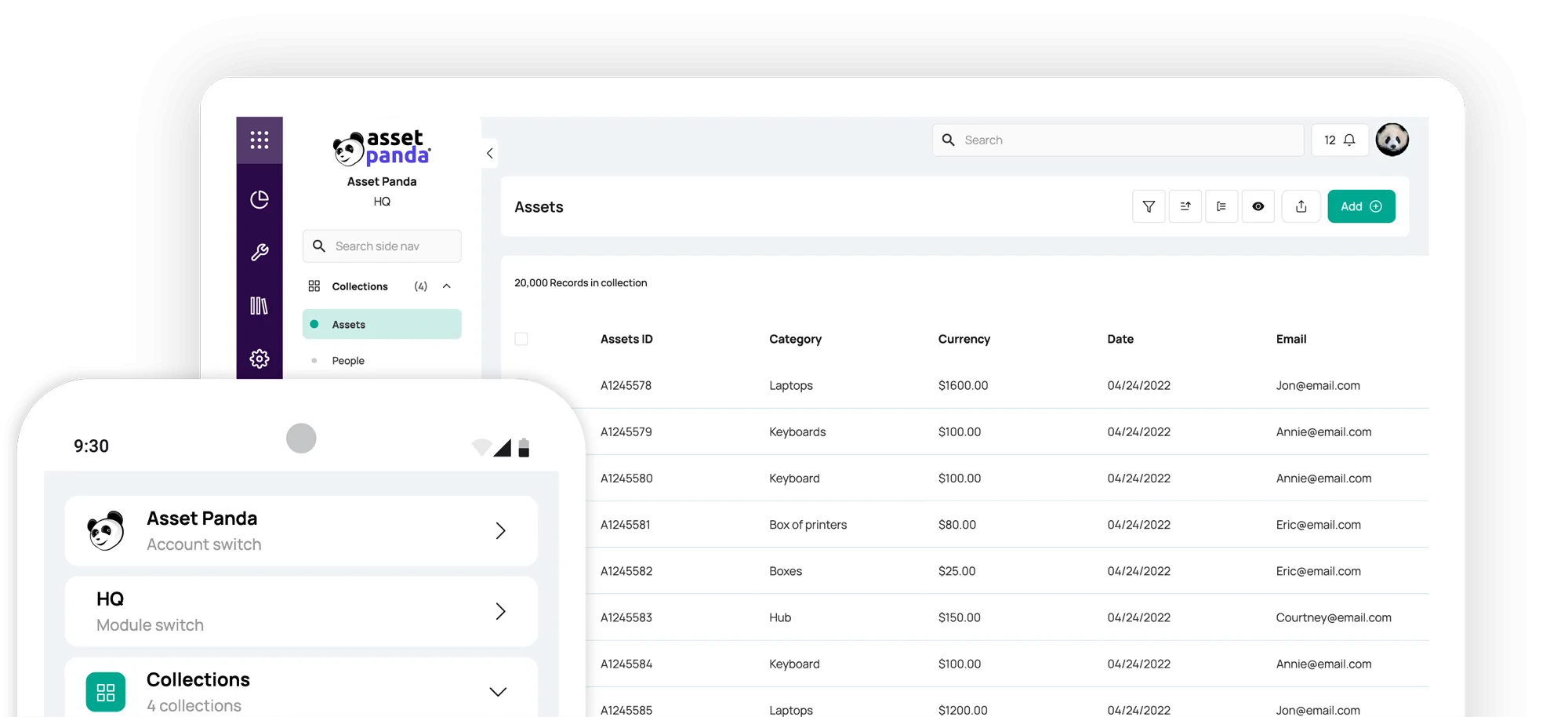
Asset Panda provides a flexible platform for asset tracking for police departments, allowing agencies to manage vehicles, firearms, radios, body armor, mobile devices, IT assets, and other mission-critical resources within a single system.
Because Asset Panda is highly configurable, departments can build workflows that align with their existing operational processes rather than adapting their processes to fit rigid software requirements.
With Asset Panda, agencies can:
- Check equipment in and out for different officers or locations
- Monitor body armor expiration and recertification dates
- Manage fleet maintenance schedules and inspections
- Automate compliance reminders
- Generate audit-ready reports
- Configure role-based permissions across departments
- Access asset information through mobile devices
- Track assets across multiple facilities and locations
Whether a department is managing a small fleet or a large multi-agency operation, Asset Panda provides the flexibility and visibility required to support modern law enforcement asset management.
See How Wilson County Uses Asset Panda
Wilson County Sheriff’s Office uses Asset Panda to keep technology,
fleet, contracts, and other operational workflows connected in one
configurable system.
Read the Wilson County case study

Final Thoughts
Asset tracking for police departments extends far beyond inventory management. Agencies must maintain accountability for mission-critical equipment, manage compliance requirements, track vehicle fleets, monitor safety equipment, and ensure personnel have access to the tools they need to perform their duties safely and effectively.
While spreadsheets may work in the early stages, they often struggle to support the operational complexity of modern law enforcement.
Purpose-built police asset tracking software provides the visibility, automation, reporting, and accountability agencies need to manage assets more efficiently while reducing administrative burden. By centralizing asset information and automating routine workflows, departments can spend less time managing records and more time focusing on public safety.
Looking for the right police asset management software for your department? Request your personalized demo to see how our easy-to-use platform can meet all your asset tracking needs.
Take Control of Your Assets
A personalized demo is just one click away.
Frequently asked questions
What is asset tracking for police departments?
Asset tracking for police departments is the process of monitoring vehicles, firearms, radios, body armor, IT equipment, and other law enforcement assets throughout their lifecycle. Police asset tracking software helps agencies maintain visibility into asset location, assignments, maintenance history, compliance requirements, and operational readiness.
Why do police departments need asset tracking software?
Police departments use asset tracking software to improve accountability, automate compliance tracking, manage fleet operations, monitor equipment assignments, and generate audit-ready reports. The software helps reduce manual processes while improving visibility across all department assets.
What assets should police departments track?
Most agencies track patrol vehicles, firearms, radios, body armor, mobile devices, laptops, medical kits, less-lethal equipment, uniforms, and other mission-critical resources.
Can police asset tracking software help with compliance?
Yes. Police asset tracking software can automate reminders for equipment inspections, body armor recertification, vehicle maintenance, certifications, and other compliance-related activities. This helps agencies reduce risk and maintain audit readiness.
What are the benefits of replacing spreadsheets with police asset tracking software?
Replacing spreadsheets with police asset tracking software provides a centralized system of record, automated notifications, improved equipment accountability, stronger security controls, better reporting, and greater visibility across all department assets.
How does Asset Panda support asset tracking for police?
Asset Panda allows police departments to track vehicles, equipment, firearms, radios, body armor, and technology assets from a single platform. Agencies can automate compliance tracking, manage maintenance schedules, monitor assignments, generate reports, and configure workflows that align with their operational needs.
Related News & Press


Learn more from a solution specialist
Schedule a demo to find out how you can transform your workflows with Asset Panda Pro
Contact our team at (888) 928-6112