
Why Your Records System Will Fail You During a School Reunification
Blog

Table of Contents
Build an Emergency Management System You Can Rely On
Request your personalized demo today.
Quick Answer
Law enforcement records systems sit behind access control lists scoped to a single agency, which means firefighters, teachers, and outside responders staffing a reunification center have no way to log in. Provisioning those accounts after an incident starts is structurally impossible, so the fix is pre-incident account provisioning for every role that would staff the center.
The reunification center goes live twenty minutes after the initial call. Firefighters walk in to help track children. Two teachers from the affected campus arrive to identify students by face and name. A victim advocate from a neighboring county shows up because mutual aid was requested. None of them can log into the law enforcement records system that the responding agency is using to track child records and parent check-ins. Someone opens a laptop, tries to add a user, and gets a permissions error. The IT director is already on three other calls. A supervisor pulls out a clipboard, and the reunification quietly reverts to paper at the worst possible moment.
This is not a hypothetical situation; it is a pattern that surfaces repeatedly in conversations with school resource officers and emergency management coordinators after they have run a real activation or a serious drill. The failure is not the software behaving badly. The failure is architectural, and it is entirely predictable before the next incident.
Key Summary
- Law enforcement records systems sit behind an access control list scoped to a single agency, which structurally excludes firefighters, teachers, and outside-agency responders.
- Provisioning user accounts at the start of an active incident is the wrong task at the wrong time, because IT capacity is at its lowest exactly when demand is at its highest.
- Getting the right child back to the right parent is described in customer interviews as the single most difficult step in a critical incident response, and it depends on every responder in the room being able to read and update the same records.
- The one-to two-hour window between the incident and children arriving at the reunification center is often the only preparation buffer available, and it disappears if pre-incident work was never done.
- Pre-provisioning accounts for every role that would staff the center, before any incident occurs, is the operational fix.
The Core Timing Problem: IT is Unavailable When You Need It Most
Provisioning new user accounts during an active emergency is structurally impossible for most agencies. IT capacity is consumed by the incident itself, and the request to stand up ten or twenty new logins for outside responders lands at the moment no one can act on it. The window to configure access closed before the call came in.
In customer interviews, one pattern shows up again and again: the person who would normally create a records-system account is either directly supporting the incident, coordinating with dispatch, or standing up communications for the command post. Asking that same person to open the admin console and add firefighters, teachers, and mutual-aid staff as new users is not a small ask. It is a competing priority against life-safety work.
The timing conflict is the core failure mode. The demand for new accounts spikes at the exact moment supply of IT attention collapses. Every agency that has run this scenario, in a real event or a tabletop, tends to describe the same discovery: the software was not the problem, and the people were not the problem. The provisioning workflow was scheduled for the wrong day.
Why a Law Enforcement Records System is the Wrong Tool for a Multi-Agency Event
Law enforcement records systems are designed around a single agency's users, and access is enforced by an access control list that keeps everyone else out. That is a feature, not a bug, for day-to-day case work. It becomes the central obstacle the moment a reunification center activates and pulls in responders who do not belong to that agency.
Three responder categories consistently end up locked out:
- Firefighters supporting triage, transport coordination, or on-scene child accountability.
- Teachers and school staff who can visually identify students and confirm parent relationships.
- Outside-agency responders, including neighboring departments, victim services, and mutual aid.
These people are not oversights. They are the intended staff of a modern reunification center, and they are exactly the users the records system was never designed to admit. According to FEMA and NIMS guidance on multi-agency coordination, this staffing model is standard doctrine for any significant incident affecting a school, so the mismatch between the tool and the operation is not an edge case.
The significant incident module helps, but it still needs pre-work
Some records systems ship a significant incident module built specifically for reunification. In customer interviews, that module is described as purpose-built for the workflow, but it comes with a set of challenges. The most consistent challenge: the module still lives behind the same agency access control list. If the outside responders have no user accounts, the module they need cannot reach them, no matter how well it is designed.
What breaks first when access breaks
When half the reunification staff cannot log in, work migrates to paper, whiteboards, and text messages. Chain of custody for each child record becomes fragile. The parent check-in log lives in one person's notebook. Downstream audit questions, the kind that FERPA and state student records laws expect to be answerable, become guesses. The system did not fail; the system was never available.
What is Actually at Stake: The Child-to-Parent Matching Workflow
The hardest operational step in a reunification is matching the right child to the right parent, and it requires multiple verification steps before any release can occur. Our clients describe this specific step as the most difficult part of the entire process, and the primary challenge is organization rather than speed. If the tool that holds the organization is inaccessible to half the staff running the operation, the difficulty compounds.
The workflow, at a minimum, looks like this:
- Parent arrives at the reunification center.
- A parent check-in action is triggered, which logs the parent's name and status into the record.
- The corresponding child record is located in the system.
- Identity verification steps are completed, often including photo ID, emergency contact confirmation, and school-side confirmation from a teacher who knows the family.
- The child is released to the parent, and the release is logged against both records.
Each of these steps is a discrete, trackable event. Each one produces a record that has to hold up later, whether the review is internal, part of an after-action report, or part of a legal proceeding. The parent check-in action alone illustrates the point: it is not just a note, but an entry that feeds the next step in the release pipeline.
In many activations, there is often a one-to two-hour gap between the initial incident and the moment children begin arriving at the reunification center from the scene. That window is real, but it is not a planning buffer. It is a preparation buffer that only pays out if the preparation happened weeks or months before the incident. Trying to build the organizational scaffolding in that 90-minute gap, while also managing family arrivals and press, is not realistic.
The Fix: Pre-Incident Account Provisioning for Every Reunification Role
The operational fix is to pre-create and manage accounts for every multi-agency user who could staff a reunification center before any incident occurs, so access is immediate the moment a significant incident is declared, and no IT intervention is required. This shifts the provisioning workload out of the emergency window entirely.
The capability that customer interviews specifically ask for is not complicated: a way to stand up user accounts for firefighters, teachers, and outside-agency responders in advance, keep those accounts current, and have them live and ready inside the reunification workflow as soon as the incident is declared. No admin console work at 9:47 a.m. on the day of the event. No permission tickets. No shared logins.
Why shared logins are not a shortcut
A tempting workaround is to hand out a single shared credential to everyone in the reunification center. In a law enforcement context, that breaks chain of custody and audit trail requirements. Every action on a child record needs to be attributable to a named user, because the record may later be part of a legal or regulatory review. Shared credentials also make it impossible to revoke access cleanly after the event.
Where Asset Panda Fits in Emergency Management
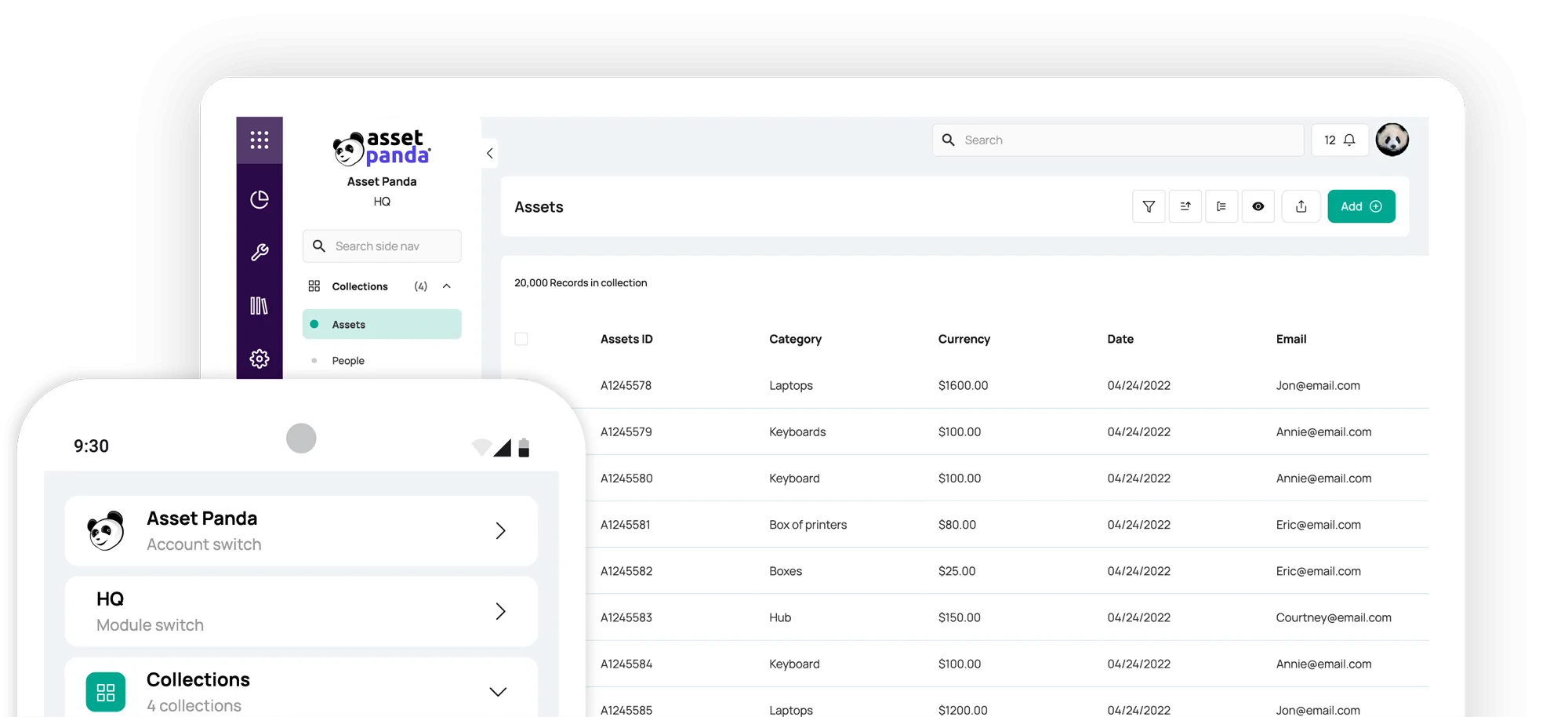
For government agencies and school districts that build their reunification workflows on a configurable records platform, the pattern above maps directly to features that already exist. Asset Panda supports configurable forms that can create and update records, which is how a parent check-in action or a release-to-parent action gets built as a discrete, logged event. Role-based accounts can be provisioned in advance for multi-agency users, so the access control conversation happens on a calm Tuesday, not during an active event. That is a very different posture than trying to add users mid-incident.
A Pre-Incident Readiness Checklist
Use this as a working checklist with your emergency management coordinator, your IT director, and your school safety officer. Every item is designed to be completed before an incident, not during one.
- Map the reunification staffing model. List every role that would show up at your center, including firefighters, teachers, school administrators, mutual-aid officers, victim advocates, and district-level staff.
- Identify the access gap. For each role, note whether the person would have an existing account in your records system or the significant incident module. Anyone marked "no" is a pre-provisioning target.
- Establish a credentialing schedule. Pre-create accounts for the identified roles. Assign them the least privilege needed to complete their reunification tasks, and document the scope in writing.
- Define the activation trigger. Decide which declaration or incident type flips these accounts from dormant to active, and who has authority to make that call.
- Build the workflow inside the system. Configure the parent check-in action, the child record lookup, the identity verification steps, and the release-to-parent action as discrete, trackable events.
- Test access in a drill. Run at least one tabletop or functional exercise where every pre-provisioned user actually logs in and completes their step. Access that has never been tested is access that does not exist.
- Review and refresh quarterly. Staff turnover is constant. Set a recurring calendar item to remove departed users, add new ones, and confirm the roster with each participating agency.
- Document the audit trail expectations. Confirm, in writing, that every action on a child record is attributable to a named user and that your process meets FERPA and applicable state student-records requirements.
Create an Emergency Management System You Can Rely On
The access-control failure is predictable, and that is the good news. Every agency that has been surprised by it during a real event describes the same root cause: no one pre-provisioned accounts for the people who would actually staff the reunification center. That work is boring; it is not urgent on any given Tuesday, and it is the difference between a reunification that holds together and one that collapses onto a clipboard.
If you want a concrete next step to creating a reliable system before you need it, walk through the checklist above with your IT director and your emergency management coordinator this quarter.
If you're looking for the right software to support your emergency management system, Asset Panda can help. Schedule your personalized call with us today and see how our configurable records platform handles pre-provisioned multi-agency accounts and discrete parent check-in actions.
Take Control of Your Assets
A personalized demo is just one click away.
Frequently Asked Questions
How often do reunification centers actually need to activate?
Activations tied to school shootings are, thankfully, rare, but activations tied to any significant incident on or near a campus are not. CISA and the U.S. Secret Service Safe School Initiative have published guidance treating reunification as a standard capability every school and responding agency should be able to execute, which means the planning burden applies whether or not your specific district has ever run one.
Can we just use one shared login during the event?
No. Shared credentials break chain of custody on every child record touched during the reunification, because no action can be attributed to a named user. That creates audit gaps that FERPA reviews, internal affairs, and after-action reporting all struggle with. It also makes revocation impossible after the event, since you cannot rotate a credential that a dozen unknown people copied into their phones.
Isn't this really an IT security problem?
It overlaps with IT security, but the operational owner is emergency management, not IT. The decision about who staffs a reunification center is an incident-command decision. IT executes the provisioning, but the roster comes from the people who plan the response. Framing it as an IT-only problem is how it ends up unfunded and unresolved.
What about pen-and-paper tracking as a backup?
Paper tracking is a legitimate backup, and every reunification plan should have one. The issue is that when paper becomes the primary system because the digital tool is inaccessible, the uniform script disappears, the audit trail fragments, and the child-to-parent matching workflow loses the structure that made it defensible. Paper as backup: yes. Paper as default: not by choice.
Who should own the pre-provisioning roster?
In most agencies, it works best as a shared responsibility between the emergency management coordinator, who owns the staffing model, and the IT director or records-system administrator, who owns the accounts. The school safety officer or SRO typically owns the drill schedule that keeps the roster honest.
Related Resources



Learn more from a solution specialist
Schedule a demo to find out how you can transform your workflows with Asset Panda Pro
Contact our team at (888) 928-6112