
Is Accumulated Depreciation an Asset or a Liability?
Blog

Table of Contents
Automatically Track Depreciation
A personalized demo is just one click away.
Quick Answer
No, accumulated depreciation is not an asset. It is a contra asset account that reduces the carrying value of a fixed asset on the balance sheet. Although accumulated depreciation appears in the assets section of the balance sheet, it does not represent something the organization owns or uses to generate revenue. Instead, it records the total depreciation recognized over an asset's useful life.
Understanding how accumulated depreciation works helps organizations prepare accurate financial statements, comply with accounting standards, and report the current book value of long-term assets.
Is Accumulated Depreciation an Asset or a Liability?
Accumulated depreciation is often misunderstood because it appears within the assets section of the balance sheet. However, it is neither an asset nor a liability. To understand why, it helps to first understand depreciation itself.
Depreciation is the gradual decrease in a fixed asset's value over time. Since assets like vehicles, machinery, and computers eventually become obsolete or outdated, it’s important to track them on an organization’s balance sheet to avoid paying the same amount of tax on the asset as it would if the asset were brand new.
Accumulated depreciation is simply the total depreciation that has been recorded since the asset was placed into service. Because it represents the reduction in an asset's recorded value—not an economic resource or an obligation—it is classified as a contra asset account rather than an asset or liability.
If Accumulated Depreciation Isn’t an Asset, What Is It?
Accumulated depreciation is a credit balance that offsets the original cost of a fixed asset. Rather than reducing the asset's historical purchase price, accountants maintain two separate figures:
- The original cost of the asset
- The accumulated depreciation recorded over time
Together, these values determine the asset's net book value, which represents the asset's carrying value on the balance sheet. This approach allows organizations to preserve the original acquisition cost while accurately reflecting the asset's declining value over time.
Where Does Accumulated Depreciation Appear on the Balance Sheet?
An organization's balance sheet records both current assets, which are expected to be used, sold, or converted to cash within one year, and fixed assets, which provide value over multiple years. Because depreciation reflects the gradual decline in value of long-term assets, accumulated depreciation applies only to fixed assets.
Accumulated depreciation is recorded as a contra asset account, meaning it offsets the original cost of the related fixed asset without changing its historical purchase price. For example, if a company purchases a computer for $5,000 and records $2,000 in accumulated depreciation over several years, the balance sheet continues to show the computer's original cost of $5,000 along with accumulated depreciation of $2,000. The result is a net book value of $3,000, which represents the asset's current carrying value.
As the asset ages, accumulated depreciation continues to increase while the asset's net book value gradually decreases. When the asset is eventually sold, retired, or otherwise removed from service, both the asset's original cost and its accumulated depreciation are removed from the balance sheet. This ensures the organization's financial statements accurately reflect the assets it currently owns and uses.
Why Accumulated Depreciation Matters
Although accumulated depreciation is not an asset, it plays an important role in asset management and reporting.
Better Asset Lifecycle Planning
Tracking depreciation alongside an asset's full lifecycle history helps organizations determine when equipment should be repaired, replaced, or retired.
Audit and Compliance Support
Maintaining complete depreciation records supports financial audits while providing documentation for accounting, regulatory, and internal reporting requirements.
Accurate Financial Reporting
Accumulated depreciation helps organizations present the current carrying value of fixed assets rather than only their original purchase cost. This creates more accurate balance sheets and supports compliance with accounting standards such as GAAP.
Best Practices for Tracking Accumulated Depreciation
Organizations can improve depreciation accuracy by following a few consistent practices:
- Maintain complete purchase records for every fixed asset.
- Apply consistent depreciation methods across similar asset categories.
- Review useful life assumptions periodically.
- Track maintenance history alongside depreciation schedules.
- Automate depreciation calculations whenever possible.
Maintaining centralized asset records improves reporting accuracy while reducing manual calculations and spreadsheet errors.
How Asset Panda Helps Track Accumulated Depreciation
The answer to "Is accumulated depreciation an asset?" is straightforward: no. Accumulated depreciation is a contra asset account that reduces the carrying value of fixed assets on the balance sheet. It is neither an asset nor a liability, but it plays a critical role in helping organizations accurately report asset values, support compliance, and manage long-term investments.
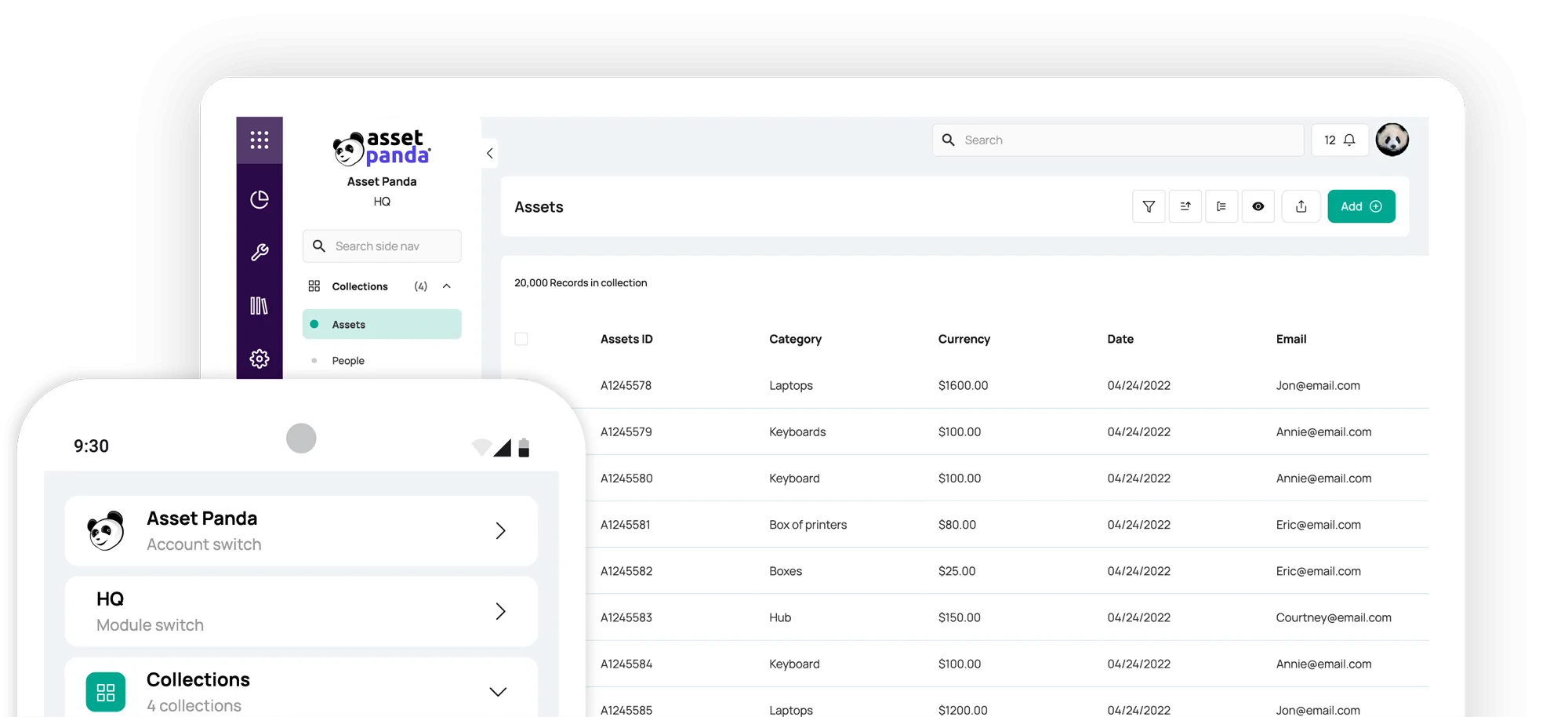
When combined with effective asset lifecycle management and automated depreciation tracking, organizations gain greater visibility into both the financial and operational performance of their fixed assets. Asset Panda helps organizations manage fixed assets throughout their entire lifecycle while simplifying depreciation tracking and financial reporting.
With Asset Panda, organizations can:
- Automate depreciation calculations
- Track complete asset lifecycle history
- Generate depreciation and audit reports
- Maintain centralized asset records
- Monitor maintenance alongside financial data
- Improve financial reporting and compliance
By connecting financial reporting with operational asset management, Asset Panda helps businesses maintain accurate books and reduce administrative burden.
See for yourself how Asset Panda can streamline your asset management and depreciation tracking. Schedule a call with your solution specialist today.
Take Control of Your Assets
A personalized demo is just one click away.
Frequently asked questions
Is accumulated depreciation an asset?
No. Accumulated depreciation is a contra asset account that reduces the carrying value of fixed assets on the balance sheet.
Is accumulated depreciation a debit or a credit?
Accumulated depreciation normally carries a credit balance. It increases over time as depreciation expense is recorded during each accounting period.
Where does accumulated depreciation appear on the balance sheet?
Accumulated depreciation appears within the fixed assets section of the balance sheet immediately below the related asset category, reducing the asset's net book value.
What is the difference between accumulated depreciation and depreciation expense?
Depreciation expense represents the depreciation recognized during a single accounting period and appears on the income statement. Accumulated depreciation is the total depreciation recognized over an asset's lifetime and appears on the balance sheet.
Why should organizations track accumulated depreciation?
Tracking accumulated depreciation supports accurate financial reporting, audit readiness, compliance, budgeting, asset replacement planning, and better lifecycle management of fixed assets.
Related News & Press



Learn more from a solution specialist
Schedule a demo to find out how you can transform your workflows with Asset Panda Pro
Contact our team at (888) 928-6112