
Tracking Depreciation on a Balance Sheet or Income Statement
Blog

Table of Contents
Take Control of Your Assets
A personalized demo is just one click away.
Quick Answer
Depreciation appears on both the balance sheet and the income statement, but it serves different purposes on each financial statement. Accumulated depreciation is reported on the balance sheet as a contra asset account that reduces the carrying value of fixed assets. Depreciation expense appears on the income statement as an operating expense for the current accounting period.
Together, these figures help organizations accurately report asset values, measure financial performance, and comply with accounting standards such as Generally Accepted Accounting Principles (GAAP).
Depreciation on the Balance Sheet vs. Income Statement: At A Glance
Although both financial statements include asset depreciation, they track it in different ways. Here's a quick overview of 3 key differences between balance sheet vs. income statement depreciation tracking.
| Balance Sheet | Income Statement |
| Reports accumulated depreciation, or the total depreciation recorded in an asset's useful life | Reports depreciation expense, or the depreciation recorded during the current accounting period |
| Appears as a contra asset account | Appears as an operating expense |
| Reduces the carrying value of fixed assets | Reduces net income |
What Is Accumulated Depreciation?
Accumulated depreciation represents the total depreciation recorded for an asset since it was placed into service.
Rather than appearing as a standalone expense, accumulated depreciation is recorded as a contra asset account on the balance sheet. Its purpose is to reduce the book value of a fixed asset without changing the asset's original purchase price.
For example, let's say a company purchases equipment for $100,000 and records $20,000 of depreciation each year. The balance sheet will continue to show the equipment's original cost while the accumulated depreciation amount increases annually. After 3 years, the balance sheet will reflect:
- Original purchase price: $100,000
- Accumulated depreciation: $60,000
- Net book value: $40,000
What Is Depreciation Expense?
Depreciation expense represents the amount of an asset's value allocated during a single accounting period, typically a month, quarter, or fiscal year. Unlike accumulated depreciation, depreciation expense appears on the income statement because it reflects the cost of using long-term assets to generate revenue during that reporting period.
Depreciation is considered a non-cash operating expense. Although no cash leaves the business when depreciation is recorded, recognizing the expense helps match the cost of an asset with the revenue it helps produce.
For many organizations, depreciation expense appears within:
- Operating expenses
- Cost of goods sold (when applicable)
- Manufacturing overhead (depending on accounting practices)
How the Balance Sheet and Income Statement Work Together
One of the most common accounting questions is why depreciation appears on both financial statements.
The answer is simple: each reporting period creates two related accounting entries.
Every time depreciation is recorded:
- Depreciation expense increases on the income statement.
- Accumulated depreciation increases on the balance sheet.
These entries remain connected throughout the asset's useful life.
Why Tracking Depreciation Matters
Depreciation is more than an accounting requirement. It helps organizations understand the financial value and lifecycle of their fixed assets.
Accurate depreciation tracking supports:
- GAAP and financial reporting compliance
- More accurate financial statements
- Budgeting and capital planning
- Asset replacement forecasting
- Insurance and audit preparation
- Asset lifecycle management
Organizations managing large fleets of equipment, vehicles, machinery, or technology assets often rely on depreciation data to determine when assets should be repaired, replaced, or retired.
Common Depreciation Reporting Mistakes
Depreciation reporting becomes more challenging as organizations manage larger asset portfolios.
Some of the most common mistakes in depreciation reporting include:
- Recording the wrong depreciation figure in the wrong statement: Depreciation expense belongs on the income statement, while accumulated depreciation belongs on the balance sheet.
- Using inconsistent depreciation methods and schedules: Applying different depreciation methods or useful lives without documented policies can create reporting inconsistencies and audit challenges.
- Tracking depreciation manually: Managing depreciation schedules in spreadsheets increases the likelihood of calculation errors, missed updates, and inconsistent reporting across departments.
How Asset Management Software Simplifies Depreciation Tracking
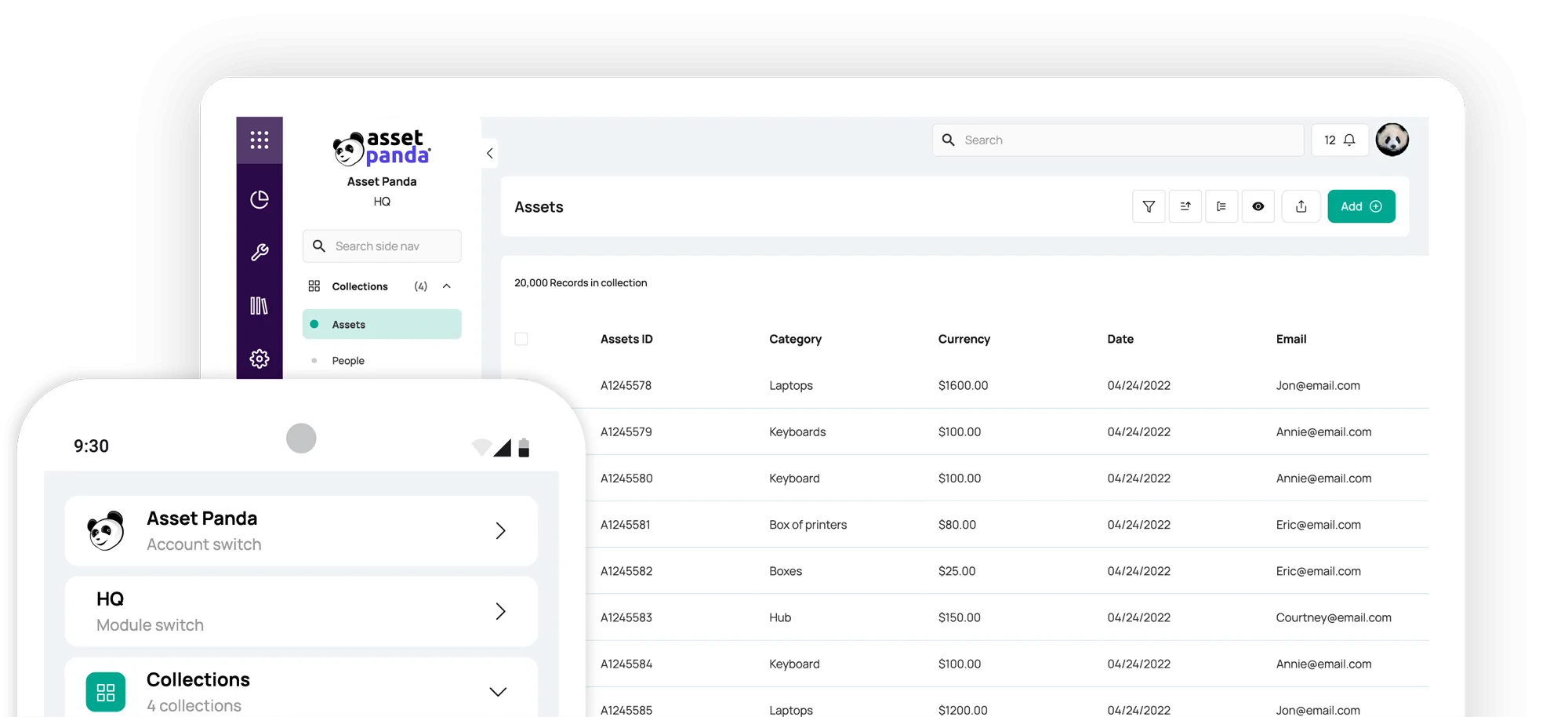
As organizations acquire more assets, tracking and reporting on depreciation becomes increasingly difficult. Modern asset management software automates much of the process by maintaining centralized asset records, purchase information, depreciation schedules, and lifecycle history within a single system.
Rather than maintaining separate spreadsheets for accounting, maintenance, and asset inventories, organizations can manage depreciation alongside the operational data that supports each asset's lifecycle. This approach improves reporting accuracy while reducing administrative effort and helping finance and operations teams work from the same source of truth.
Automate Your Depreciation Reporting with Asset Panda
Understanding the difference between depreciation on the balance sheet and the income statement is essential for accurate financial reporting. While accumulated depreciation reflects the total reduction in an asset's value over its lifetime, depreciation expense measures the portion of that value recognized during a specific reporting period.
Together, these figures provide a complete picture of an organization's asset value and financial performance. By automating depreciation tracking and maintaining accurate asset records, organizations can simplify compliance, improve reporting, and make more informed decisions about their long-term investments.
Asset Panda helps organizations manage fixed assets throughout their entire lifecycle while simplifying depreciation tracking and financial reporting. Using configurable depreciation schedules, organizations can automatically calculate accumulated depreciation and depreciation expense while maintaining complete asset histories, purchase records, maintenance information, warranties, and audit documentation.
With Asset Panda, organizations can:
- Automate depreciation calculations
- Track complete asset lifecycle history
- Generate audit-ready reports
- Maintain centralized asset records
- Monitor maintenance alongside financial data
- Improve reporting accuracy across departments
See how Asset Panda's easy-to-use platform can automate your asset management and depreciation tracking. Book a call with your solution specialist today.
Take Control of Your Assets
A personalized demo is just one click away.
Frequently asked questions
Does depreciation appear on both the balance sheet and the income statement?
Yes. Depreciation appears on both financial statements but in different forms. The balance sheet reports accumulated depreciation, while the income statement reports depreciation expense for the current accounting period.
What is the difference between accumulated depreciation and depreciation expense?
Accumulated depreciation is the total depreciation recorded for an asset since it was placed into service. Depreciation expense is the amount recognized during a single accounting period.
Where does accumulated depreciation appear on the balance sheet?
Accumulated depreciation appears as a contra asset account within the fixed assets section of the balance sheet. It reduces the net book value of long-term assets while preserving their original purchase cost.
Is depreciation expense an operating expense?
Yes. In most organizations, depreciation expense is classified as an operating expense, although in some industries it may be included within cost of goods sold or manufacturing overhead depending on accounting practices.
How does asset management software help with depreciation?
Asset management software automates depreciation calculations, maintains complete asset histories, generates financial reports, and helps organizations track asset lifecycles while supporting accounting compliance and audit readiness.
Related News & Press



Learn more from a solution specialist
Schedule a demo to find out how you can transform your workflows with Asset Panda Pro
Contact our team at (888) 928-6112