
How a Systematic Tool Tracking System Cuts Field Equipment Losses
Blog

Table of Contents
Build Your Custom Tool Tracking System with Asset Panda
A personalized demo is just one click away.
Quick answer: Untracked tools travelling between job sites and warehouses can quickly translate into high replacement costs and downtime on the job. With a systematic field tool tracking system, teams can easily track, assign, and inspect tools with a barcode-based solution. When field teams roll out a tool tracking system using the checklist below, they can reduce downtime and unexpected costs all while improving accountability.
For field operations managers, the math on lost tools rarely shows up in a single line item. It hides in petty cash reorders, last-minute hardware-store runs, and the productivity gap when a crew member grabs a damaged drill that should have been pulled from service weeks earlier. In customer interviews, one field manager described losing roughly 30 units of a single hand tool over a year, which translated into a couple of thousand dollars in replacement costs for just that one SKU. Multiply that across a full tool fleet, and the operational drag becomes obvious.
This piece walks through how a systematic field tool tracking system, built on barcoded identification and crew-level responsibility, changes the economics of tool loss. The angle is not behavioral. It is infrastructural: what the workflow has to look like, what edge cases it has to absorb, and when the spend is justified by what is currently walking off the job site.
Key Summary
- Losing about 30 units of a single moderately priced hand tool in a year can reach a couple of thousand dollars in replacement costs, and that is just one SKU out of many.
- Manual, supervisor-dependent check-out processes often break down in the field because there is no systematic record of who took what or whether returned tools were red-tagged.
- A barcode scan-to-identify workflow (where a worker scans their personal barcode, then scans the tool) logs assignments automatically without requiring a supervisor at every transaction.
The Hidden Cost of Untracked Field Tools
Untracked hand tools quietly compound into a multi-thousand-dollar annual loss line, because each individual disappearance feels too small to investigate, but the aggregate replacement spend is real. The example of a field manager estimating around $2,000 in replacement costs for 30 units of a tool is useful as an anchor here. However, it is rarely just one SKU bleeding.
The same pattern tends to repeat across cordless drivers, measuring equipment, specialty hand tools, and the consumable-adjacent items that get treated as disposable until the reorder invoice lands. When there is no systematic check-in/check-out process, finance sees the replacement spend, but operations cannot tie it back to a person, a crew, or a job. The loss is real, the cause is invisible, and the conversation defaults to a vague accountability talk instead of a system redesign.
Why Manual and Supervisor-Dependent Workflows Break Down
Manual check-out fails in distributed field operations because it depends on a supervisor being physically present for every tool transaction, and that level of oversight is not cost-effective to sustain across multiple crews and job sites. The result is a workflow with no systematic check-in/check-out, where tools leave with no record of who took them or when they will return.
This pattern came up directly in customer interviews. Tools are taken out, sometimes returned, and often not properly maintained or red-tagged between uses. The next worker on shift picks up what looks like a working tool and only discovers the damage on site, which costs productive time and sometimes a second trip back to the shop. The red-tag step, flagging a returned tool as out of service before re-issuance, is the workflow that disappears first when oversight is manual.
The supervisor bottleneck
One field manager explicitly described supervisor-based manual check-out as cost-prohibitive in practice. A supervisor cannot stand at the tool cage for every shift change, and once that role is absent, the paper log or spreadsheet drifts out of date within days. The crews are not the problem. The workflow simply was not designed to run without a human gatekeeper.
The damaged-tool handoff
Without a structured return step, a damaged tool re-enters circulation invisibly. The buyer's pain here is not just the cost of the damaged unit. It is the downtime of the next worker who discovers it, the rescheduled task, and the erosion of trust in the tool crib itself.
How Barcode-Based Individual Identification Changes the Equation
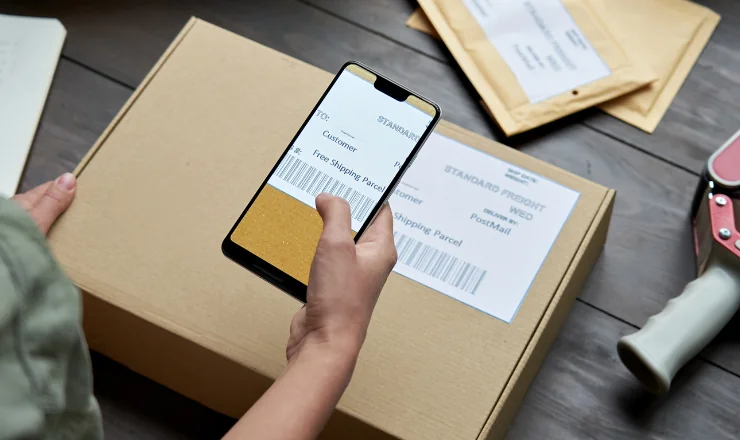
A barcode scan-to-identify workflow replaces supervisor oversight with a two-scan transaction: the worker scans a personal barcode to identify themselves, then scans the tool's barcode label, automatically logging the assignment with an accurate timestamp and identity. No supervisor needs to witness the handoff for the record to exist.
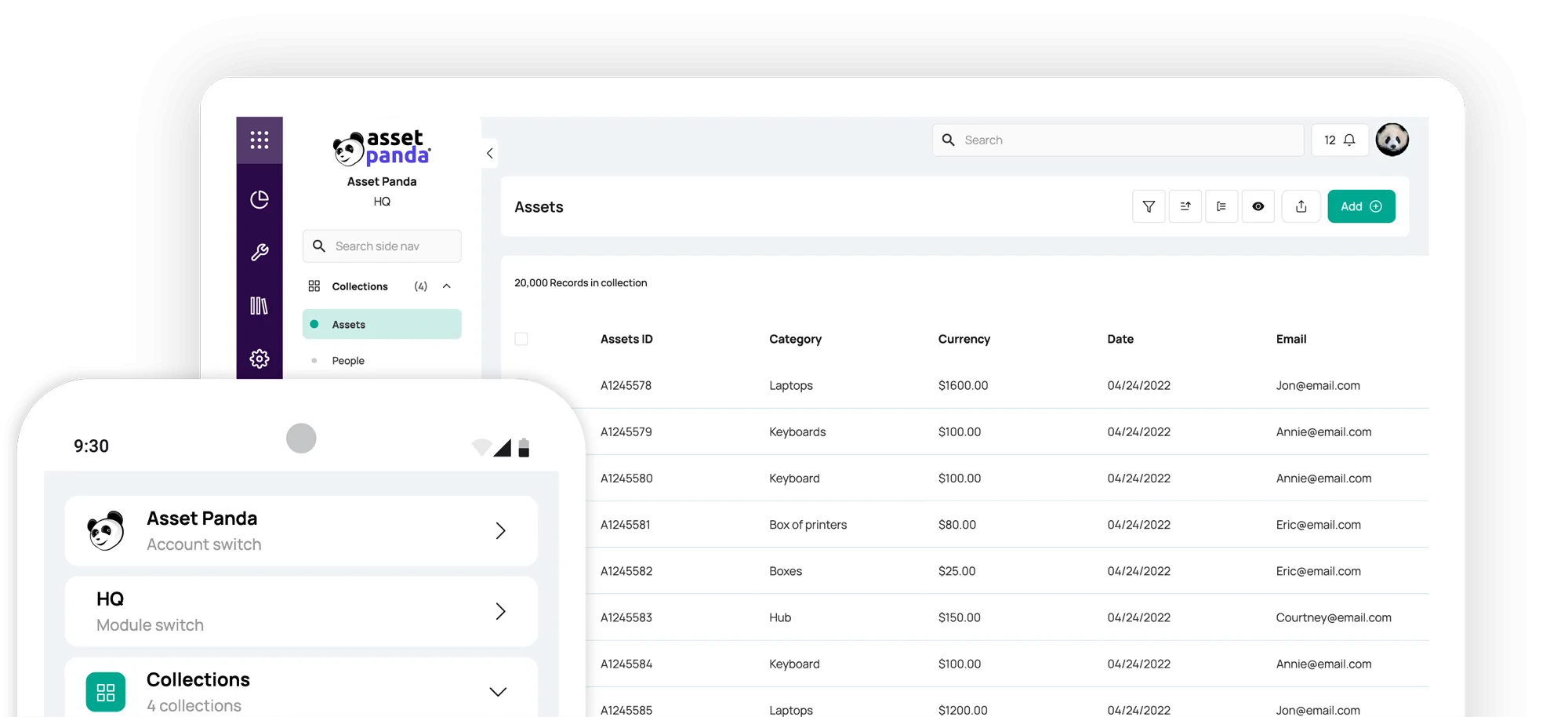
Asset Panda supports this kind of assignment model, where assets are checked in and out against people or locations so ownership is always clear.
What the two-scan transaction actually looks like:
- Field worker arrives at the tool crib or staging area at shift start.
- The worker scans their own barcoded ID badge or personal label.
- They then scan the barcode on each tool they are taking for the day.
- The system creates an immutable, timestamped record: who, what, when.
At shift end, the same two-scan sequence runs in reverse, with an optional condition prompt that triggers a red-tag flag if the tool comes back damaged.
Why individual identification matters more than tool identification alone
Most basic barcode tool management systems get the tracking side right, but fall short when it comes to assignment history. However, the real value of systematic tool tracking lies in knowing which specific worker had which specific tool and when. That is what makes the data useful for loss investigation, maintenance flagging, and crew-level accountability and reporting.
Operational Benefits Beyond Loss Prevention
While loss prevention is the headline benefit of a tool tracking system, there are several other gains that teams experience day to day:
- Reduced shift-start downtime: workers self-serve through the scan workflow instead of waiting for a supervisor's signature.
- Better maintenance flagging: the red-tag step becomes a structured prompt at return time, so damaged tools exit circulation immediately.
- Crew-level reporting: leads can see their crew's outstanding tools without walking the cage.
- Accurate audit trails: every transaction has a timestamp and identity attached, which supports both internal reviews and any client or regulatory documentation requirements.
Practical Rollout Checklist for Your Tool Tracking System
Oftentimes, the biggest friction point is not the software itself but the gap between when a worker shows up and when they can legally check out tools. Crews rotate between job sites, new hires arrive the same morning work starts, and the tracking system has to absorb that pace without creating a bottleneck at the tool crib. The checklist below is designed with that reality in mind.
- Inventory the tool fleet by category and estimate annual replacement spend per category for the last 12 months.
- Identify the three to five highest-loss SKUs as the pilot scope.
- Order a starter run of barcoded identification labels (a bulk approach in the range of roughly 1,000 labels is a practical starting point) and validate label durability against your field conditions before scaling.
- Define the crew structure based on which crew leads, how many workers per crew, and what the default tool set looks like. If crews rotate between job sites, map each crew to its current site so the system reflects where tools actually are, not just who has them.
- Configure the system's employee records to match that crew structure. Group tools by crew or job site so leads can see outstanding items without sorting through the full fleet.
- Run the two-scan workflow for one pay cycle with one crew before expanding.
- Build a same-day-hire SOP so new workers can be added and issued tools within their first hour on site. On customer calls, construction teams described this as a hard requirement: a platform that needs multi-day pre-enrollment cannot keep up with field hiring pace.
- Set up maintenance-due reporting so leads can see which tools are approaching a service date. In customer conversations, construction managers described wanting to shift from reactive repairs to planned maintenance, and a 30- or 90-day look-ahead filter on the tool list makes that possible.
- Review the first month's data with crew leads and adjust the default tool sets and red-tag prompts based on what the records show.
A note on label durability
Field managers have flagged barcode label durability as an open question worth pressure-testing. Hand tools live rough lives: solvents, impact, weather, abrasive surfaces. Before committing to a full rollout, run the candidate labels through your worst-case environment for a few weeks and confirm scan reliability after wear. This is not a solved problem in every field context, and the right label substrate depends on the specific tools and conditions involved.
Takeaway and Next Steps
The argument for a systematic field tool tracking system is not about catching people; it is about replacing a workflow that depends on supervisor presence with one that runs on scans and records. Once the two-scan transaction is in place and crew leads have the reports to manage by exception, the annual replacement spend that used to be invisible becomes a line item you can actually reduce.
The same infrastructure that prevents loss also supports proactive maintenance scheduling. When every tool return triggers a condition check, and the system tracks service dates, leads can see what needs attention before it fails on site rather than after. This shift from reactive to proactive maintenance is a game changer for field teams, overall operations, and your bottom line.
Want to see Asset Panda's systematic field tool tracking system in action? Book a demo with your solution specialist today.
Take Control of Your Assets
A personalized demo is just one click away.
Frequently Asked Questions
What is a field tool tracking system?
A field tool tracking system is software paired with barcoded identification labels that logs every check-in and check-out of hand tools and equipment against a specific worker or crew. It replaces manual sign-out sheets and supervisor-witnessed handoffs with a scan-based record that captures who took what and when.
How does barcode-based tool check-in/check-out actually work?
The worker scans a personal barcode to identify themselves, then scans the barcode on each tool they are taking. The system writes a timestamped assignment record automatically. At return, the same sequence runs in reverse, with an optional prompt to flag any tool that needs to be red-tagged for maintenance.
Can the system handle a worker hired the same morning they need tools?
Yes, this is the workflow to validate during evaluation. A capable system supports adding a person record on the fly and issuing tools against that record the same day, without waiting for a pre-enrollment cycle. If a platform requires multi-day onboarding before assets can be checked out, it will not survive field hiring pace.
What about barcode label durability in rough field conditions?
Label durability is a real consideration and worth testing before committing to a full rollout. Run candidate labels on a sample of your highest-use tools in your actual working environment for several weeks, then check scan reliability. The right substrate depends on the specific tools, chemicals, and physical demands involved.
Related Resources

Learn more from a solution specialist
Schedule a demo to find out how you can transform your workflows with Asset Panda Pro
Contact our team at (888) 928-6112