
How Wilson County Sheriff's Office Built a Student Reunification System with Asset Panda on AWS
Case Study
About Wilson County Sheriff's Office
The Wilson County Sheriff's Office (WCSO) is a county law enforcement agency responsible for public safety, criminal investigation, and emergency response across its jurisdiction. Like most sheriff's offices, it operates in the public-sector, government, and public-safety space, coordinating closely with local school districts on incident preparedness and response.
Christopher Andrews, Director of Technical Services Unit and Cybersecurity, supports the agency's operational technology and works to modernize field processes that have historically relied on manual, paper-based procedures. School safety and student reunification during emergencies sit squarely within that mission, making the office both an operator of law-enforcement technology and a partner to the schools it protects.
The Challenge
When a school emergency triggers a student reunification event, the process of accounting for every child is still largely done with clipboards and paper lists. FEMA's National Incident Management System (NIMS) framework treats reunification as a structured, accountable function within the Incident Command System, yet the operational reality in many jurisdictions is that the process depends on whatever paper forms a school happened to print before the incident.
For the Wilson County Sheriff's Office, that gap between protocol and practice was unacceptable: paper lists get separated from the people managing them, handwriting becomes illegible under stress, and there is no instant way to confirm which students have been released to which adults.
The office also faced an access constraint. Its primary law-enforcement records system sits behind strict access controls, and not every staff member who might need to enter data during a reunification event has an account in that system. That made real-time data entry into the primary platform impractical at the exact moment it mattered most.
Compounding the problem, any new tool introduced for emergency use risked over-complicating the process: staff who have only practiced with a system under calm conditions will not use it correctly under stress, and any solution requiring logins, connectivity, or multi-step setup at incident time would introduce a new point of failure.
If these challenges went unaddressed, the risks were significant and concrete. Without a reliable, verifiable system of record, the agency faced the possibility of misidentifying a child, releasing a student to the wrong adult, or losing accountability for a student's whereabouts during a chaotic event—all outcomes that carry profound safety, legal, and reputational consequences for the sheriff's office and its partner school district.
Partner Solution
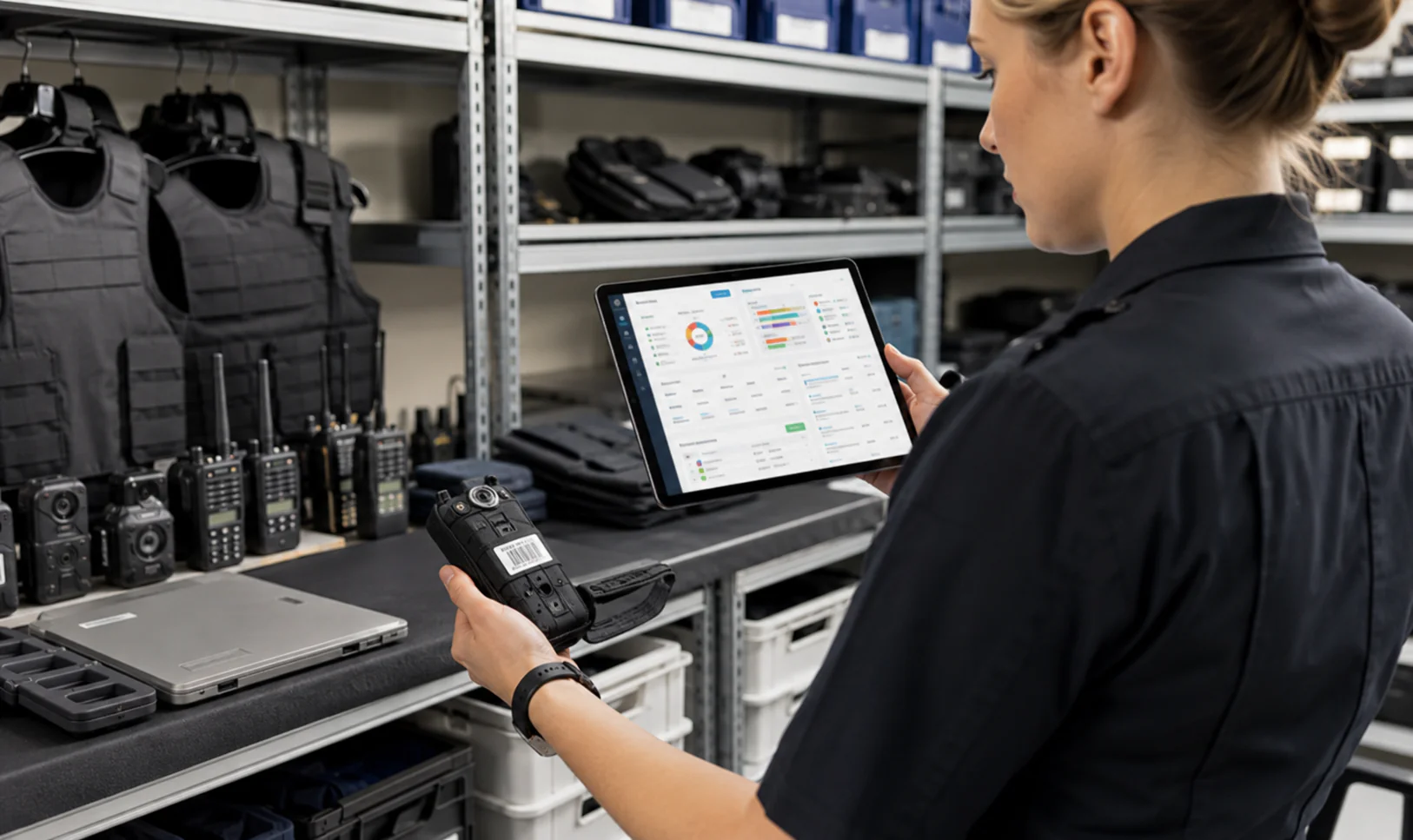
The Wilson County Sheriff's Office partnered with Asset Panda to customize the cloud-based asset-tracking platform as a field-ready student reunification system. Because the office already used Asset Panda for physical asset tracking, staff were familiar with the platform, eliminating new training burden, new login credentials, and a new vendor relationship at the moment of an incident.
With Asset Panda's flexibility and configurable fields, photos, and status updates, the platform fit WCSO's reunification needs: a student needs a record, a photo, and a status, and the platform holds all three.
The solution centers on three configured components:
- A record is created for each student with fields configured to match the data that matters during reunification, including name, grade level, student ID, and release status.
- A pre-saved export template in the district's Skyward student information system is mapped once, before any incident, so its field names align exactly with the corresponding Asset Panda fields. When an incident is declared, staff simply run the export and import the resulting CSV, populating student records in minutes with no manual data entry.
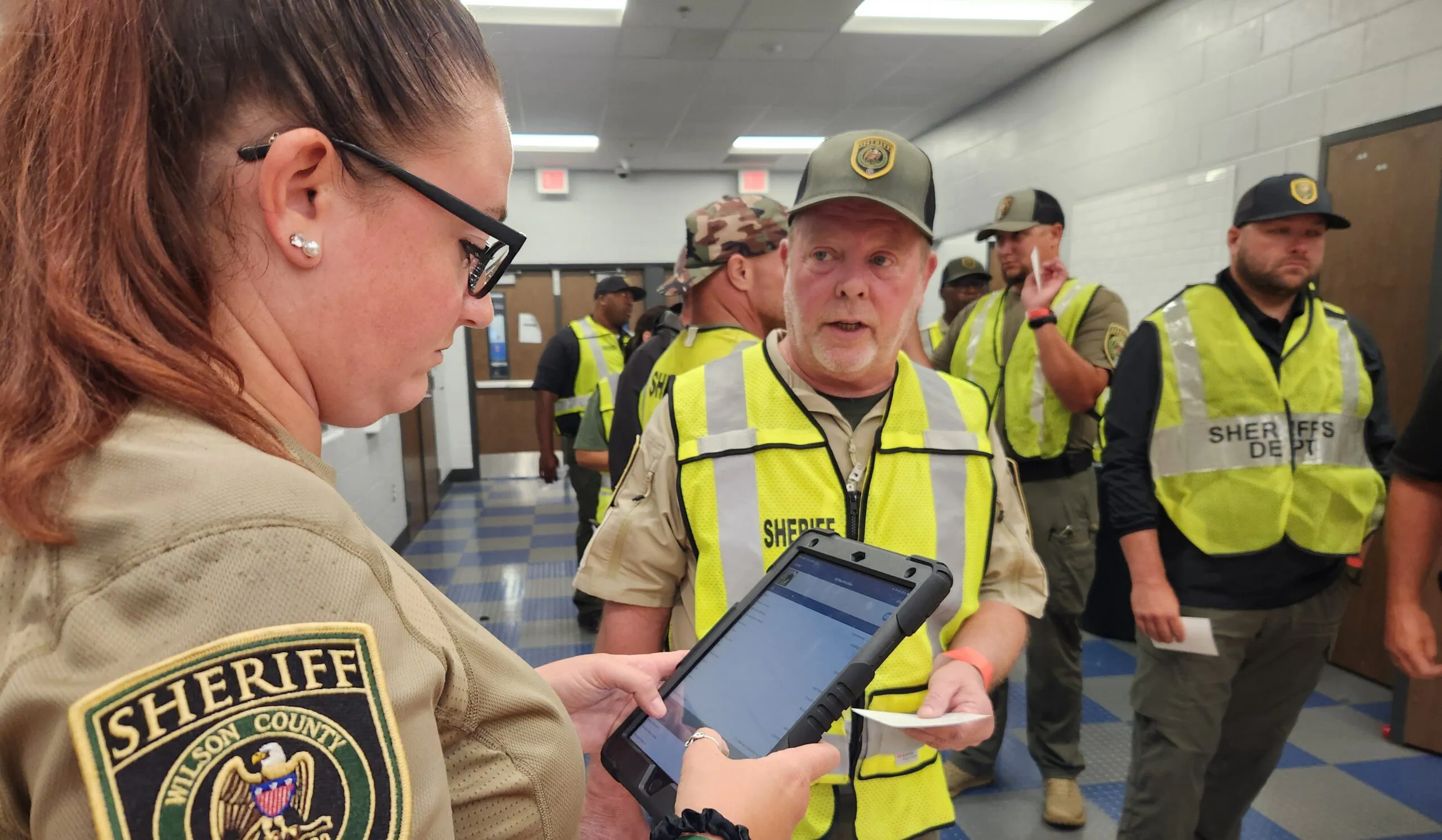
- Staff photograph each student upon arrival using the native iOS camera in the Asset Panda mobile app and attach the image to the corresponding record, providing a visual confirmation layer that a paper list cannot offer when a child is released to a guardian.
The Asset Panda platform is delivered as a fully managed, cloud-native SaaS application running on Amazon Web Services in the US East (N. Virginia) Region, so the sheriff’s office consumes the reunification workflow with no infrastructure to provision or maintain on-premises.
The primary AWS services underpinning the solution are: Amazon Elastic Kubernetes Service (Amazon EKS), which runs Asset Panda’s containerized web, API, background-processing, and scheduled-job workloads and scales them as activity spikes during an incident; Amazon RDS for MySQL, the managed relational database that stores student records, configurable field definitions, and release-status history across a primary writer and read replicas; Amazon S3, which provides durable object storage for the student photos captured in the Asset Panda mobile app as well as generated reports and CSV exports, with report downloads delivered through time-limited pre-signed URLs; Amazon ElastiCache for Redis, which backs application caching and the queued background jobs that process CSV roster imports, allowing a full student roster to populate in minutes; Amazon OpenSearch Service, which indexes platform API activity so that actions taken during an event can be searched and audited afterward; and Amazon Elastic Container Registry (Amazon ECR) with AWS CodeBuild, which form the automated container build-and-release pipeline Asset Panda uses to deliver platform updates without downtime.
Since Asset Panda operates as a managed service provider for this deployment, its support spanned both pre- and post-implementation. Before deployment, the Asset Panda team worked with the office to design the reunification module, map the Skyward-to-Asset Panda field template, provision separate Asset Panda accounts for all relevant responders, and run the full export-and-import workflow multiple times to validate that every field populated correctly and no data was lost or misaligned.
After deployment, the Asset Panda team provided ongoing platform support, documentation for a one-page staff reference card, and guidance on a recurring test cadence, so the template stays current as school rosters change each semester. This hands-on, tested rollout was treated as non-negotiable given the stakes, and it is what turned an ad-hoc idea into a repeatable, trainable procedure.
"The partnership has been important," Andrews said. "We have to feel comfortable that the company that we're trusting our processes, our information, our data with, is there for us."
The Results
The school reunification configuration in Asset Panda replaced an error-prone, pen-and-paper process with a repeatable, field-tested digital workflow. With the Skyward export template pre-mapped and validated, an incident-time import that once meant hand-transcribing student details now completes in under 5 minutes, populating the full student roster automatically and eliminating essentially 100% of manual data entry at the moment of an incident. The workflow was validated across multiple successful test runs before it was considered deployment-ready, confirming a consistent CSV structure, correct field population, and repeatable execution by different staff members.
Since implementation, the Wilson County Sheriff's Office has realized various solutions to their original challenge:
- The photo-capture step adds a visual confirmation layer that reduces the risk of releasing a child to the wrong adult, closing the single largest accountability gap in the paper process
- The standardized workflow requires no on-the-fly decision-making and allows for faster staff training of a single walkthrough plus two practice runs, compared to the former extended, inconsistent training that ad-hoc paper procedures demand
- Provisioned Asset Panda accounts ensure incident-time data access to all relevant responders without touching its secured law-enforcement infrastructure
"Asset Panda has made our lives so much easier," Andrews said. "I can’t remember back before it. We would still be fighting with spreadsheets, probably hundreds of spreadsheets."
Watch the coverage of WCSO's Specialized Multi-Agency Response Training (SMART) exercise held in July 2026.
About the Partner
Asset Panda, founded in 2012 and headquartered in Frisco, Texas, is an asset tracking, inspection, and audit platform used by organizations across government, education, healthcare, financial services, and enterprise IT in more than 140 industries to manage the full lifecycle of their physical and digital assets. Delivered as a SOC 2 Type II compliant, cloud-based SaaS application with native iOS and Android mobile apps, the platform lets customers model any trackable item with custom fields, photos, status workflows, and integrations such as CSV import from systems like Skyward, making it adaptable to use cases well beyond traditional asset management, including the student reunification workflow described here. Asset Panda is an AWS Partner whose platform is built and operated entirely on AWS, running its production workloads on Amazon EKS with Amazon RDS, Amazon S3, Amazon ElastiCache, and Amazon OpenSearch Service, and delivering software through an AWS-native CI/CD pipeline built on AWS CodeBuild and Amazon ECR.